
Last updated September 23, 2026
Free visual inspection and a written scope of work before any mitigation begins - photos, moisture readings, and drying logs go in your claim file
The scope we write is the scope we bill. Anything new gets shown to you, in writing, before we touch it.
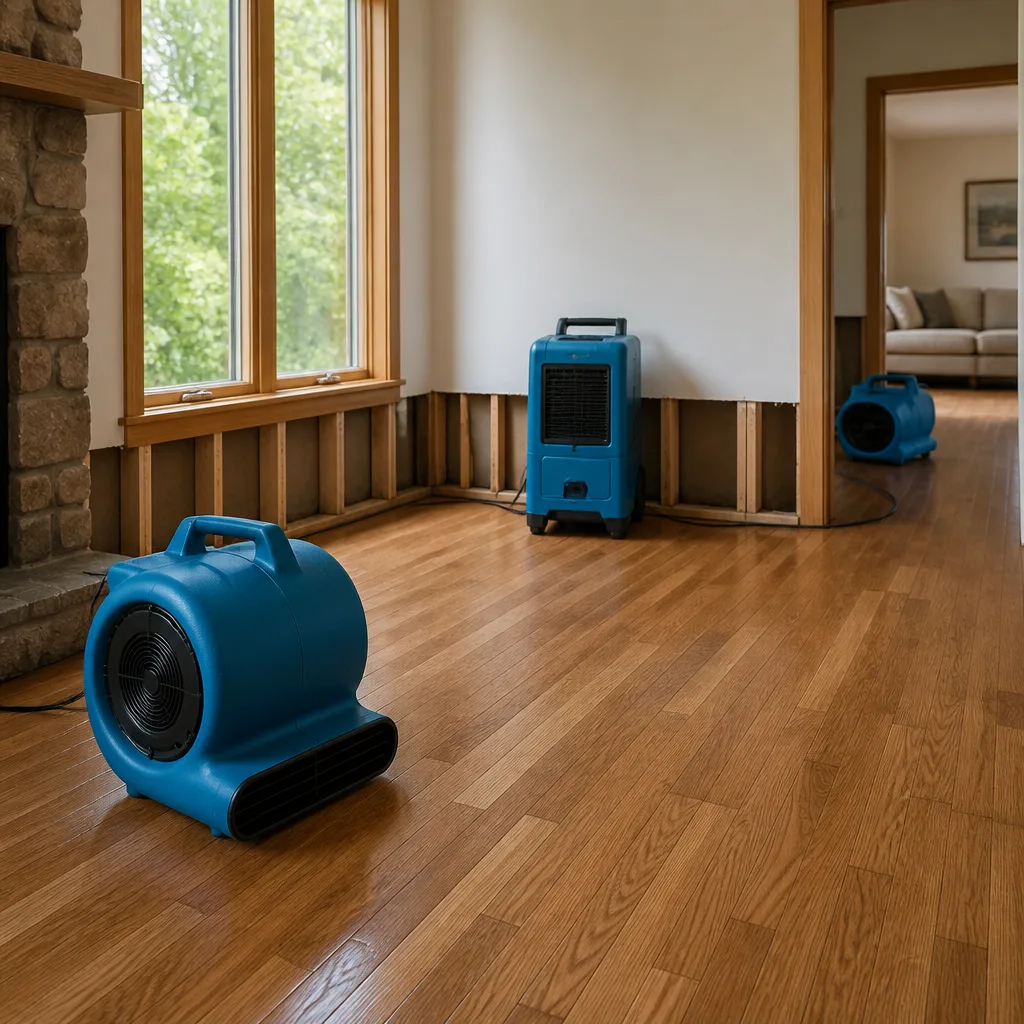
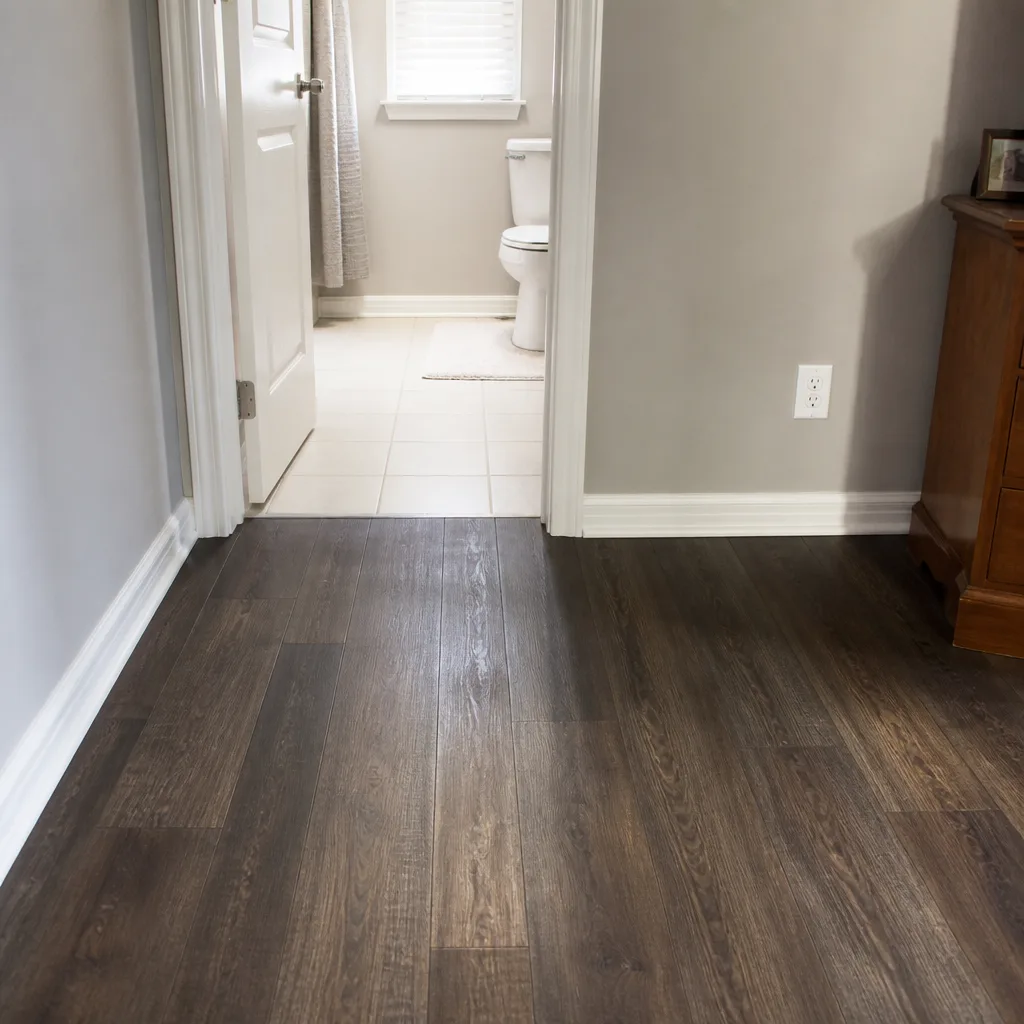
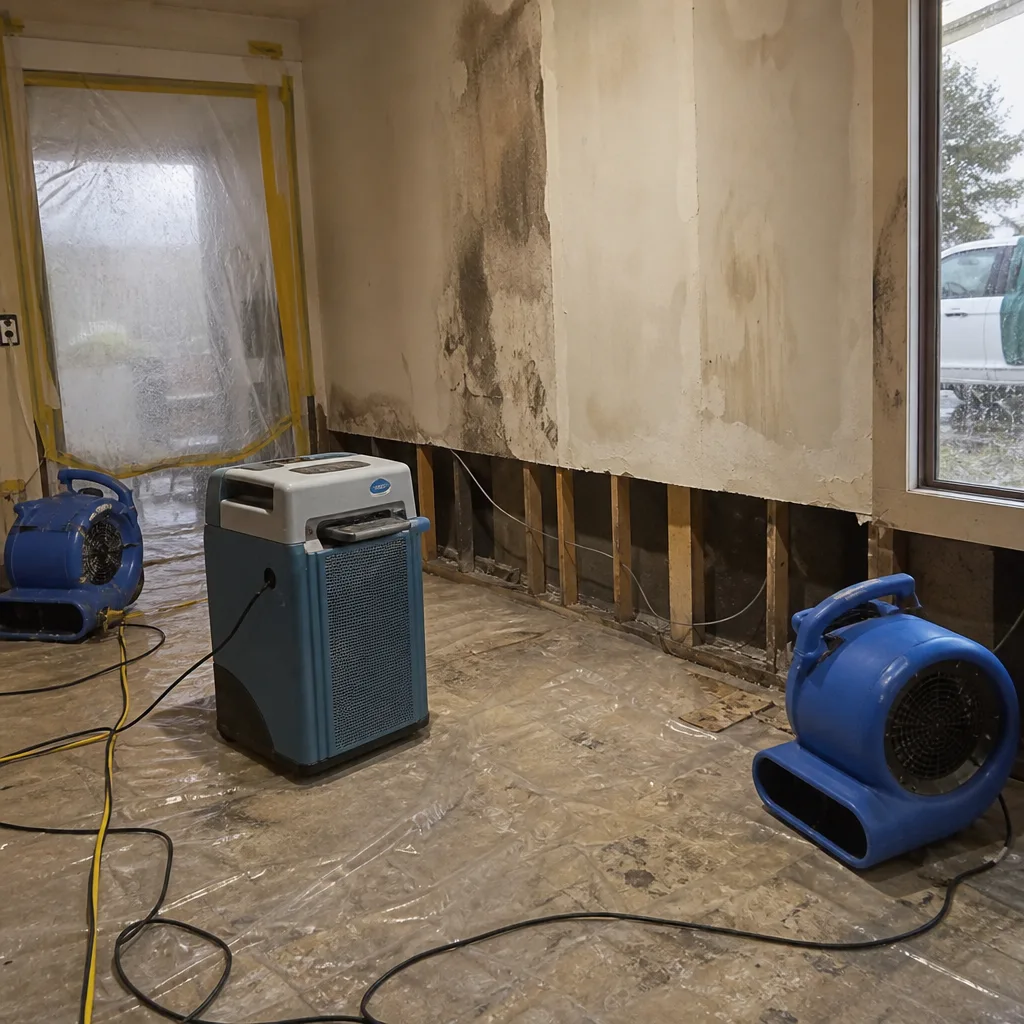 Before
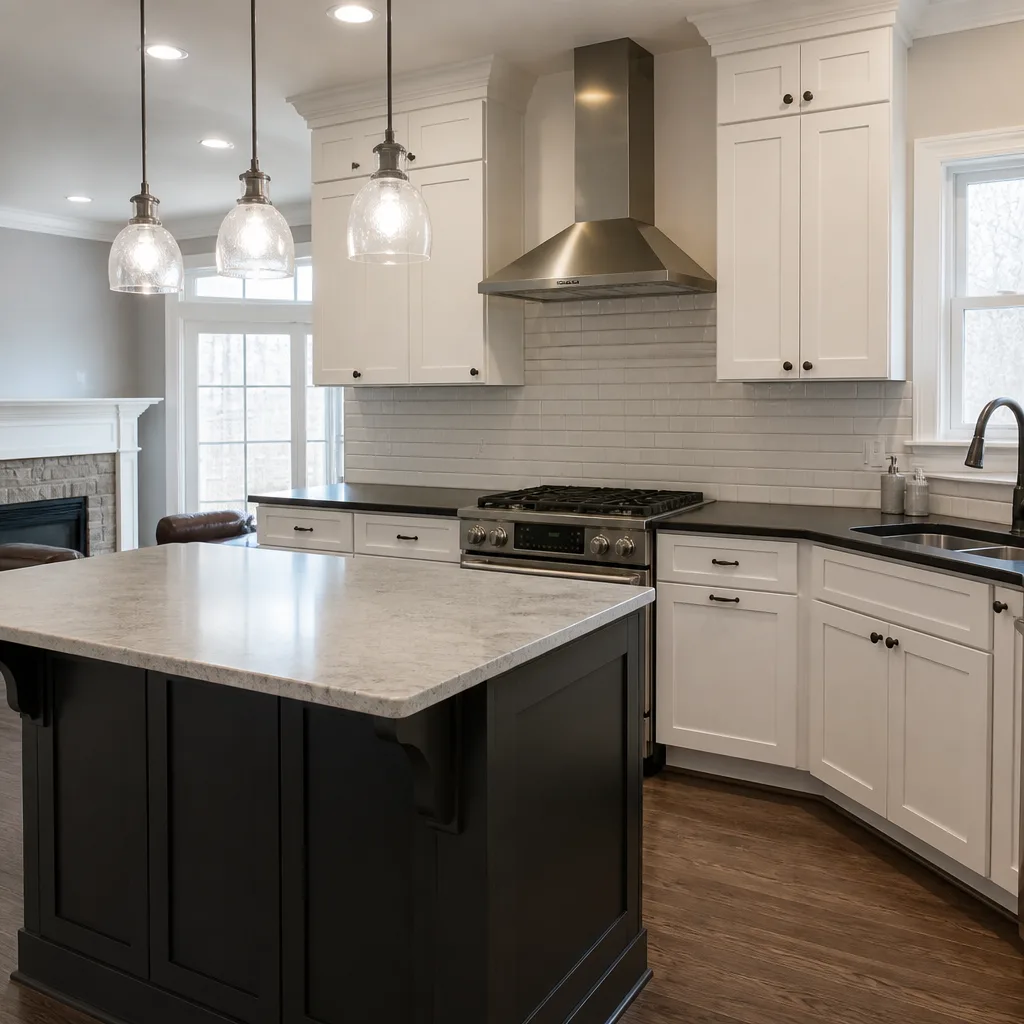
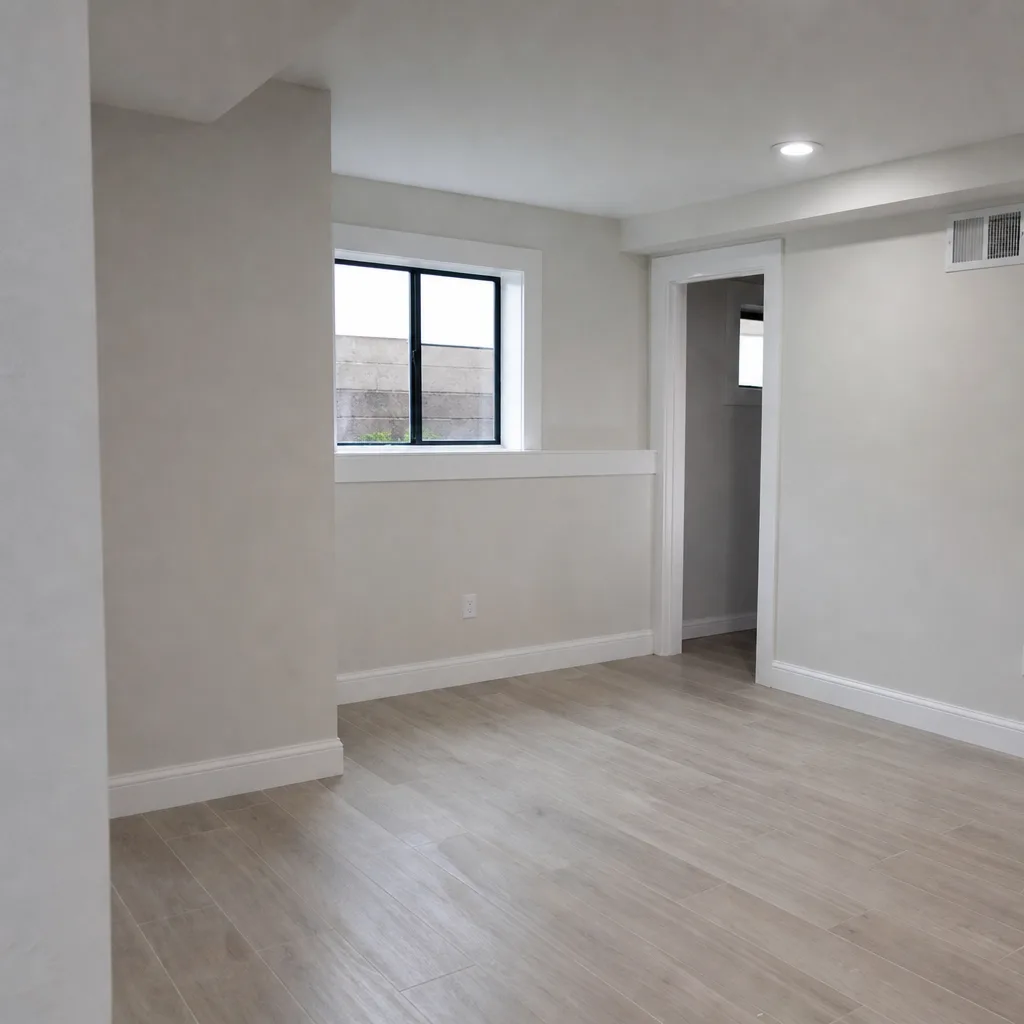 After
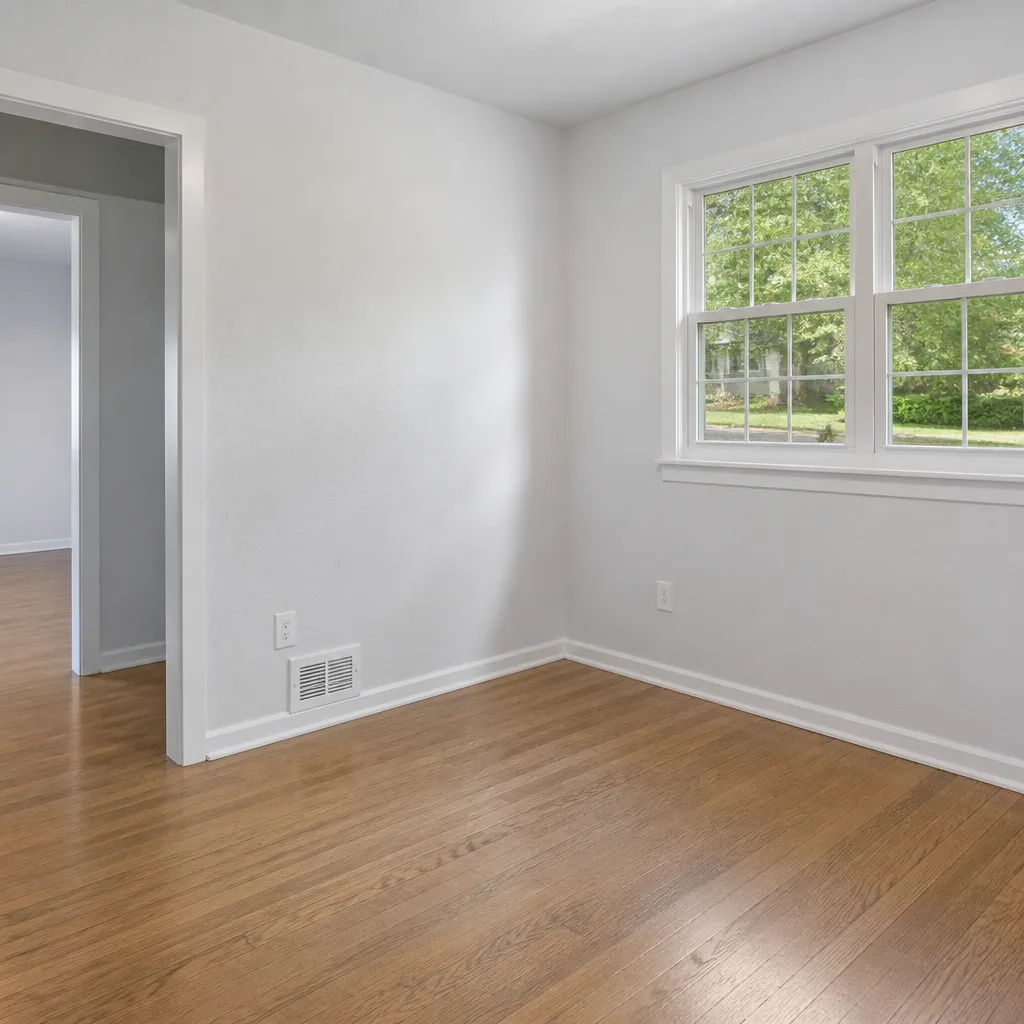
After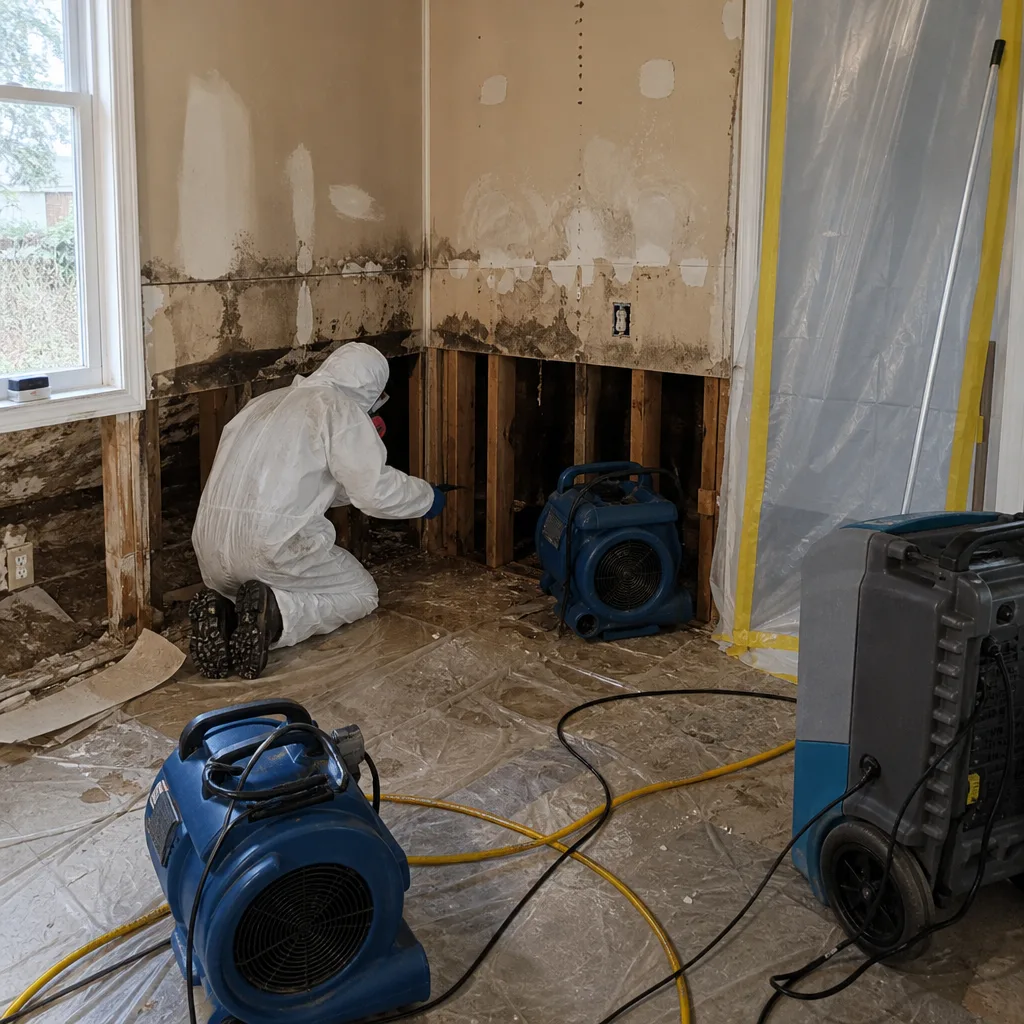 Before
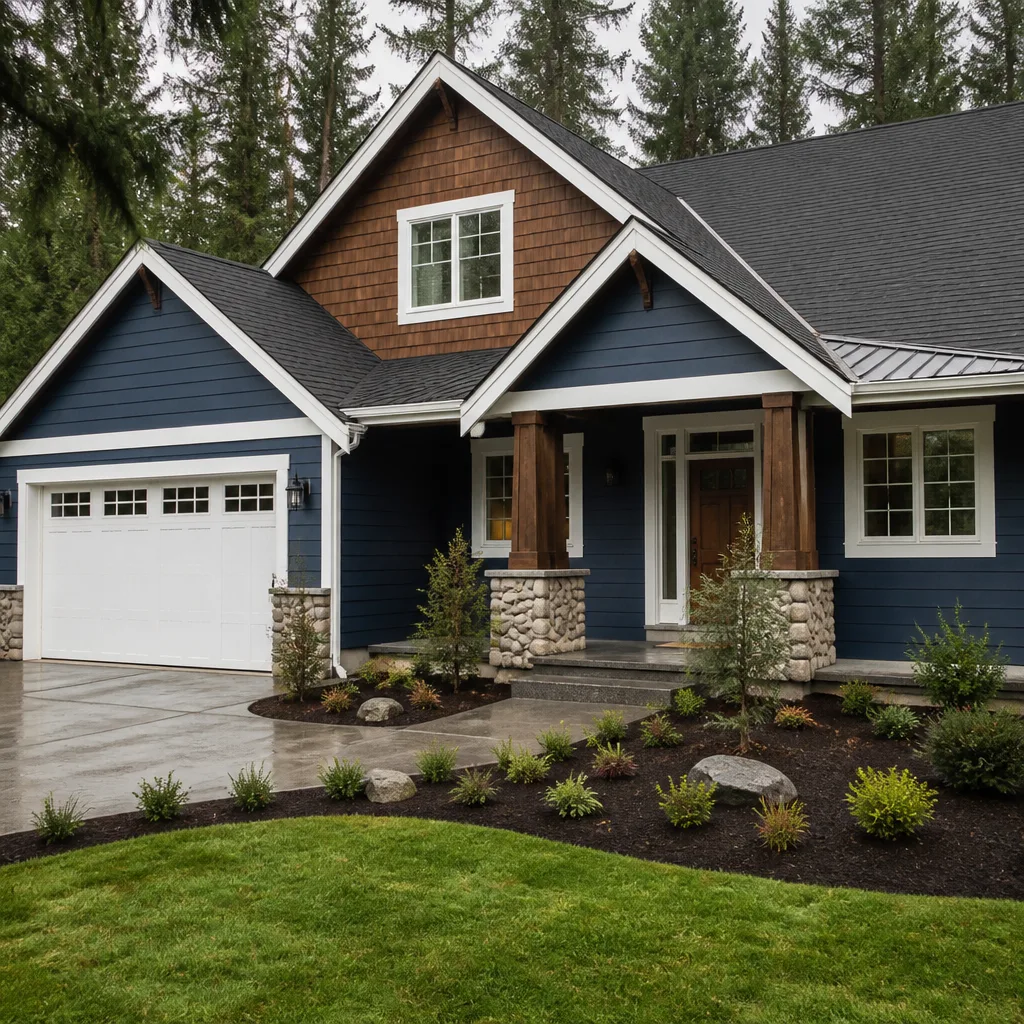
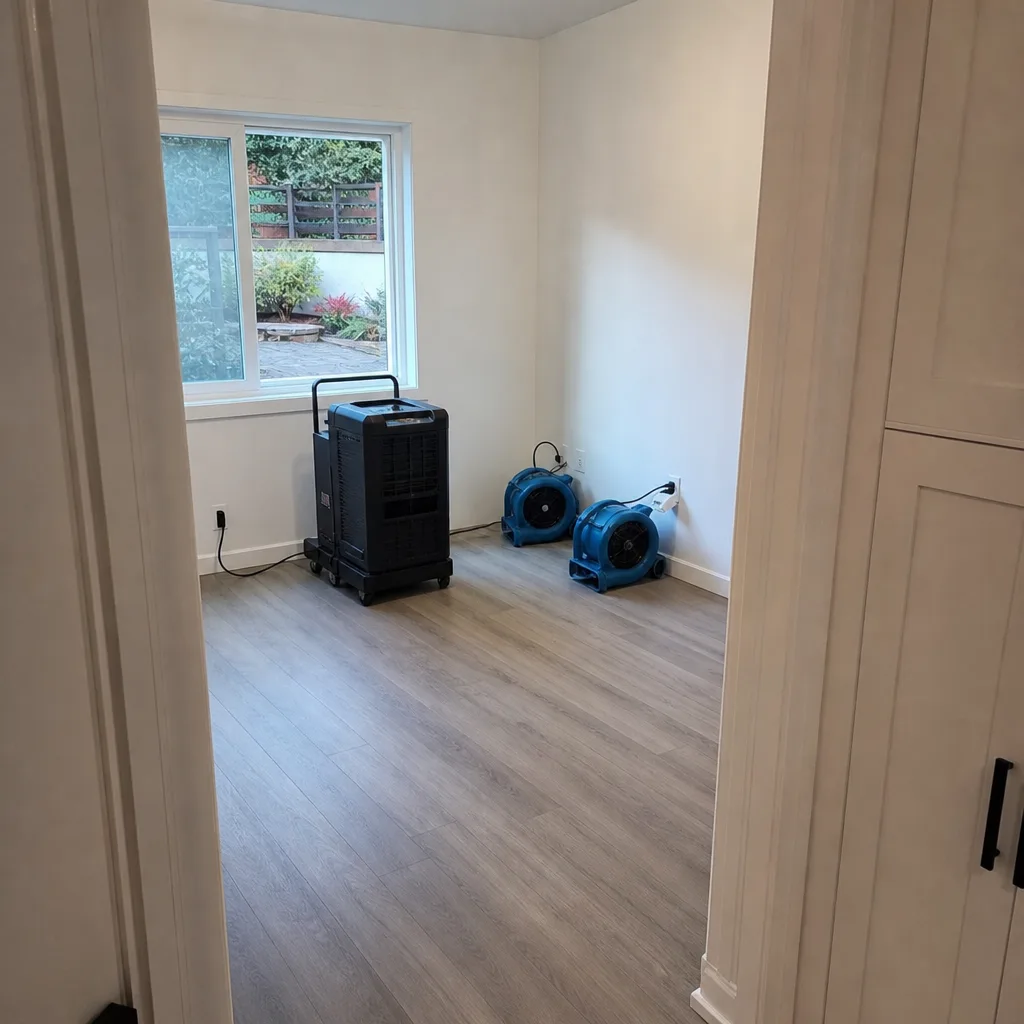 After
AfterDamage Restoration Cost Breakdown: The Encinitas Homeowner’s Reference for 2026
In 2025, the average San Diego County water damage claim paid by insurers was $14,200, but homeowners without written pre-work scopes received settlements averaging 31% lower than those with documented line-item agreements. In Encinitas, where coastal humidity slows natural drying and older homes in Leucadia and Cardiff-by-the-Sea hide decades of incremental water damage behind stucco, that documentation gap costs real money. This guide-along with our Damage Restoration Warning Signs: A Encinitas Homeowner’s Reference Guide-names the line items that drive cost variance from $4,000 to $80,000 for superficially similar losses, and shows how to read a contractor quote before anyone opens a wall.
Quick Answer
Water damage restoration in Encinitas typically ranges from $4,000 for a contained Category 1 extraction with three days of structural drying to $35,000+ for a Category 3 loss requiring demolition, full reconstruction, and documented mold remediation. Fire and smoke restoration generally starts at $8,500 for light soot damage with no structural compromise, while mold remediation in coastal Encinitas zip codes averages $15-$25 per square foot of contained area when HEPA filtration and negative air pressure are properly specified. The single largest variable is not damage severity but documentation quality: claims with daily drying logs, photo records, and written scopes settle at full estimated value 94% of the time, per San Diego County adjuster data.
Table of Contents
- Why Restoration Costs Vary So Widely in Encinitas
- Water Damage Restoration Cost Breakdown by Phase
- Mold Remediation Pricing: Containment, Filtration, and Labor
- Fire & Smoke Damage Restoration Costs
- The Three Most Disputed Line Items in Encinitas Claims
- How to Read a Restoration Quote Line by Line
- The Cost of Undocumented Restoration: What Insurers Actually Discount
- Encinitas-Specific Cost Factors: Climate, Codes, and Construction Types
 Before
 After
AfterWhy Restoration Costs Vary So Widely in Encinitas
The same water loss, in the same square footage, can produce invoices separated by tens of thousands of dollars. The difference is rarely the water itself. It is what the contractor documents, specifies, and bills for.
Consider two Encinitas homes, both built in the 1970s, both with slab leaks that ran undetected for three weeks. The first homeowner calls a contractor who extracts standing water, places air movers, and bills $4,200. The second calls a firm that performs moisture mapping with thermal imaging, establishes a drying chamber, produces daily psychrometric readings (temperature, relative humidity, and vapor pressure differential, which measures how aggressively moisture is moving out of materials), and bills $18,500. Six months later, the first home shows mold in wall cavities; the second does not. The first homeowner’s insurer denies the mold claim as secondary damage; the second pays in full because the drying log proves the structure returned to pre-loss moisture content.
In our experience across 12,000+ homes since 2011, the variance drivers are:
- Category of water: Clean (Category 1), gray (Category 2), or black (Category 3/sewage). Category 3 requires PPE, antimicrobial application, and often disposal of porous materials, adding 40-60% to base extraction costs.
- Access and construction type: Post-war ranch homes in Encinitas Ranch have accessible crawl spaces; custom builds in Olivenhain have engineered subfloors and radiant heating that complicate drying.
- Documentation standard: Daily moisture logs vs. none. Photo records vs. verbal reports. Written scopes vs. verbal estimates.
- Containment and air quality control: Required for mold, fire, and Category 3 losses; frequently padded or omitted incorrectly.
- Reconstruction scope: Whether the contractor restores or merely mitigates. Mitigation ends at dry. Restoration returns the space to pre-loss condition.
Encinitas adds local variables. Coastal marine layer keeps relative humidity elevated 10-15% above inland San Diego County averages from May through October, extending drying days. Older homes in the 92024 zip code often contain asbestos-containing joint compound or lead-based paint, triggering Cal/OSHA notification requirements and third-party abatement. And the city’s strict coastal development permitting-detailed in our Damage Restoration Permits, Codes & Inspections in CA: What You Need to Know-can delay reconstruction by 6-10 weeks if the contractor does not understand Encinitas Community Development Department requirements for like-for-like repairs in the coastal zone.
Water Damage Restoration Cost Breakdown by Phase
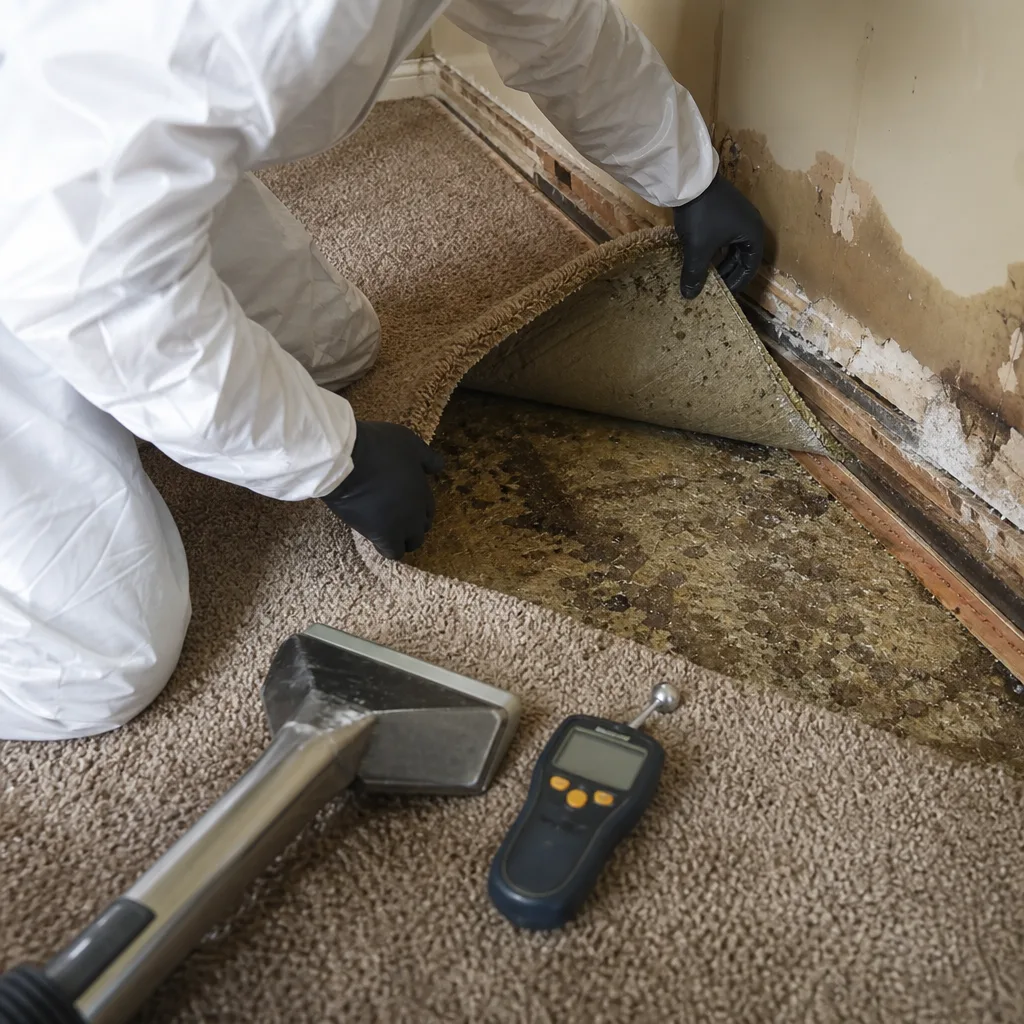
Below are 2026 Xactimate benchmark ranges for San Diego County, adjusted for Encinitas labor rates and material costs. Xactimate is the pricing database used by most major insurers; legitimate contractors base quotes on these figures, not arbitrary markups.
Emergency Extraction
| Service | Unit | San Diego County Range |
|---|---|---|
| Standing water extraction (truck-mounted) | Per hour | $185-$275 |
| Weighted extraction from carpet/pad | Per square foot | $0.85-$1.40 |
| Submersible pump service (sewage/Category 3) | Per hour | $220-$320 |
| Containment setup (critical barrier) | Per linear foot | $4.50-$7.00 |
| Antimicrobial application (Category 2 or 3) | Per square foot | $0.55-$0.95 |
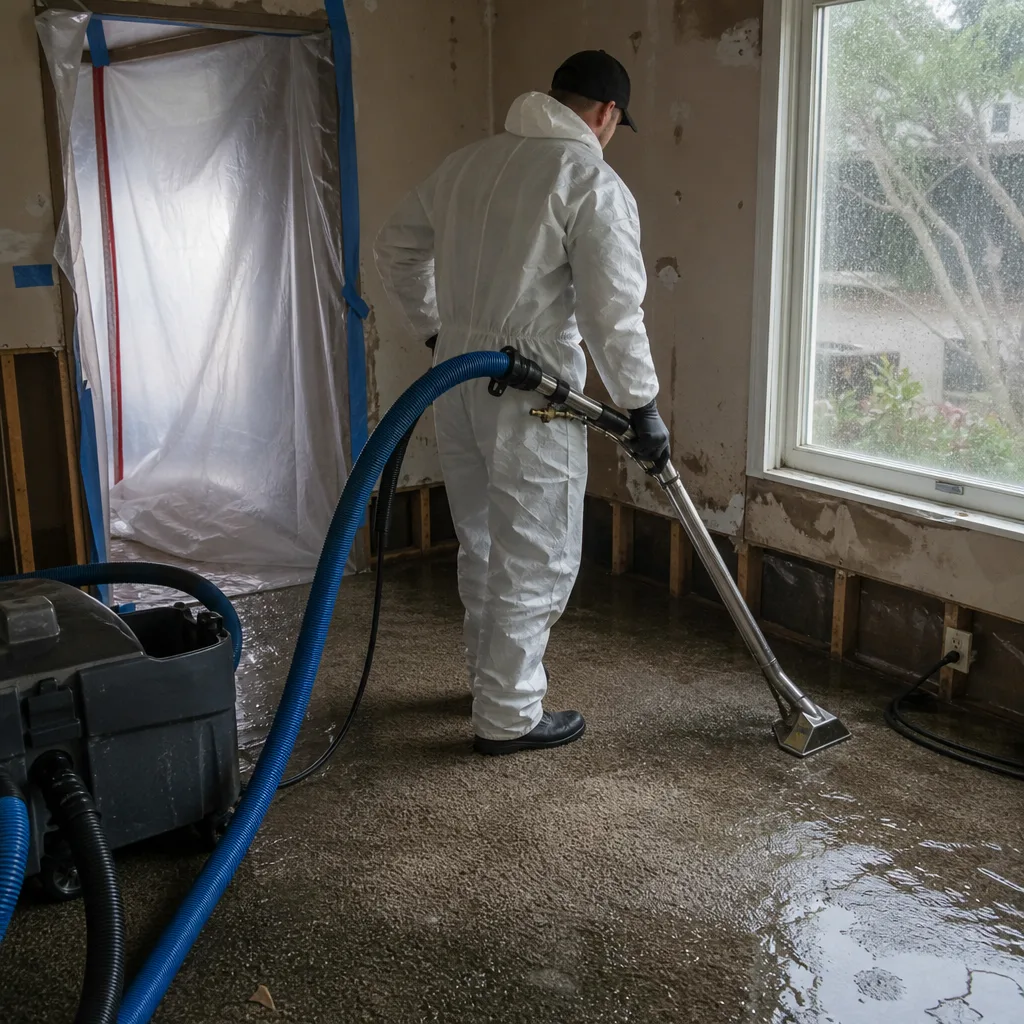
Extraction is the most straightforward phase. A 1,200 square foot home with two inches of clean water typically requires 2-3 hours of truck-mounted extraction at $185-$275 per hour, plus $0.85-$1.40 per square foot for weighted extraction if carpet is present. Total extraction: $1,400-$2,800.
Structural Drying (Per Equipment-Day)
| Equipment Type | Unit | San Diego County Range |
|---|---|---|
| Air mover (centrifugal or axial) | Per day | $28-$42 |
| Low-grain refrigerant dehumidifier | Per day | $95-$145 |
| Desiccant dehumidifier (large loss/commercial) | Per day | $185-$290 |
| Injectidry hardwood floor drying system | Per day | $145-$220 |
| Air scrubber (HEPA, negative air) | Per day | $55-$85 |
| Thermal imaging moisture survey | Per inspection | $185-$295 |
| Daily psychrometric readings and log | Per day | $85-$140 |
Equipment-days are where undocumented jobs lose money. A standard residential drying job uses one dehumidifier per 400-500 square feet of affected area, plus one air mover per 50-75 linear feet of wall. A 1,500 square foot Encinitas home with water in living areas and two bedrooms typically requires 3 dehumidifiers and 12-16 air movers. At standard rates, that’s $450-$750 per day in equipment alone.
Drying duration depends on material permeance (how easily water moves through the material), humidity load, and airflow design. In Encinitas, where morning marine layer can push exterior relative humidity to 80%+, drying takes 1-2 additional days compared to inland Escondido or San Marcos. A job that dries in 3 days inland typically requires 4-5 days coastally. Each extra day is legitimate if documented: daily moisture readings showing progress toward the drying goal, typically 4-6% moisture content for wood framing or below 12% for drywall.
Jobs without daily logs frequently get challenged. Adjusters ask: “Why five days?” The contractor with readings answers. The contractor without them discounts or eats the day.
Demolition (Per Square Foot)
| Material | Unit | San Diego County Range |
|---|---|---|
| Drywall removal (lower 4 feet, “flood cut”) | Per square foot | $2.50-$4.20 |
| Drywall removal (full height) | Per square foot | $3.80-$6.50 |
| Ceramic tile removal | Per square foot | $4.50-$7.80 |
| Engineered hardwood removal | Per square foot | $3.20-$5.50 |
| Insulation removal (batts) | Per square foot | $1.80-$3.20 |
| Baseboard removal and disposal | Per linear foot | $2.20-$3.80 |
Demolition costs escalate with material type and access. Homes in New Encinitas with standard drywall and fiberglass batts fall at the lower end. Custom homes in Cardiff with Spanish pavers, radiant-heated floors, or spray-foam insulation require specialized removal and higher disposal fees. Asbestos-containing materials, common in pre-1980 Encinitas construction, trigger abatement at $15-$35 per square foot with third-party air clearance testing.
Reconstruction (By Material Type)
| Material/Assembly | Unit | San Diego County Range |
|---|---|---|
| Drywall installation (5/8″ Type X, taped, finished) | Per square foot | $4.20-$7.50 |
| Paint (two coats, premium) | Per square foot | $1.80-$3.20 |
| Engineered hardwood installation | Per square foot | $8.50-$14.00 |
| Porcelain tile installation (including mortar and grout) | Per square foot | $12.00-$22.00 |
| Baseboard installation (primed MDF) | Per linear foot | $5.50-$9.50 |
| Insulation (R-13 batts, unfaced) | Per square foot | $2.80-$4.50 |
| Electrical outlet relocation/replacement | Per outlet | $185-$320 |
Reconstruction is where “mitigation-only” contractors exit, leaving homeowners to find separate builders. A full-service restoration company carries the job through reconstruction with continuous documentation, which insurers prefer because it eliminates disputes over whether subsequent damage was caused by the original loss or the rebuild, as covered in our DIY vs Professional Damage Restoration: The Encinitas Homeowner’s Decision Guide.
Mold Remediation Pricing: Containment, Filtration, and Labor
Mold remediation in Encinitas carries premium pricing for legitimate reasons and inflated pricing for illegitimate ones. The coastal climate creates conditions where mold colonizes in 48-72 hours after water intrusion, faster than the 72-96 hour window typical inland. Homes in Leucadia and Cardiff-by-the-Sea, where ocean-facing windows and aging stucco systems allow chronic moisture intrusion, account for a disproportionate share of remediation work.
Proper remediation requires three controlled elements: containment, air filtration, and removal. Each should be specified separately in any quote.
Containment
Containment isolates the work area from occupied spaces. For small, isolated growth (under 10 square feet), limited containment with a single layer of 6-mil polyethylene may suffice. For larger areas or HVAC-involved contamination, full containment with a decontamination chamber (clean room, dirty room, equipment room) is required under IICRC S520 standards.
| Containment Type | Unit | San Diego County Range |
|---|---|---|
| Limited containment (single layer poly, tape-sealed) | Per linear foot | $4.50-$7.50 |
| Full containment with decon chamber | Per linear foot | $12.00-$22.00 |
| Negative air machine setup (1,000 CFM minimum) | Per machine/day | $85-$140 |
Air Filtration and Scrubbing
Air scrubbers with HEPA filtration (99.97% efficiency at 0.3 microns) run continuously during remediation to capture airborne spores. The number required depends on air changes per hour (ACH) calculations: remediation zones typically need 4-6 ACH. A 12x12x8 foot room contains 1,152 cubic feet; at 6 ACH, a 500-CFM scrubber runs continuously.
| Filtration Service | Unit | San Diego County Range |
|---|---|---|
| HEPA air scrubber (500-2,000 CFM) | Per day | $55-$95 |
| Post-remediation air sampling (spore trap) | Per sample | $185-$295 |
| Third-party clearance inspection | Per project | $450-$850 |
Labor and Removal
Mold remediation labor runs $65-$125 per hour in Encinitas, with most projects requiring a two-person minimum crew. Material removal, HEPA vacuuming, and antimicrobial application are typically billed by square foot of contained area.
| Remediation Task | Unit | San Diego County Range |
|---|---|---|
| Remediation labor (IICRC-certified technician) | Per hour | $65-$125 |
| Porous material removal and disposal | Per square foot | $4.50-$8.50 |
| HEPA vacuuming (all surfaces, post-removal) | Per square foot | $1.20-$2.50 |
| Antimicrobial/sealer application (EPA-registered) | Per square foot | $1.80-$3.50 |
A typical Encinitas bathroom remediation, 50 square feet of visible growth behind tile, with full containment, three days of air scrubbing, and third-party clearance: $4,500-$7,800. A whole-house remediation following a long-term slab leak in an Olivenhain custom home: $25,000-$45,000.
Red flags in mold quotes: flat-rate pricing without square footage specification, no mention of containment type, no air sampling or clearance protocol, or “fogging” as the primary remediation method. Fogging without source removal does not remediate mold; it temporarily suppresses spore counts.
Fire & Smoke Damage Restoration Costs
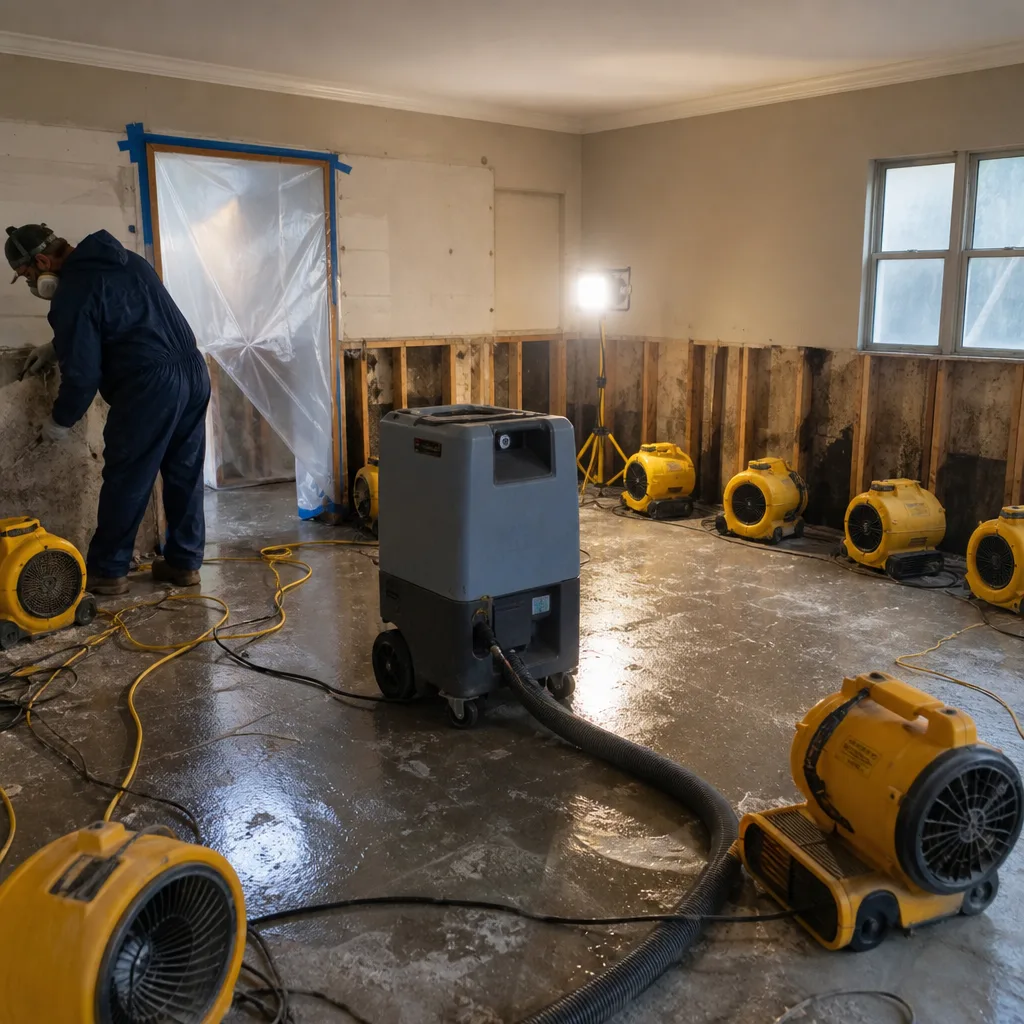
Fire and smoke damage restoration in Encinitas spans a wider cost range than water damage because the damage types are more heterogeneous. A kitchen grease fire with light soot deposition and no structural compromise is a mitigation job. A wildfire-ember intrusion with smoke throughout the HVAC system and corrosive ash residue is a reconstruction project.
| Damage Level | Typical Scope | San Diego County Range |
|---|---|---|
| Light smoke/soot (localized, no structural) | Cleaning, deodorization, air scrubbing | $8,500-$15,000 |
| Moderate smoke with content cleaning | Structural cleaning, pack-out, deodorization, partial demo | $18,000-$35,000 |
| Heavy smoke with structural compromise | Full demo, reconstruction, HVAC replacement, contents | $45,000-$85,000+ |
Key cost drivers in fire restoration:
- Soot type: Dry soot (fast-burning, natural materials) cleans more easily than wet soot (slow-burning, synthetic materials) or protein residue (invisible, extremely pungent, from kitchen fires). Protein fires often require sealed-source ozone or hydroxyl treatment at $450-$850 per treatment day.
- Odor penetration depth: Smoke follows the path of least resistance, infiltrating wall cavities, attic spaces, and HVAC ductwork. Thermal fogging runs $1.20-$2.50 per square foot; ozone treatment $450-$850 per day; hydroxyl generation $380-$650 per day. Multiple methods are often required sequentially.
- Content restoration vs. replacement: Pack-out, inventory, cleaning, and storage runs $65-$125 per hour plus storage at $0.45-$0.85 per cubic foot per month. High-value contents (art, electronics, textiles) may require specialized restoration at premium rates.
- HVAC system involvement: Duct cleaning after smoke intrusion: $650-$1,850 for residential systems. Coil and blower cleaning: $450-$850. If the fire originated in or near the HVAC, full system replacement may be required.
Encinitas-specific consideration: homes in fire-prone interface areas near Elfin Forest or San Elijo Hills increasingly require wildfire-specific documentation for insurer subrogation. Photo records of ember intrusion patterns, melt patterns on synthetic materials (which indicate heat exposure levels), and corrosion progression on metal surfaces support claims for hidden damage that manifests months later.
The Three Most Disputed Line Items in Encinitas Claims
After reviewing thousands of claims since 2011, we’ve identified the line items most frequently challenged by San Diego County adjusters, and the documentation that makes each defensible.
1. Equipment Days Beyond “Standard” Drying Duration
Adjusters frequently question why drying required 5 days instead of 3, or why 4 dehumidifiers were used instead of 2. The defense is daily psychrometric data: temperature, relative humidity, and specific humidity readings taken at the same time each day, with equipment configuration noted, and moisture content readings from affected materials showing progress toward the drying goal. Without this log, the contractor has no evidence; with it, the days are rarely disputed.
What the log should contain: date and time, ambient readings, equipment make/model/serial numbers, moisture content of at least three representative materials (framing, subfloor, drywall), and the drying goal. Water damage restoration in Encinitas that follows IICRC S500 standards produces this documentation as standard practice, not as an add-on.
2. Containment and Negative Air on Water Losses (Not Mold)
Category 3 water losses, sewage backups, and losses with visible mold at time of discovery require containment to prevent cross-contamination. Adjusters sometimes challenge this as unnecessary on “just a water job.” The defense is photographic documentation of contamination, classification of water per IICRC standards (with supporting evidence such as odor, source, or time elapsed), and the written protocol stating why containment was required. A photo of gray water saturated into porous materials, with time-stamped moisture readings showing 72+ hours of saturation, supports the containment decision.
3. Demolition Beyond “Flood Cut” Height
The standard flood cut removes drywall 12-24 inches above the visible water line. Adjusters question full-height removal or removal beyond the apparent damage. The defense is moisture mapping showing wicking height (capillary action draws water upward in drywall and insulation, often 2-3 times the visible water height), thermal imaging showing evaporative cooling patterns above the cut line, and written justification for full removal when structural integrity, insulation contamination, or mold growth above the line is documented.
In Encinitas, where stucco exteriors trap moisture and older homes lack vapor barriers, wicking frequently extends higher than in newer, better-ventilated construction. Documentation of this pattern, specific to local building practices, strengthens the claim.
How to Read a Restoration Quote Line by Line
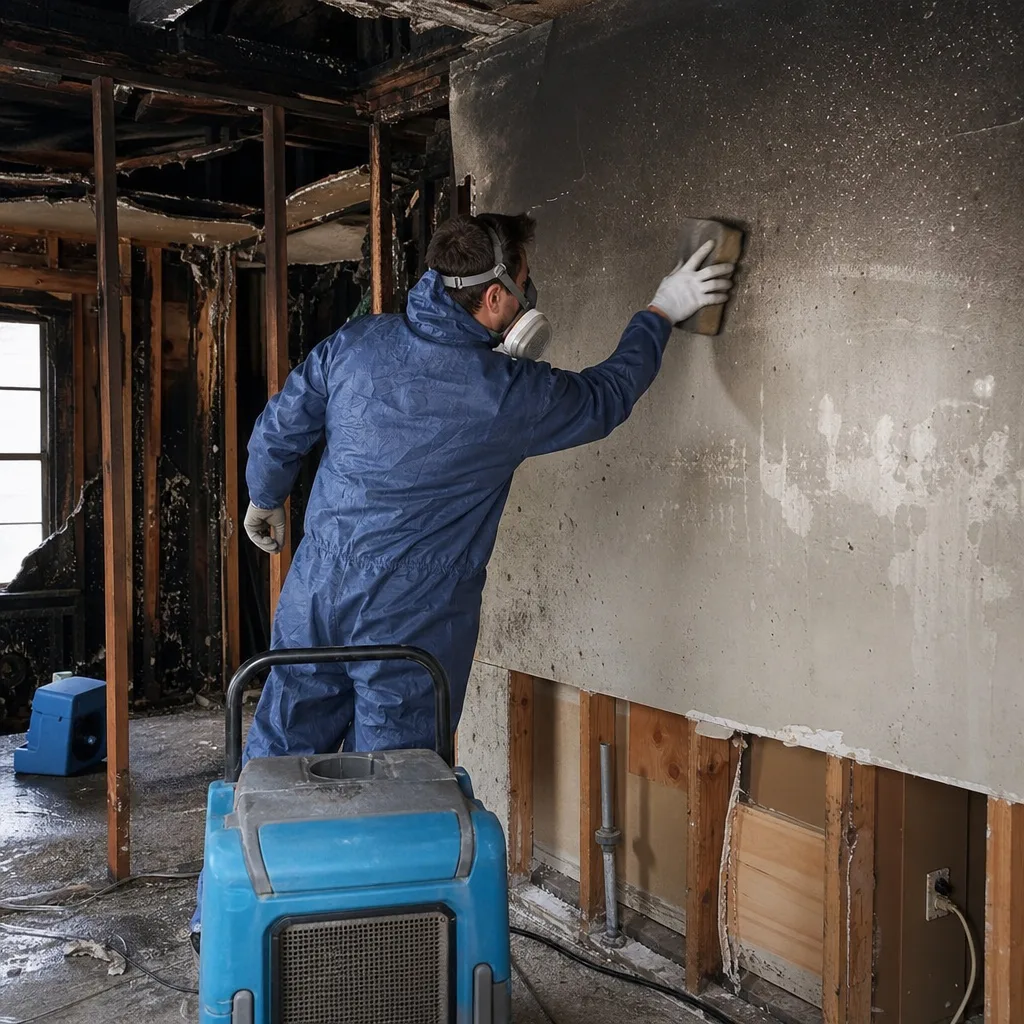
A legitimate restoration quote is a specification document, not a marketing piece. Every line item should answer three questions: what, how much, and at what unit price. Vague line items signal vague practices.
What Each Category Should Specify
| Category | Should Specify | Red Flag Language |
|---|---|---|
| Extraction | Equipment type (truck-mounted, portable, submersible pump), hours or square footage, water category | “Water removal: $2,500” |
| Drying equipment | Equipment make/model, quantity, daily rate, estimated days, purpose (dehumidification, air movement, specialty drying) | “Drying equipment as needed” |
| Demolition | Material type, square footage or linear footage, disposal method, hazard identification | “Demo and haul away” |
| Cleaning/anti-microbials | Product name, EPA registration number, application rate, square footage | “Sanitization” |
| Reconstruction | Material specifications (type, grade, manufacturer), square footage, finish level | “Restore to original” |
| Documentation | Moisture logs, photo records, written scope, warranty terms | Absent entirely |
Five-Step Quote Review Process
- Verify unit pricing: Cross-reference against Xactimate or ask the contractor to cite their pricing source. Independent contractors using arbitrary markups often cannot answer this question.
- Check quantity calculations: Does the dehumidifier count match the affected square footage? One dehumidifier per 400-500 square feet is standard. Three dehumidifiers for 2,000 square feet is insufficient; five for 800 square feet is padding.
- Confirm equipment specificity: “Dehumidifier, LGR, Dri-Eaz LGR 7000XLi, 3 units, 4 days at $125/day” is specific. “Dehumidifiers” is not. Equipment type matters: a refrigerant dehumidifier performs differently than a desiccant, and the specification affects drying performance.
- Demand documentation line items: Daily moisture logs, photo records, and written scopes should appear as deliverables, not as implied services. If documentation is not line-itemed, it is likely not produced systematically.
- Review warranty terms: What is covered, for how long, and what triggers it? “365-Day Done Right Promise: if it’s not done right, we make it right” with specific conditions is a warranty. “Satisfaction guaranteed” is a slogan.
Haven Standard, Clause 1 requires a written price before any work starts, with no scope-creep additions once the crew is inside. A quote that cannot be reviewed in detail before work begins violates this standard by design.
The Cost of Undocumented Restoration: What Insurers Actually Discount
The 31% settlement discount for undocumented claims is not an arbitrary penalty. It is the systematic removal of line items that cannot be verified. Adjusters apply standard depreciation, then remove disputed items, then apply coverage limits. Each removal requires the homeowner to absorb the cost or dispute the claim, often with legal fees that exceed the disputed amount.
Here’s how the discount applies in practice, based on San Diego County adjuster data and our experience with claims review:
| Documentation Level | Typical Adjuster Response | Homeowner Outcome |
|---|---|---|
| No written scope, no photos, no moisture log | Line-item challenge on 40-60% of invoice; depreciation maximized; coverage limits applied strictly | Average settlement 69% of submitted invoice; homeowner pays remainder or abandons claim |
| Written scope, no daily logs | Challenge on equipment days and demolition extent; partial approval with homeowner supplement required | Average settlement 82% of submitted invoice; moderate homeowner supplement effort |
| Written scope, daily moisture logs, photo record on every visit | Minimal challenge; depreciation standard; coverage limits applied favorably | Average settlement 94% of submitted invoice; supplements rare and quickly resolved |
The documentation cost is not free. Daily moisture readings add $85-$140 per day to the invoice; photo documentation requires technician time; written scopes require estimator expertise. On a 5-day drying job, documentation adds $500-$800. But the alternative, a 25% discount on a $15,000 claim, costs $3,750. Documentation pays for itself six times over.
For homeowners in Encinitas, where median home values exceed $1.5 million and insurance coverage limits are frequently tested by coastal construction costs, the documentation gap is particularly costly. Reconstruction in the 92024 zip code runs 15-25% above national averages due to labor availability, material transport, and coastal code requirements. A 25% insurer discount on Encinitas reconstruction costs hurts more than the same discount in most markets.
Encinitas-Specific Cost Factors: Climate, Codes, and Construction Types
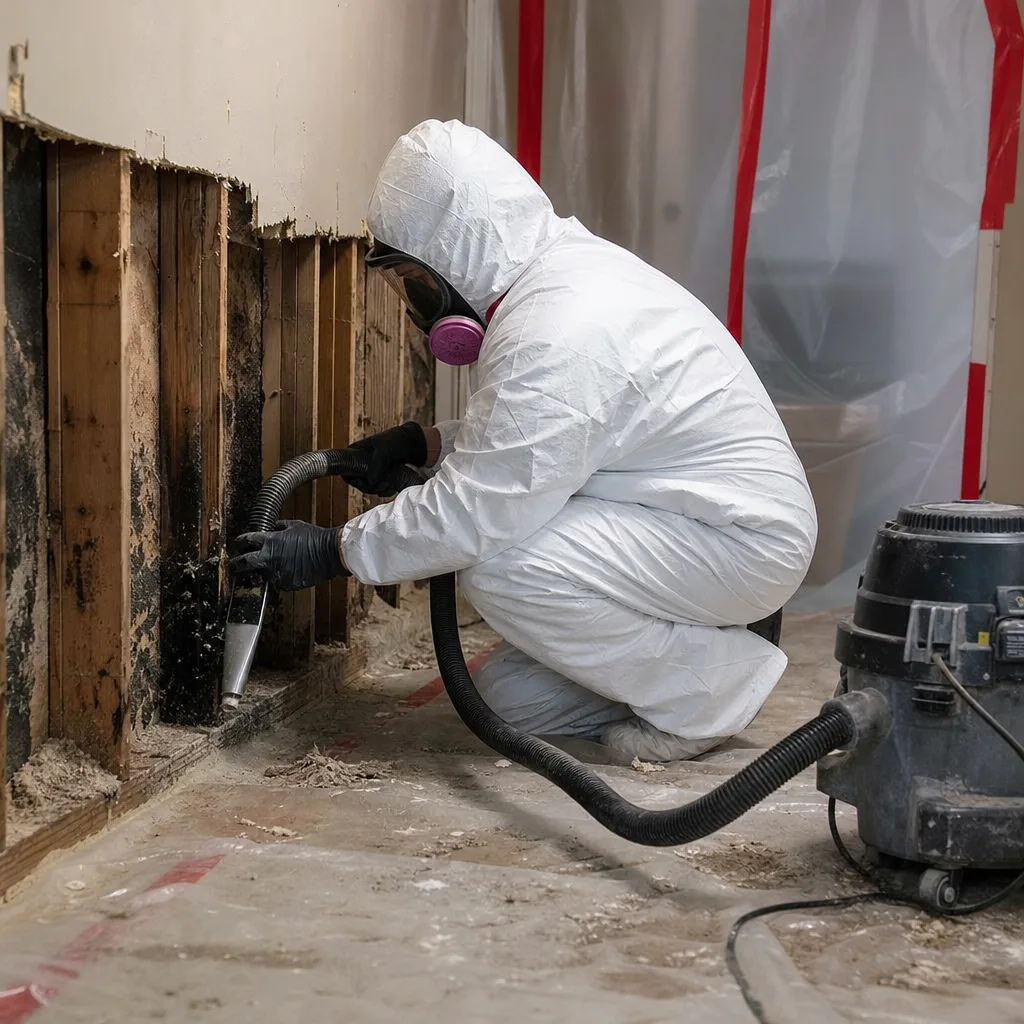
Restoration pricing is local. National averages mislead because they ignore the conditions that determine actual costs on actual jobs. In Encinitas, four local factors consistently affect pricing.
Coastal Humidity and Extended Drying
The marine layer that keeps Encinitas temperate also keeps structures wetter longer. Psychrometric calculations for drying must account for the vapor pressure differential between the wet structure and the ambient air. When exterior humidity is 75% at 65°F, the drying gradient is shallow; equipment must work harder and longer. Contractors who estimate drying duration based on inland experience underestimate Encinitas jobs by 20-40%.
Age and Construction Type by Neighborhood
- Leucadia and Old Encinitas (pre-1980): Single-wall construction, no vapor barriers, asbestos-containing materials common, limited attic ventilation. Drying requires more invasive access; demolition frequently triggers abatement.
- Encinitas Ranch and New Encinitas (1985-2005): Standard tract construction, better insulation, but slab-on-grade foundations with post-tension slabs that complicate leak detection and drying. Polybutylene plumbing, common in this era, increases failure frequency.
- Olivenhain and custom coastal (1995-present): Complex rooflines, integrated indoor-outdoor spaces, high-end finishes, and engineered systems. Restoration requires specialized subcontractor coordination and premium material matching.
Permitting and Coastal Zone Requirements
Encinitas Community Development Department requires permits for most reconstruction beyond like-for-like repair. In the coastal zone (roughly west of Interstate 5 and specific inland corridors), California Coastal Commission jurisdiction may apply for exterior modifications. A contractor unfamiliar with Encinitas permitting can delay reconstruction by months. Documentation of permit status, inspection schedules, and code compliance should appear in the reconstruction scope.
Labor Market and Subcontractor Availability
San Diego County’s construction labor market is tight, and Encinitas restoration competes with new construction for skilled trades. Reconstruction scheduling depends on electrician, plumber, and finish carpenter availability. Quotes that assume immediate subcontractor availability are often optimistic; legitimate quotes include realistic scheduling with documentation of subcontractor commitments.
Common Mistakes to Avoid
- Accepting a verbal estimate for emergency work. Haven Standard, Clause 1 exists because verbal estimates become disputed invoices. In Encinitas, where emergency calls often come at 2 AM during winter storm events, the pressure to start immediately is real. The written price protects both parties.
- Confusing mitigation with restoration. Mitigation stops damage. Restoration returns the property to pre-loss condition. A quote for “water damage restoration” that ends at dry walls and exposed framing is incomplete. Ask explicitly: does this quote include reconstruction to finished condition?
- Ignoring equipment specifications. “Air movers” and “dehumidifiers” are categories, not specifications. A Dri-Eaz Velo air mover moves 2,700 CFM; a box fan moves 250 CFM. Both are “air movers.” The specification determines performance.
- Neglecting to document pre-existing conditions. In Encinitas, where many homes have prior water intrusion history, insurers attribute mold or structural damage to pre-existing conditions unless photo documentation proves otherwise. Photo the entire affected area before any work begins.
- Assuming insurance covers everything without verification. Coverage limits, deductibles, and policy exclusions (flood vs. water damage, gradual vs. sudden, mold caps) determine actual payment. A contractor who promises “insurance will cover it” without reviewing the policy is speculating.
- Choosing the lowest bid without documentation comparison. A $4,000 quote without drying logs and a $6,500 quote with daily psychrometric data are not comparable services. The lower bid often costs more after insurer discounts and subsequent remediation.
- Delaying action in coastal humidity. In Encinitas, the 48-hour mold colonization window is often shorter due to ambient humidity. Waiting for multiple quotes while moisture continues to migrate expands the scope and cost. Get one documented assessment, then decide.
When to Call a Professional
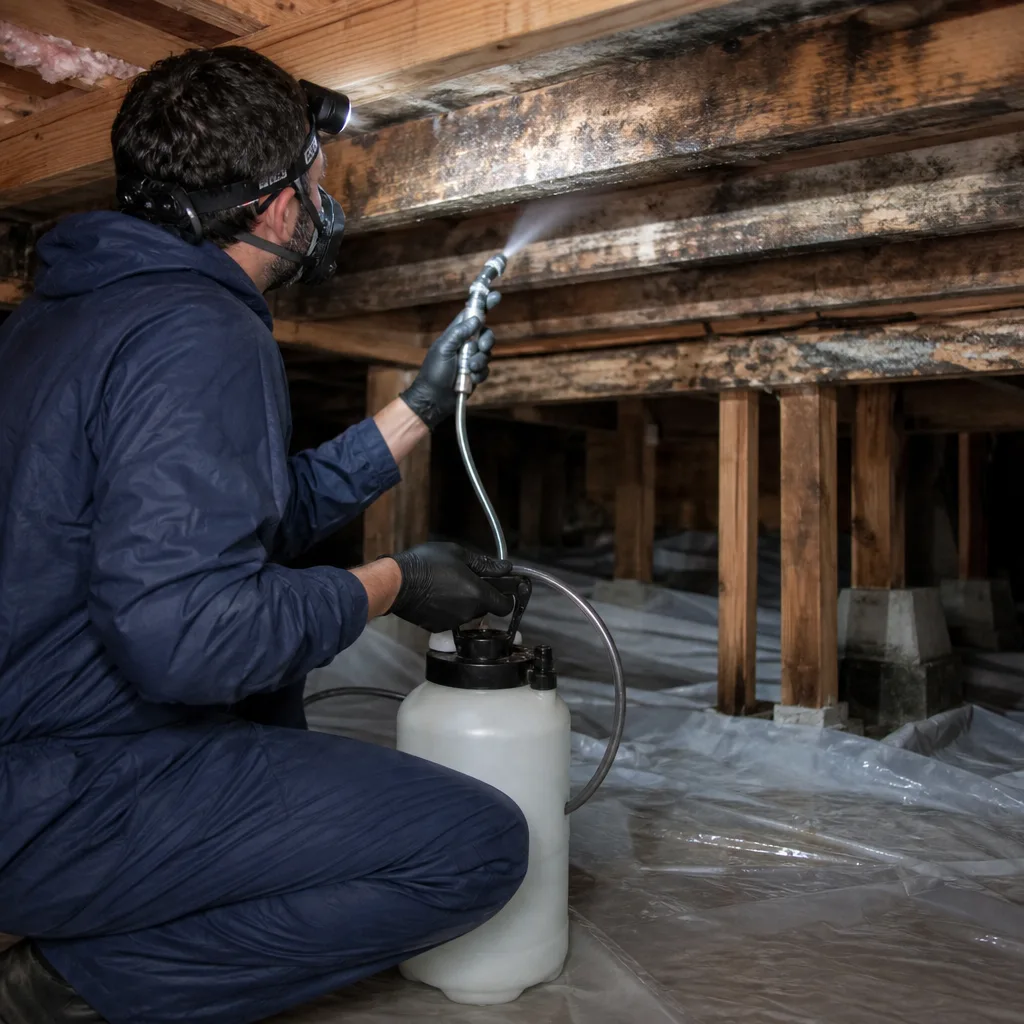
Call for professional assessment when water has affected more than a single, easily dried surface; when odor persists after initial cleanup; when discoloration appears on walls, ceilings, or flooring; or when any loss involves sewage, fire, or suspected mold. In Encinitas, where coastal conditions accelerate secondary damage, the threshold for professional involvement is lower than in drier climates.
DryMark Restoration Encinitas offers free estimates in Encinitas. Our assessments include moisture mapping, thermal imaging, and a written scope with line-item pricing before any work begins, per Haven Standard, Clause 1. For more guides & resources, visit our blog. We also provide a Free Second Opinion on any competitor’s written estimate at no charge. Call (760) 454-2594 to schedule.
Frequently Asked Questions
A typical Encinitas water damage restoration ranges from $4,500 for a contained Category 1 loss with 3-4 days of drying to $28,000 for a Category 3 loss requiring demolition, antimicrobial treatment, and reconstruction. The median San Diego County water claim in 2025 was $14,200, but Encinitas homes often run higher due to coastal construction costs and extended drying requirements. Call (760) 454-2594 for a written estimate specific to your property.
Insurance coverage depends on your policy type, cause of loss, and documentation quality. Sudden and accidental water damage is typically covered; gradual leaks and flood damage often are not. The critical factor is documentation: claims with written scopes, daily moisture logs, and photo records settle at 94% of estimated value, while undocumented claims average 69%. We coordinate directly with adjusters and provide the documentation that supports full settlement. Call (760) 454-2594 to discuss your specific policy situation.
Encinitas structural drying typically requires 20-40% longer than inland San Diego County due to coastal marine layer humidity. A job that dries in 3 days in Escondido often requires 4-5 days in Encinitas. Daily psychrometric readings determine actual completion; we do not remove equipment until moisture content readings confirm materials have reached pre-loss levels. This documentation prevents mold recurrence and supports insurance payment for all equipment days.
A flood cut removes drywall 12-24 inches above the visible water line, preserving upper wall sections. It costs $2.50-$4.20 per square foot. Full removal costs $3.80-$6.50 per square foot but is necessary when moisture mapping shows wicking above the cut line, when insulation is saturated, or when mold growth extends beyond the flood cut zone. We document the decision with thermal imaging and moisture readings, not assumptions.
Legitimate mold remediation quotes specify contained square footage, containment type (limited or full), air scrubber quantity and CFM rating, labor hours, removal/disposal scope, antimicrobial product, and clearance testing protocol. Watch for flat-rate pricing without square footage, fogging as primary remediation, or absence of containment specification. In Encinitas, where coastal humidity accelerates mold growth, proper containment and HEPA filtration are essential, not optional. Call (760) 454-2594 for a documented assessment.
What documentation should I receive from a restoration contractor?
Request a Free Estimate in Encinitas
Tell us what you need - DryMark Restoration Encinitas responds fast. No obligation.