
Last updated September 23, 2026
Free visual inspection and a written scope of work before any mitigation begins - photos, moisture readings, and drying logs go in your claim file
The scope we write is the scope we bill. Anything new gets shown to you, in writing, before we touch it.
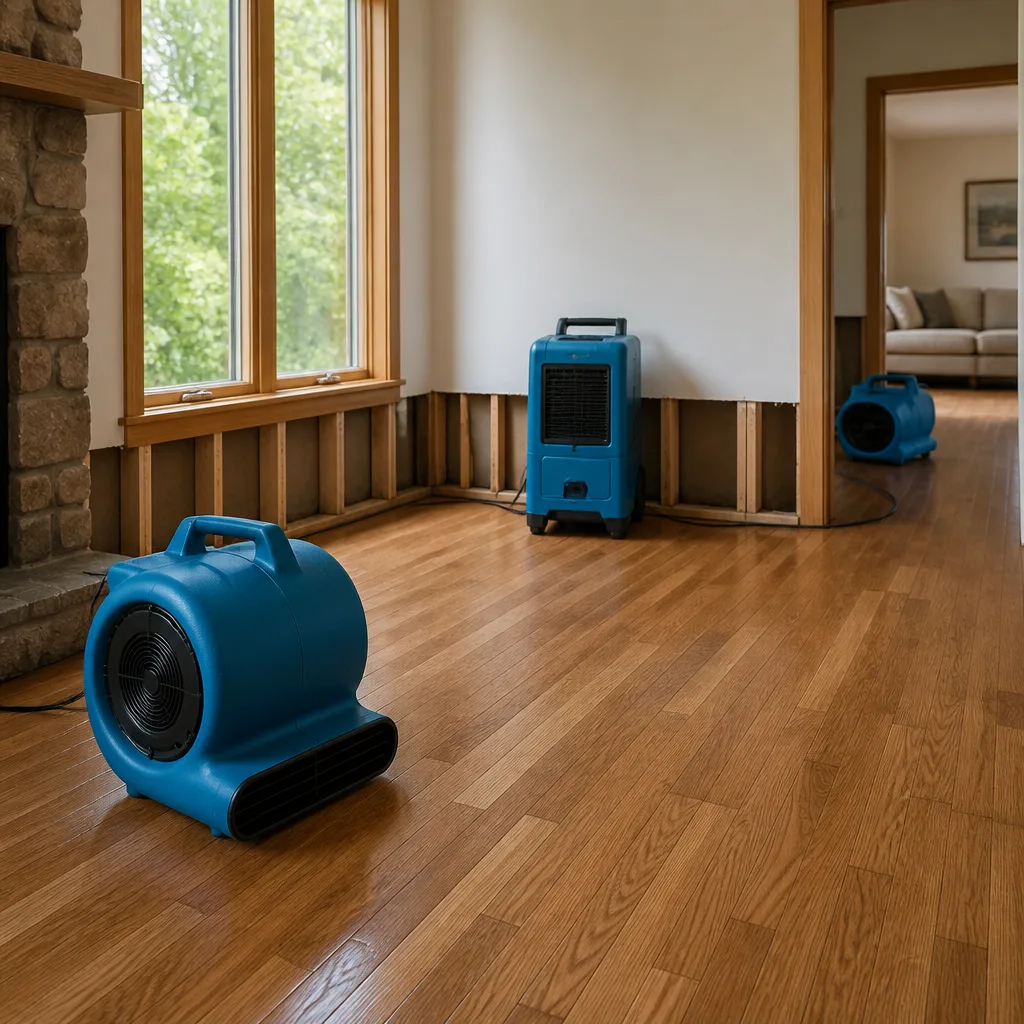
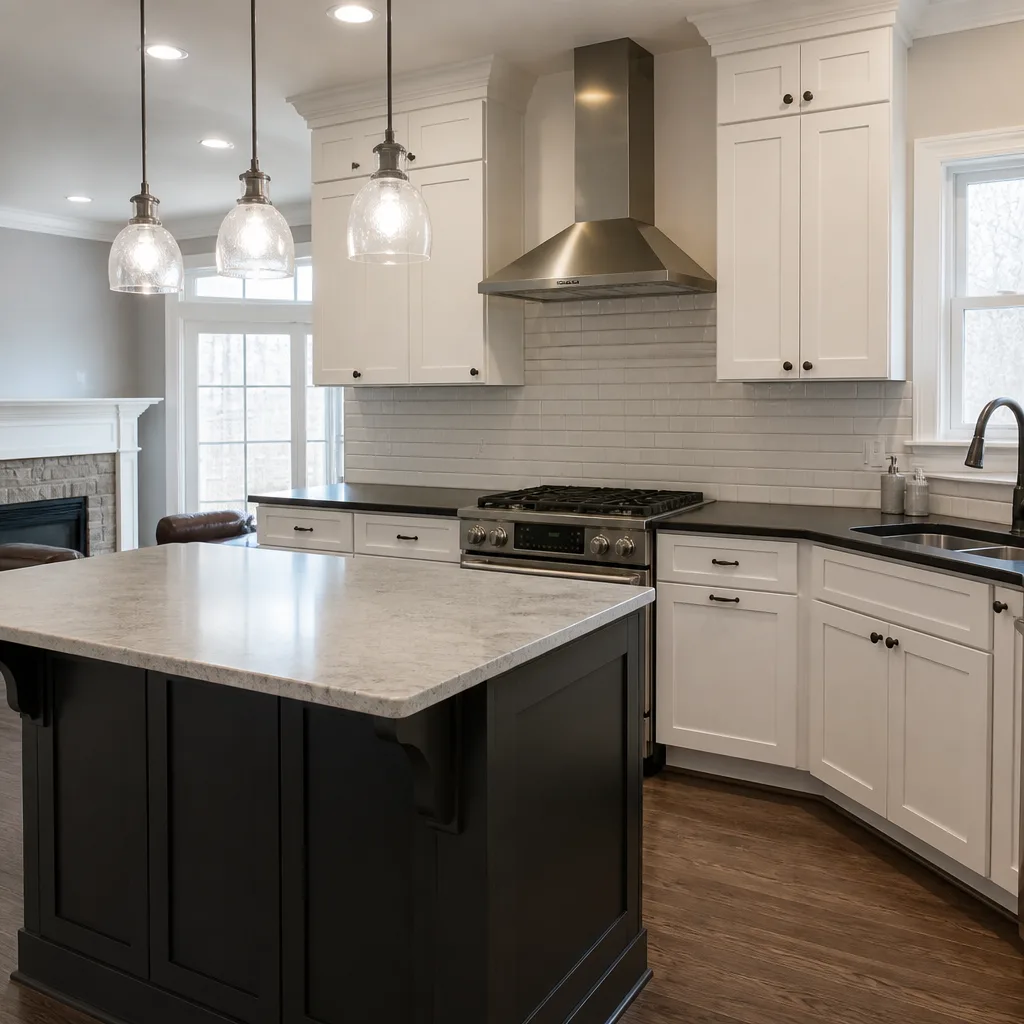
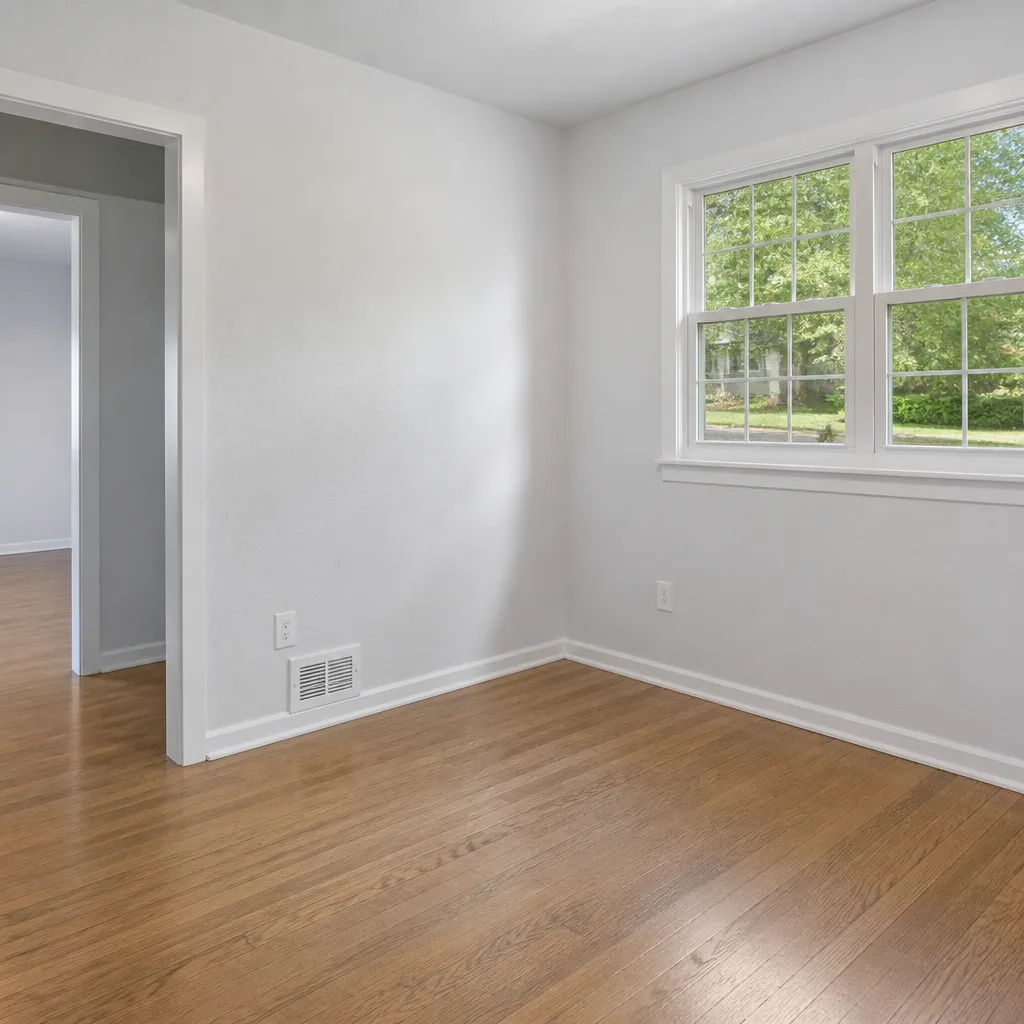
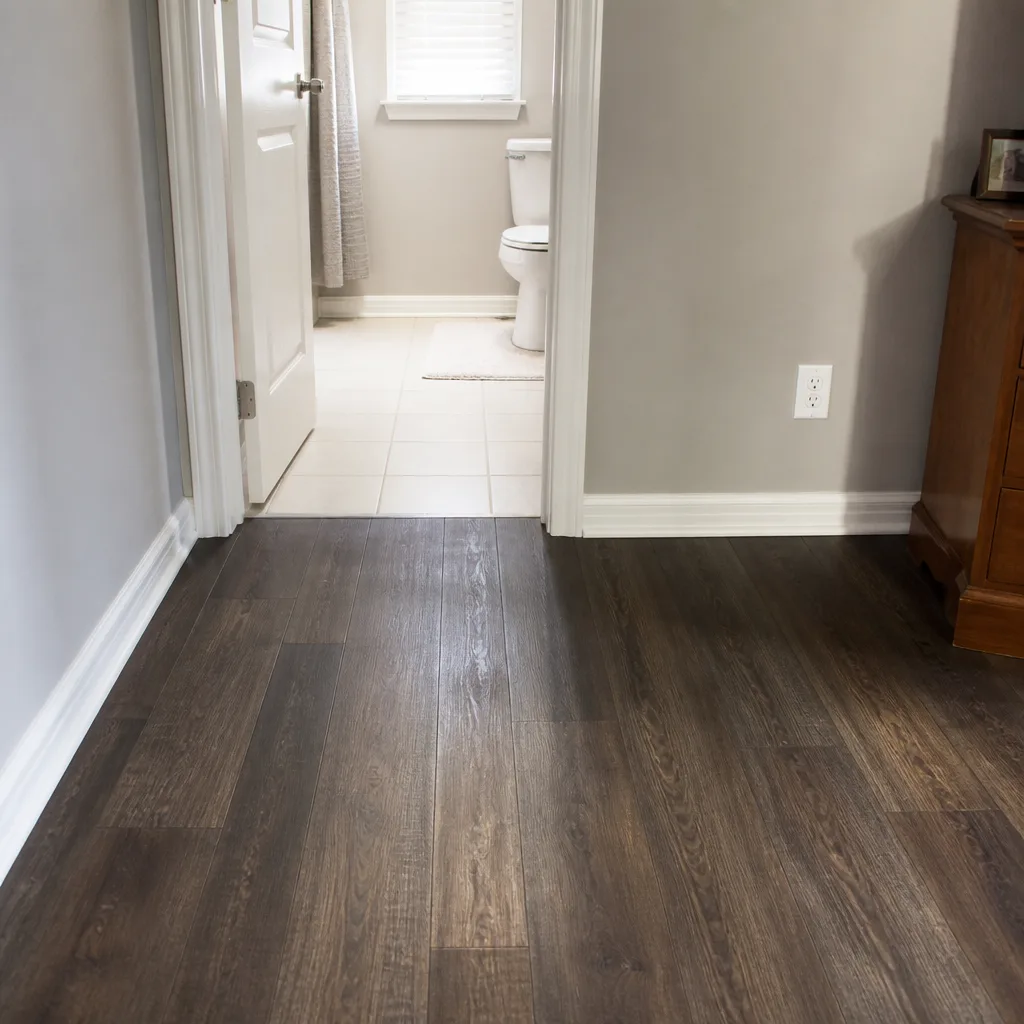
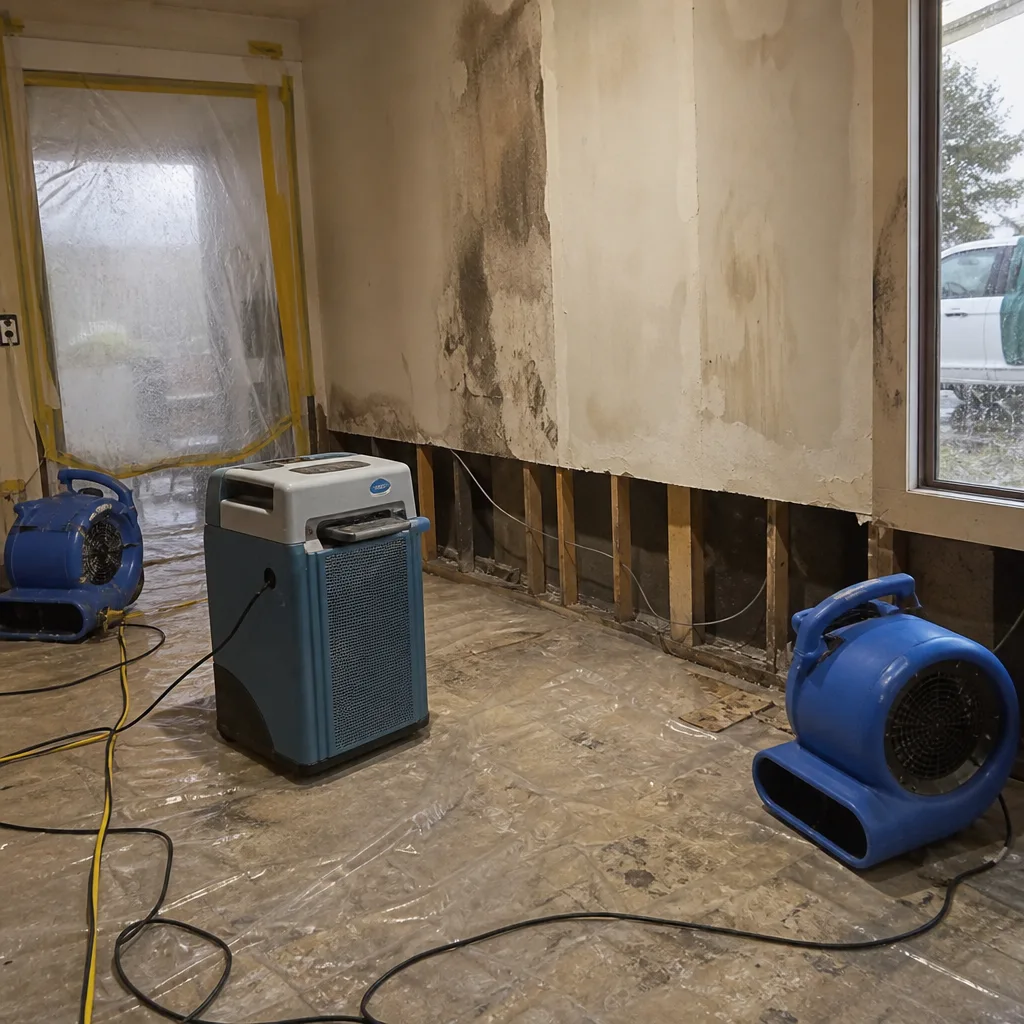 Before
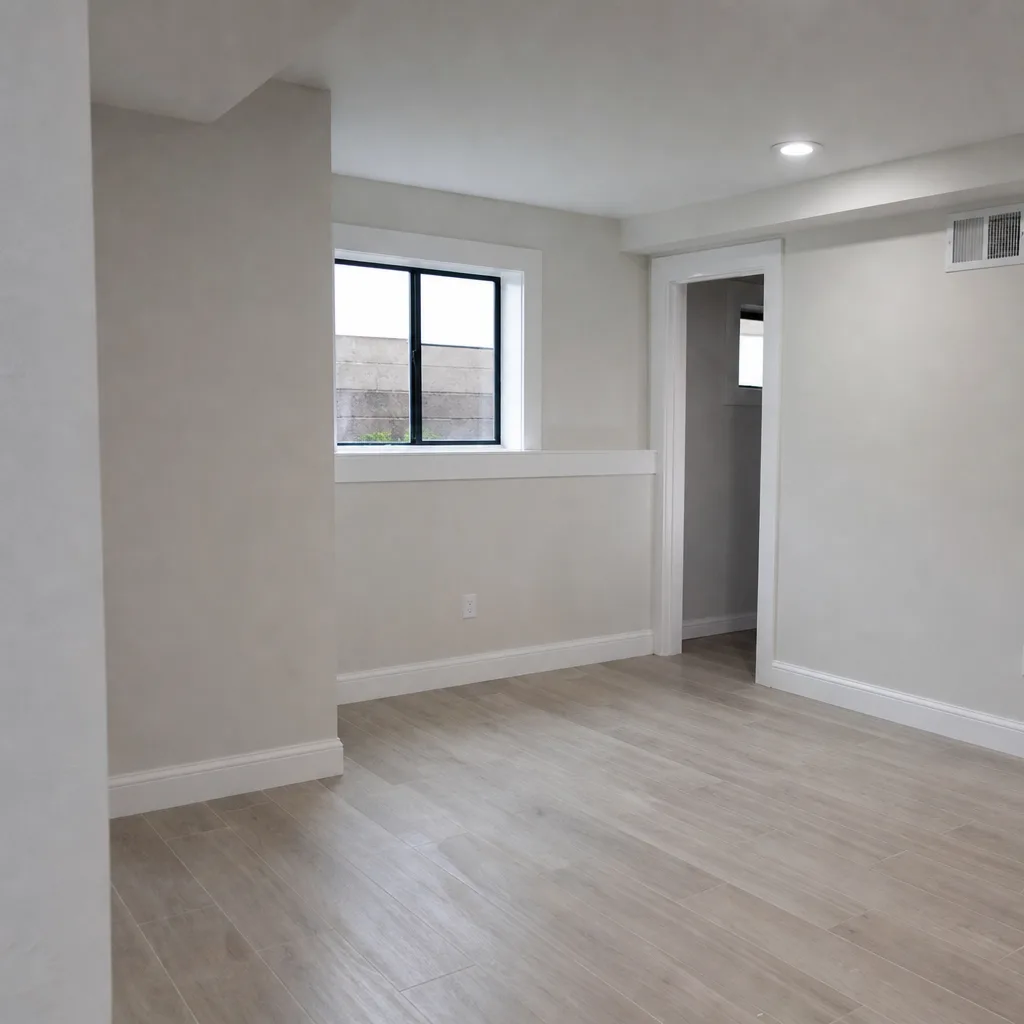 After
After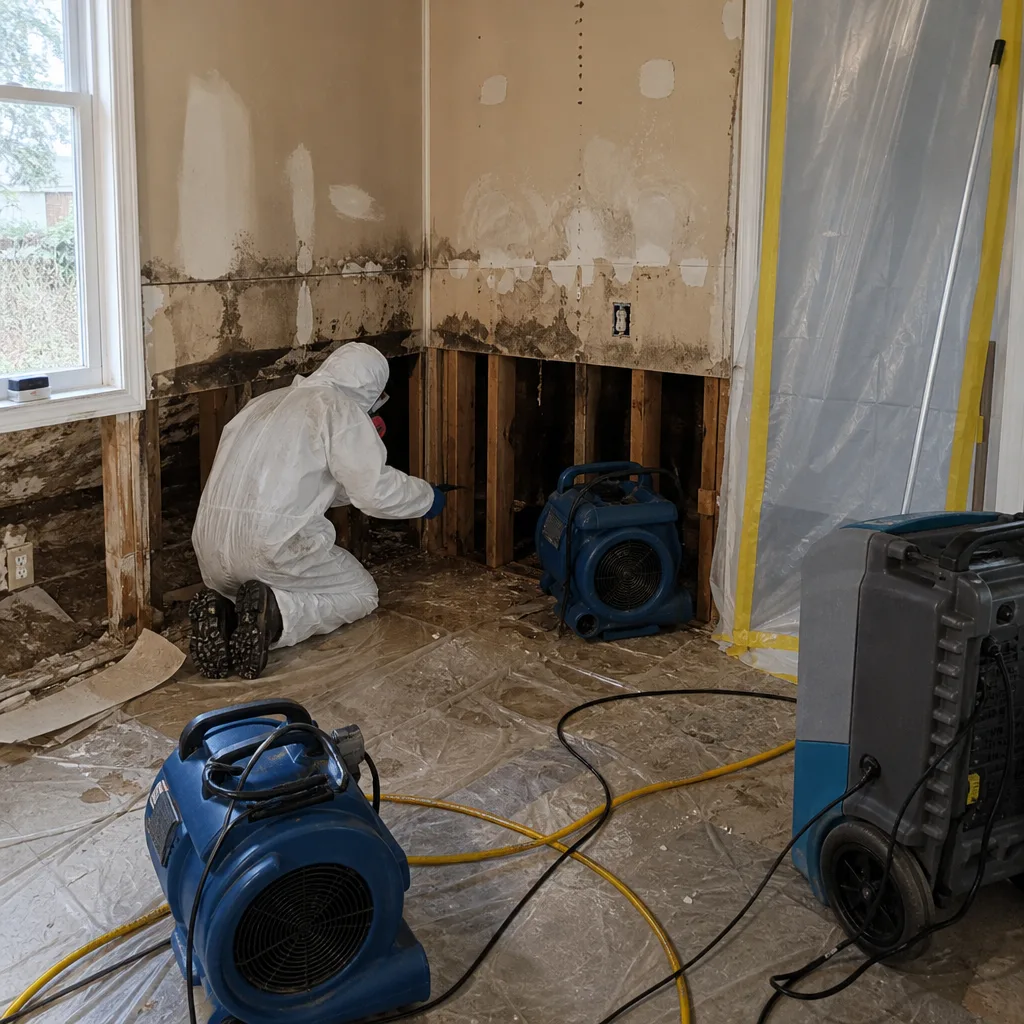 Before
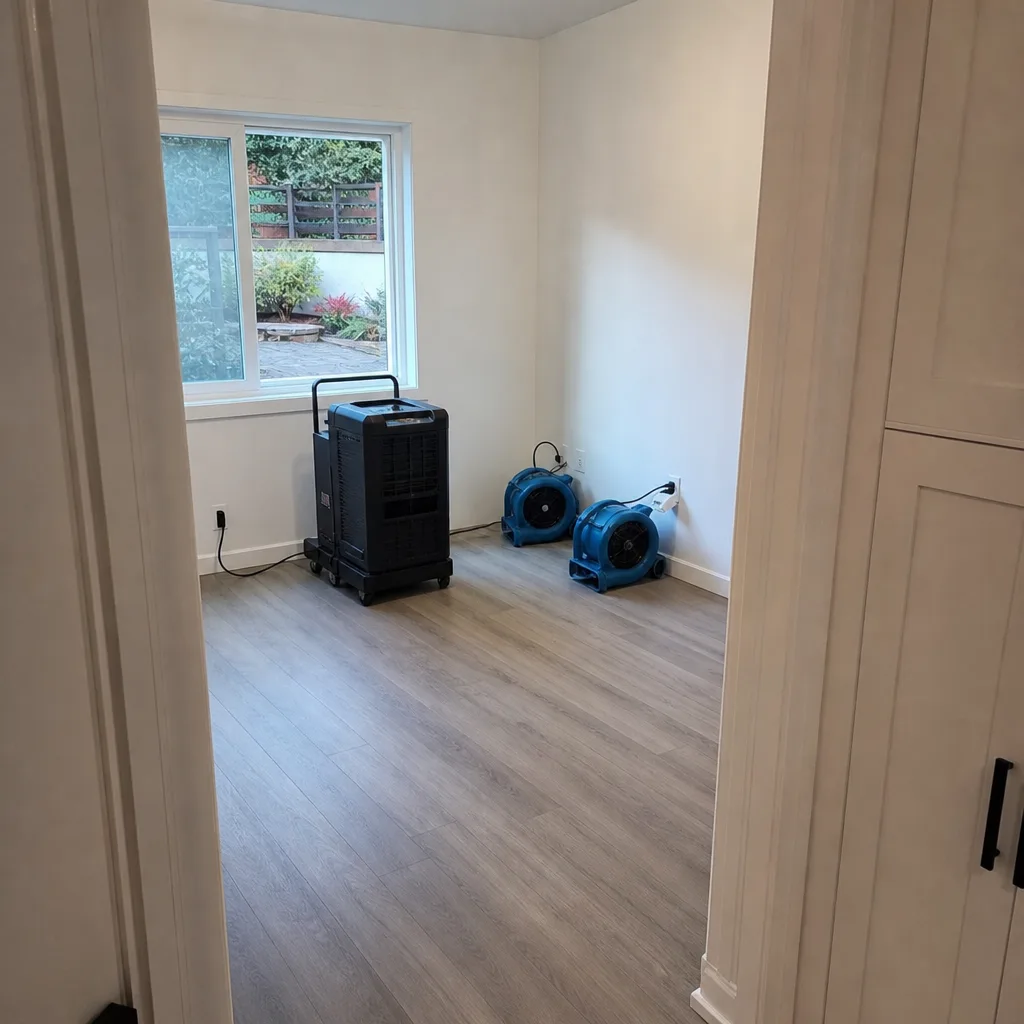 After
AfterDIY vs Professional Damage Restoration: The Encinitas Homeowner’s Decision Guide
A homeowner in Encinitas can legally dry their own water-damaged flooring - but their insurer can legally deny the subsequent mold claim if there’s no drying log showing the structure reached 15% moisture content or below. In our experience reviewing thousands of claims since 2011, the DIY vs. professional restoration question isn’t about skill. It’s about documentation. A homeowner who dries their own water loss without producing a single moisture reading has created a gap in their claim record that an insurer will exploit. This guide draws the decision boundary using documentation requirements, not damage size. You’ll learn exactly what records a DIY restoration must produce to support a future insurance claim, when California law requires a licensed contractor, and how Encinitas’s coastal humidity changes the equipment math. For year-round maintenance guidance, see our checklist for Encinitas homeowners.
Quick Answer
Most Encinitas homeowners can legally handle water damage under 50 square feet on non-porous surfaces with a consumer dehumidifier - provided they produce daily moisture readings, photos with timestamps, and a drying log proving the structure reached 15% moisture content or below. For losses exceeding that threshold, affecting porous materials like drywall or engineered hardwood, or occurring when relative humidity is above 60%, professional documentation becomes necessary to protect against denied secondary damage claims. The cost difference between DIY and professional restoration in Encinitas typically ranges from $800-$2,500 for the initial dry-out, but an undocumented DIY job that leads to a mold claim denial can cost $15,000-$40,000 in uncovered remediation.
Table of Contents
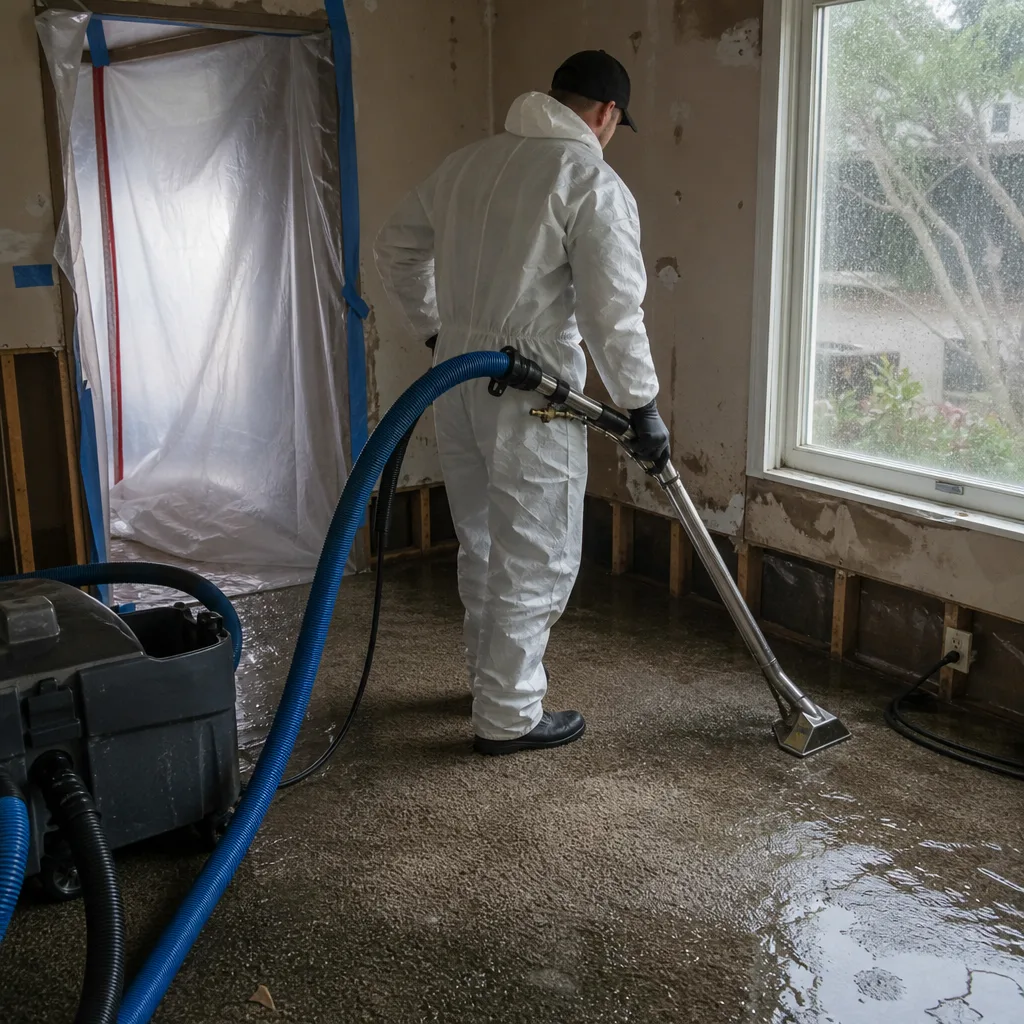
- The Documentation Gap: Why Insurers Deny DIY Restoration Claims
- How Encinitas’s Coastal Climate Changes the Drying Equation
- California Contractor Licensing: What Homeowners Can and Cannot Legally Do
- Equipment Thresholds: When Consumer Gear Fails
- The Hidden Cost of DIY: Secondary Damage and Claim Denials
- Decision Matrix: Four Inputs That Determine DIY or Professional
- The DIY Documentation Checklist: Records That Survive Claim Review
- What a Professional Restoration Delivers That DIY Cannot
 Before
 After
AfterThe Documentation Gap: Why Insurers Deny DIY Restoration Claims
Insurance adjusters do not deny mold claims because a homeowner dried their own water damage. They deny them because the homeowner cannot prove the structure was dried properly.
Here’s what happens in our files. A water loss hits a kitchen in Leucadia in March - a supply line to the refrigerator ice maker fails. The homeowner shops vacuums the standing water, sets up a box fan and a 50-pint dehumidifier from Home Depot, and declares the job done in three days. Six months later, musty odor appears behind the cabinets. The mold test comes back positive for Stachybotrys chartarum on the drywall. The homeowner files a mold claim. The insurer requests the drying log.
There isn’t one. The insurer denies the claim, citing “pre-existing conditions and inadequate mitigation” - policy language that shifts liability to the homeowner for failing to document proper drying.
The documentation gap is not a technical failure. It’s a record-keeping failure. Professional restoration companies operating under IICRC S500 standards produce:
- Daily moisture content readings for each affected material, recorded in percentage by weight
- Psychrometric data: temperature, relative humidity, and specific humidity at the loss site and in the drying chamber
- Equipment placement logs with serial numbers, CFM ratings, and cubic footage calculations
- Photo documentation with timestamps, showing pre-loss condition, equipment deployment, and post-drying verification
- A written scope of work with a fixed price delivered before work begins
A DIY restoration produces none of this by default. The homeowner has memories, perhaps a few phone photos, and a credit card receipt for the dehumidifier. That collection does not survive a claim review.
We built DryMark Restoration Encinitas around this exact problem. Our founder, Alicia Brennan, spent years as a claims adjuster watching homeowners lose coverage over documentation gaps they didn’t know existed. The Haven Standard was written to close that gap: Haven Standard, Clause 1 requires a written price before work starts, and every job includes a complete photo record and drying log as standard deliverables - never an upsell.
How Encinitas’s Coastal Climate Changes the Drying Equation
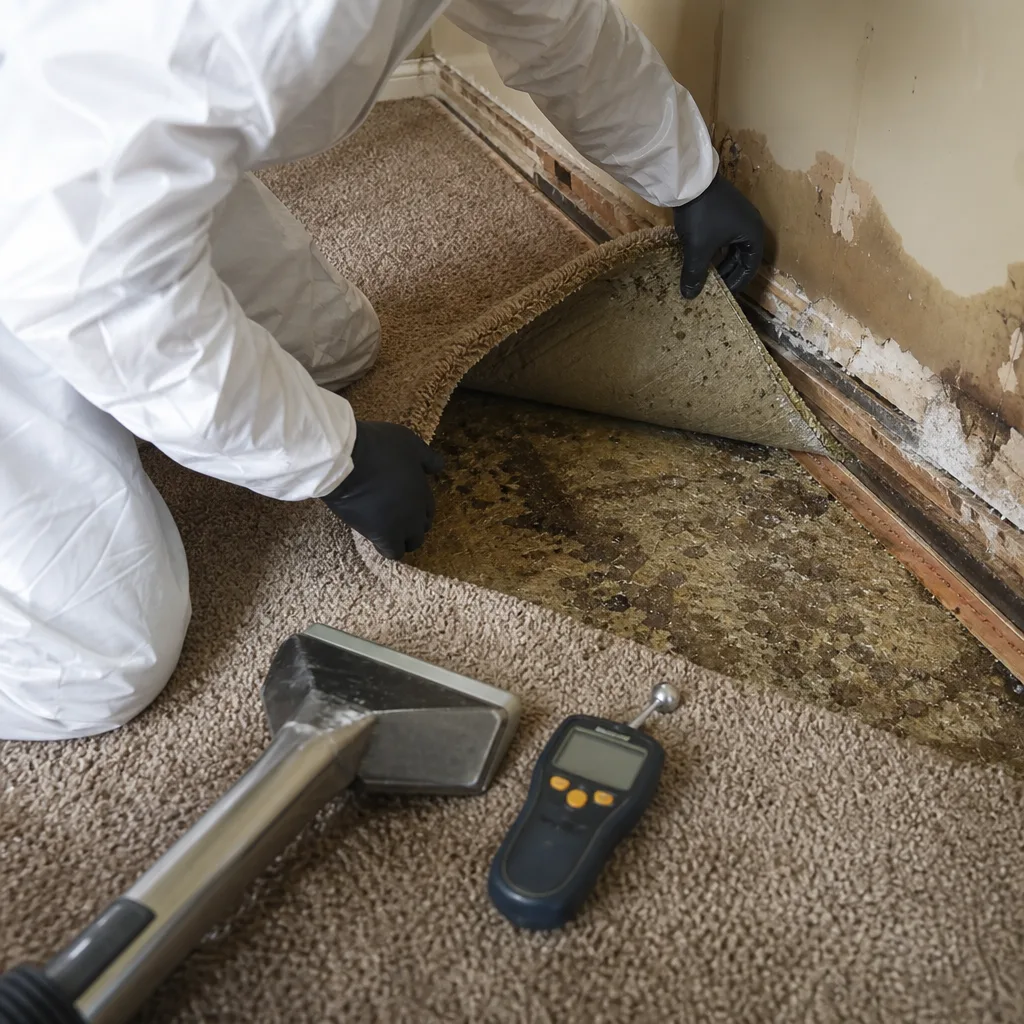
Encinitas sits at 33.04°N, roughly 2 miles from the Pacific Ocean, with baseline relative humidity that routinely runs 65-75% in morning hours and rarely drops below 55% even in dry afternoons. This matters because dehumidification is a battle against the air’s existing moisture load, not just the water in your walls.
A consumer-grade dehumidifier rated at 50 pints per day is tested at 80°F and 60% relative humidity - conditions rarely seen in Encinitas coastal homes. At 70°F and 70% RH, that same unit’s actual output drops to approximately 30-35 pints per day. The air is already saturated. The machine works harder for less result.
Here’s the equipment math that determines whether DIY drying is viable:
- Calculate affected cubic footage. A 12′ × 12′ kitchen with 9′ ceilings and water wicking 2 feet up the walls creates approximately 1,728 cubic feet of affected airspace, plus the interstitial spaces within walls and cabinetry.
- Determine required air changes per hour (ACH). IICRC S500 recommends 4-6 ACH for Class 1 and 2 water losses. At 5 ACH, you need 8,640 cubic feet of air movement per hour - 144 CFM minimum from your drying equipment.
- Size the dehumidifier by grain depression. Professional units like the Dri-Eaz LGR 7000XLi produce grain depressions of 30-35 grains per pound (GPP) under coastal conditions. Consumer units achieve 15-20 GPP at best. Lower grain depression means slower drying, longer exposure time, and elevated mold risk.
- Account for vapor pressure differential. This is the force that drives moisture from wet materials into the drier air. A professional LGR (low-grain refrigerant) dehumidifier maintains vapor pressure low enough to pull moisture from dense materials like engineered hardwood and concrete subfloors. Consumer units cannot achieve this differential in Encinitas’s humid baseline conditions.
In Cardiff-by-the-Sea and along the 101 corridor, we’ve measured indoor RH at 78% during active drying with consumer equipment. The structure was not drying. It was equilibrating - reaching moisture balance with the humid air, not losing moisture to it. The homeowner thought the floor felt dry. The moisture meter read 22% in the plywood subfloor. Mold colonization threshold is 16% sustained for 48-72 hours.
The coastal climate doesn’t make DIY impossible. It makes the equipment threshold higher and the documentation burden heavier. A homeowner in inland Escondido with 35% baseline RH has a larger margin for error than a homeowner in Encinitas with 70% baseline RH.
California Contractor Licensing: What Homeowners Can and Cannot Legally Do
California law draws a clear line between maintenance and construction, and that line determines what a homeowner can legally perform without a contractor’s license. For step-by-step guidance on selecting qualified help, see our Encinitas hiring guide.
Under the California Business and Professions Code Section 7048, a homeowner may perform work on their own single-family dwelling without a contractor’s license, provided the work does not involve structural modifications, electrical, plumbing, or HVAC systems beyond minor repairs. However, water damage restoration frequently crosses into licensed territory without the homeowner realizing it.
Here’s the breakdown for common restoration scenarios in Encinitas:
- Water extraction and surface drying: No license required. A homeowner may extract standing water and deploy drying equipment on their own property.
- Drywall removal and replacement: Generally no license required if non-structural and under $500 in value. Above $500, or if load-bearing walls are involved, a C-61/D-49 (Limited Specialty) or B (General Building) contractor is required.
- Mold remediation exceeding 10 square feet: The California Department of Public Health recommends - and most insurers require - remediation by a licensed contractor with mold-specific training. While not strictly criminal for a homeowner to perform, an insurer may deny subsequent claims for work performed by an unlicensed party.
- Sewage cleanup (Category 3 water): No explicit licensing requirement for homeowners on their own property, but OSHA 29 CFR 1910.1030 (bloodborne pathogens) and local health department regulations apply. The City of Encinitas requires proper disposal documentation for Category 3 waste.
- Electrical or plumbing repair/replacement: C-10 (Electrical) or C-36 (Plumbing) license required. A homeowner may not legally replace a subpanel damaged by water or reroute plumbing without proper licensure.
- Reconstruction involving structural elements: B license required. This includes sistering joists, replacing sill plates, or any work affecting the building’s structural integrity.
The practical risk for Encinitas homeowners isn’t criminal prosecution for unlicensed work. It’s claim denial. An insurer examining a water loss that led to mold may request documentation of who performed the remediation. “I did it myself” triggers scrutiny. “A C-61/D-49 licensed contractor performed the work under IICRC S520 mold remediation standards, with a written scope and drying log” does not.
We maintain C-61/D-49 and B licenses specifically for this reason. Every water damage restoration in Encinitas we perform includes license verification in the job file, available to adjusters on request.
Equipment Thresholds: When Consumer Gear Fails
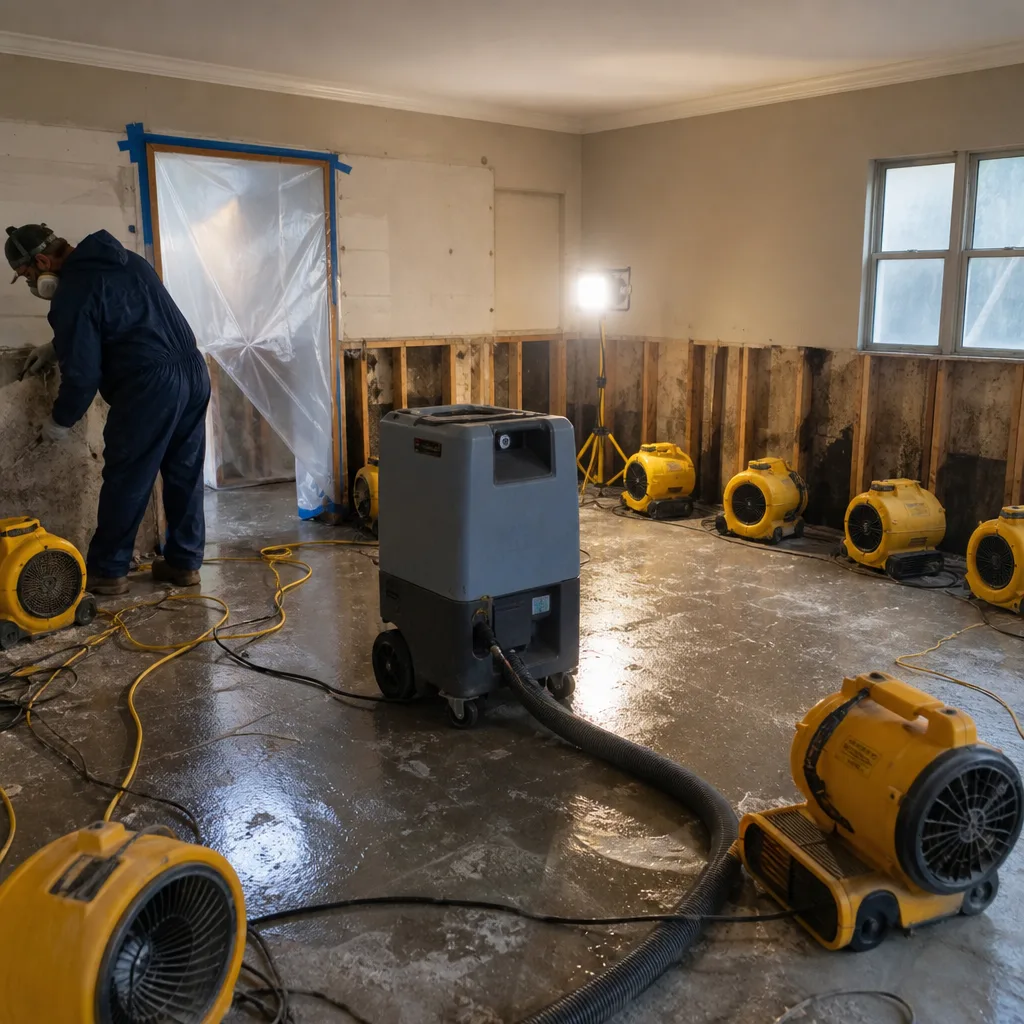
The restoration industry measures drying capacity in pints per day at AHAM conditions (80°F, 60% RH), but the number that matters is grain depression under actual loss conditions. Here’s when consumer equipment crosses from adequate to inadequate.
Consumer dehumidifier adequacy by loss class:
| Loss Class | Description | Consumer Unit Adequacy | Professional Unit Required |
|---|---|---|---|
| Class 1 | Minimal moisture, fast evaporation, affected area <150 sq ft, non-porous materials only | Marginal in Encinitas conditions; viable with extended runtime and daily moisture verification | Recommended for documentation purposes |
| Class 2 | Significant moisture, fast evaporation, 150-700 sq ft, moisture wicking into walls | Inadequate. Cannot achieve required grain depression or vapor pressure differential | Required. LGR or desiccant dehumidification with air movers |
| Class 3 | Greatest moisture, slow evaporation, >700 sq ft, ceiling/walls/insulation saturated | Inadequate. Structural drying requires positive or negative air pressure systems | Required. Injectidry or equivalent cavity drying, with thermal imaging verification |
| Class 4 | Specialty drying: hardwood, plaster, concrete, low-permeance materials | Inadequate. Consumer units cannot overcome material permeance resistance | Required. Desiccant dehumidification, targeted heat drying, or vacuum freeze-drying |
The cubic footage-to-pint ratio that actually works in Encinitas: for Class 2 losses, you need approximately 1 pint of removal capacity per 10 cubic feet of affected space per hour, adjusted upward 25% for coastal humidity baselines above 65%. A 1,500 cubic foot affected area requires 187.5 pints per hour of rated capacity - roughly 4,500 pints per day. No consumer unit approaches this. A Dri-Eaz LGR 7000XLi produces 235 pints per day at AHAM, approximately 180 pints under Encinitas conditions. You need two units for that space, plus air movers, plus containment if humidity migration is a concern.
Air movers matter as much as dehumidifiers. A box fan moves 1,000-2,000 CFM with no focused velocity. A professional axial air mover like the Phoenix FOCUS produces 3,000 CFM at a focused 2,000 FPM velocity across the wet surface, creating the boundary layer disruption that accelerates evaporation. Without that velocity, you’re drying by passive evaporation - slow, undocumented, and risky.
The Hidden Cost of DIY: Secondary Damage and Claim Denials
The cost comparisons you’ll find online compare equipment rental to professional service fees. They rarely include the downstream costs that determine whether DIY was actually cheaper.
We track secondary damage claims in our files. The pattern is consistent: 90-180 days after an undocumented DIY dry-out, we receive calls from homeowners whose insurers have denied mold or structural damage claims. The denial reason is almost always the same: “failure to mitigate properly” or “pre-existing condition not covered under current policy term.”
Here’s a typical Encinitas case from our files. A homeowner in Olivenhain experienced a washing machine overflow in a second-floor laundry room. They extracted water, ran fans for five days, and replaced the visible wet drywall themselves. Four months later, mold appeared in the ceiling of the room below. The insurer’s adjuster requested:
- The drying log showing daily moisture content readings
- Documentation that the structure reached 15% MC or below
- Verification that a licensed contractor performed or supervised the work
- Photo documentation with timestamps of the drying process
The homeowner had none of these. The mold remediation estimate was $18,400. The claim was denied. The homeowner paid out of pocket.
The hidden costs of DIY restoration include:
- Denied secondary damage claims: Mold, structural decay, and electrical corrosion that develop after inadequate drying, with no documentation to prove the initial loss was properly mitigated
- Extended displacement: Incomplete drying extends the time before affected areas can be reconstructed, often by weeks
- Equipment rental overrun: Consumer units run longer and achieve less, extending rental periods beyond initial estimates
- Material replacement versus restoration: Professional drying often saves carpet, hardwood, and drywall that DIY methods condemn to replacement
- Health exposure costs: Category 2 and 3 water losses involve bacterial and chemical contamination; inadequate PPE and disinfection create exposure risk
The documentation-first approach exists precisely to prevent this outcome. Our 365-Day Done Right Promise, backed by The Haven Standard, includes not just the work but the record that makes the work verifiable. If an insurer questions whether a structure was properly dried, we produce the daily moisture logs, the psychrometric data, and the timestamped photo record. That documentation has value independent of the drying itself.
Decision Matrix: Four Inputs That Determine DIY or Professional
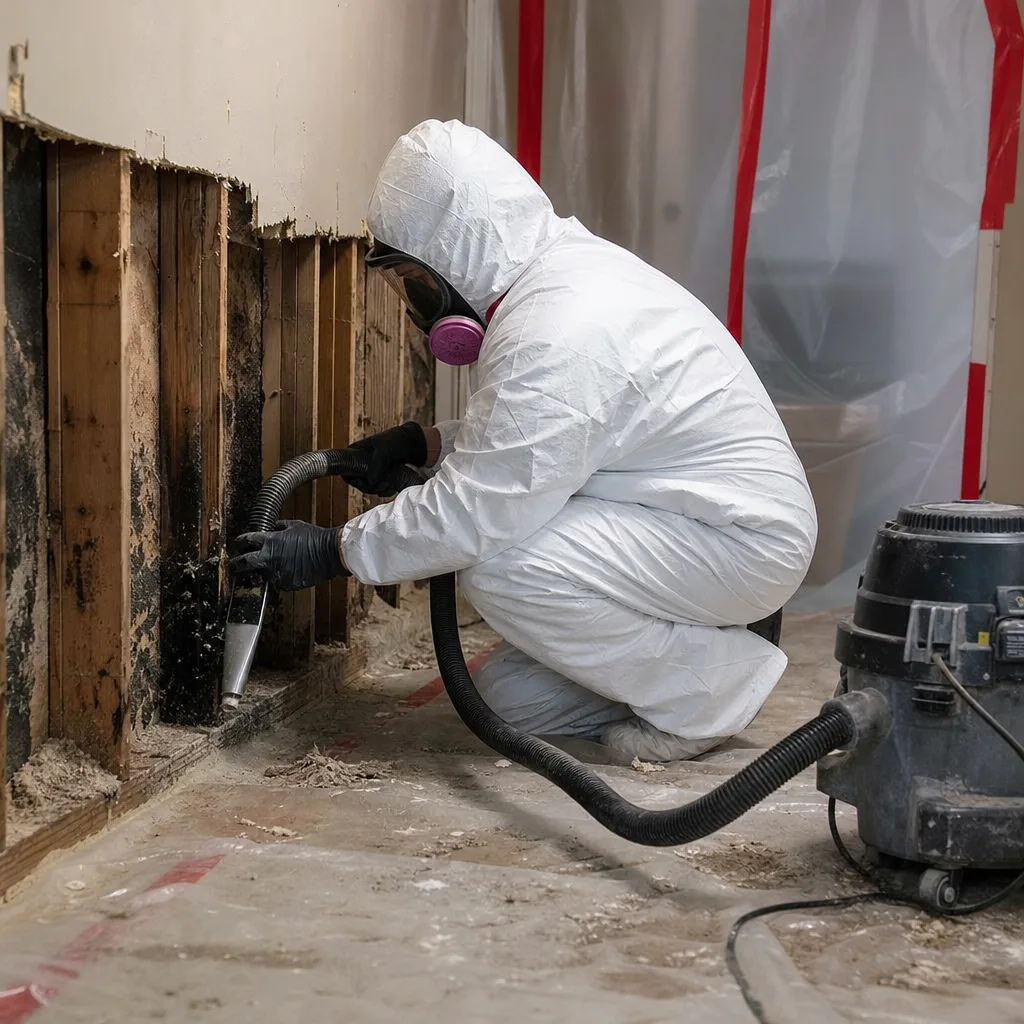
Use these four inputs to place your loss on the DIY-professional boundary. This matrix reflects our experience with Encinitas’s specific climate and claim patterns.
Input 1: Loss size in square feet
- Under 50 sq ft, non-porous: DIY viable with documentation
- 50-150 sq ft, any material: Professional recommended for documentation value alone
- Over 150 sq ft: Professional required for equipment capacity and claim protection
Input 2: Material type affected
- Tile, sealed concrete, vinyl plank: DIY viable if extraction is thorough
- Carpet and pad: Professional recommended - pad retention and subfloor drying require extraction equipment most homeowners don’t own
- Drywall, insulation, engineered hardwood: Professional required - these materials require controlled drying rates to prevent permanent damage
- Plaster, solid hardwood, concrete: Professional required - Class 4 specialty drying protocols
Input 3: Relative humidity at time of loss
- Under 50% RH: DIY margin for error exists
- 50-65% RH: DIY requires extended runtime and verification; professional recommended
- Over 65% RH: Professional required - Encinitas coastal baseline makes consumer equipment inadequate
Input 4: Access to documentation tools
- Pin-type moisture meter ($50-$150), hygrometer ($30-$80), camera with timestamp capability, and spreadsheet or log template: DIY documentation possible
- Missing any of these: Professional required - the documentation gap creates claim risk that exceeds any equipment savings
Composite recommendation:
If three or more inputs point to professional service, hire a professional. If two point to DIY and two to professional, default to professional - the documentation value and claim protection typically exceed the cost differential for losses near the boundary. If all four point to DIY, proceed with strict documentation protocols and verify your insurer’s requirements for self-mitigation documentation before starting work. Explore seasonal care strategies to prevent losses before they start.
The DIY Documentation Checklist: Records That Survive Claim Review
A homeowner who chooses DIY can produce documentation that survives insurer scrutiny. It requires discipline, the right tools, and time investment that most underestimate. Here’s the checklist we recommend, derived from IICRC S500 documentation standards that professional firms follow.
Pre-loss and immediate response:
- Photograph the loss source, affected areas, and visible water line before moving anything. Use a camera that embeds timestamps or a phone with location services enabled for EXIF data.
- Record the date and time of discovery, the apparent source, and any immediate actions taken (water shutoff, extraction begun).
- Document the water category: Category 1 (clean source), Category 2 (gray water - dishwasher, washing machine), or Category 3 (black water - sewage, seawater, ground water). Category determination affects drying protocols and health precautions.
Daily drying log - maintain for each day until completion:
- Date and time of reading
- Ambient temperature and relative humidity (measured with calibrated hygrometer, not thermostat display)
- Moisture content percentage for each affected material, measured with pin-type meter at multiple points
- Equipment operating: dehumidifier model and pint rating, air mover count and CFM, any supplemental heat
- Photos of equipment placement and affected materials
- Notes on odor, visible changes, or new affected areas
Completion documentation:
- Final moisture readings showing all materials at or below 15% moisture content (wood framing) or dry standard for specific material
- Photo documentation of dry condition
- Summary of equipment runtime and conditions achieved
- Receipts for any equipment rental or materials purchased
Store this documentation in multiple locations: cloud storage, physical copy with your insurance policy, and email to your agent with a read receipt. Insurers have denied claims where the homeowner produced documentation but could not prove when it was created.
The time investment: 30-45 minutes daily for reading, recording, and photographing, plus 2-3 hours for initial setup and final documentation. For a 5-day dry, that’s 4-6 hours of documentation work. Professional restoration includes this as standard deliverable, with the added value of third-party verification - a licensed contractor’s record carries more weight than a homeowner’s spreadsheet.
What a Professional Restoration Delivers That DIY Cannot
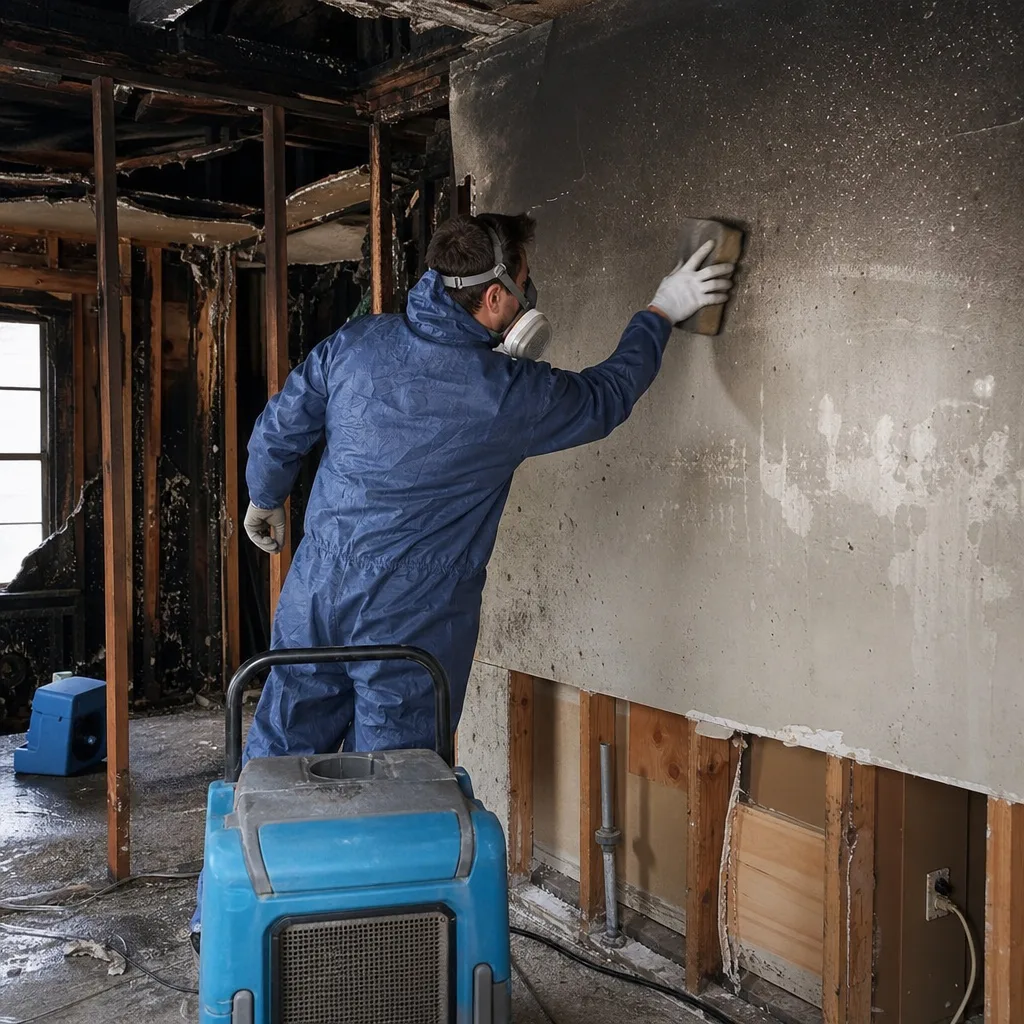
Beyond equipment capacity, professional restoration provides deliverables that have independent value in the claims process. These are not marketing distinctions. They are specific documents and guarantees that affect whether a homeowner keeps or loses coverage.
Written price before work begins. Haven Standard, Clause 1 requires this on every job. A homeowner receives a fixed scope and price before equipment is deployed. No scope creep. No surprise additions once the crew is inside. This document becomes part of the claim file, establishing reasonable and customary costs for the work performed.
Daily moisture logs with psychrometric data. Temperature, relative humidity, specific humidity, and vapor pressure recorded at each visit. These readings demonstrate that drying was proceeding according to scientific standards, not guesswork. Adjusters recognize this format - it’s the same documentation their own preferred vendors produce.
Photo record on every visit. Timestamped, geotagged, and organized by room. Pre-loss, equipment deployment, progress, and final condition. Included as standard, never an upsell. When an insurer questions whether a wall was opened or a cabinet was moved, the photo record answers before the homeowner is asked.
License verification and standards compliance. Work documented to IICRC, RIA, and IFA standards, performed by named, background-checked, uniformed technicians. License numbers on file, available to adjusters. This matters when insurers apply “qualified professional” clauses in policy language.
365-Day Done Right Promise. A written warranty under The Haven Standard, not a verbal assurance. If secondary damage develops from incomplete drying, the original contractor returns to make it right. This warranty transfers to subsequent owners in many cases, adding value at resale.
Direct adjuster coordination. Photo documentation delivered to the adjuster’s file, scope written in claim-adjustable language, and a single point of contact who speaks the adjuster’s vocabulary. This reduces claim cycle time and dispute frequency.
These deliverables are why mold remediation in Encinitas and other restoration services performed under professional documentation standards achieve higher claim approval rates and faster payment cycles than DIY or undocumented work.
Common Mistakes to Avoid
- Assuming “feels dry” means dry. Human skin detects surface moisture, not subfloor saturation or wall cavity humidity. In Encinitas’s humid climate, materials feel dry at 20% moisture content - 5 points above the mold colonization threshold.
- Using a thermostat’s humidity reading. Thermostat sensors measure air at the device location, not at the loss site. A hygrometer placed in the affected area is required for accurate readings.
- Neglecting the HVAC system. Water-damaged ductwork and air handlers distribute moisture and mold spores throughout the house. DIY restoration often misses this vector entirely.
- Failing to document the water category. A Category 2 loss that sits for 48 hours becomes Category 3 by definition. Without timestamped documentation, the insurer may classify the loss at the higher category and apply corresponding exclusions.
- Removing equipment too early. Surface dryness does not indicate structural dryness. We regularly find 18-22% moisture content in plywood subfloors three days after homeowners have returned their rental equipment.
- Ignoring permit requirements for reconstruction. Encinitas requires permits for electrical and plumbing work beyond minor repairs. Unpermitted work discovered during a claim inspection can trigger coverage review for unrelated portions of the loss.
- Not notifying the insurer promptly. Most policies require “prompt” or “immediate” notice of water damage. Delayed notification combined with DIY mitigation gives insurers grounds to claim the damage was worsened by homeowner inaction.
When to Call a Professional
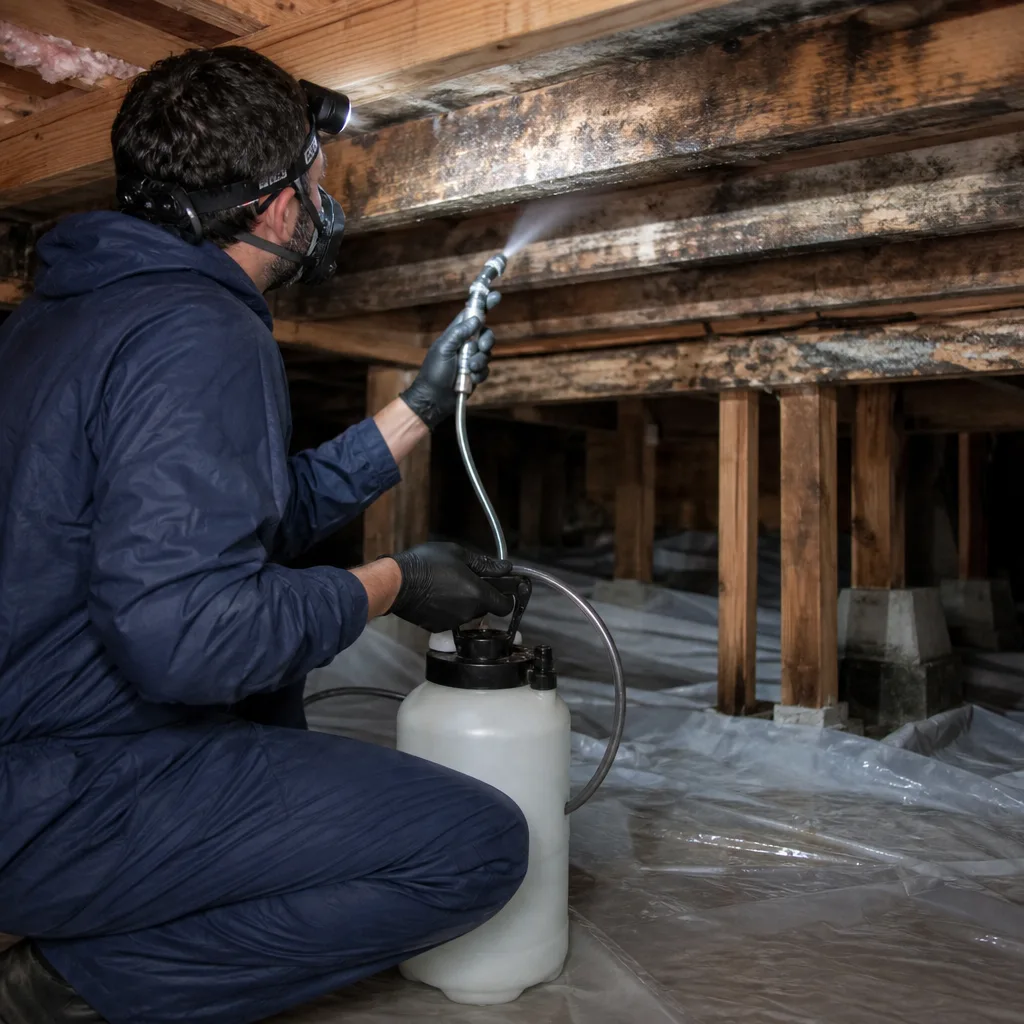
Call a professional when any of the following apply: the affected area exceeds 150 square feet; the water source is Category 2 or 3; relative humidity at the loss site exceeds 65%; any porous structural material is involved; you lack a pin-type moisture meter and calibrated hygrometer; your insurance policy includes a “qualified professional” clause for mitigation; or you simply need the documentation protection that a licensed, insured contractor provides.
Fire and smoke damage restoration should never be attempted DIY - the chemical contamination from synthetic materials and the structural assessment requirements make professional service mandatory for health and safety reasons.
DryMark Restoration Encinitas offers free estimates in Encinitas - call (760) 454-2594. We also provide a Free Second Opinion on any competitor’s written estimate. Browse more guides & resources on protecting your home. Bring another company’s scope and we’ll review it at no charge, with no obligation. Every estimate we provide includes a written price before work begins, per Haven Standard, Clause 1.
Frequently Asked Questions
Professional water damage restoration in Encinitas typically ranges from $1,200-$3,500 for Class 1-2 losses, while DIY equipment rental runs $200-$600 for the same period. However, an undocumented DIY job that leads to a mold claim denial can cost $15,000-$40,000 in uncovered remediation, making the apparent savings illusory for losses near the professional threshold. Call (760) 454-2594 for a written estimate - estimates are free and include no obligation.
Your insurance may cover the initial loss but deny subsequent mold or structural claims if you cannot produce documentation proving proper drying. Most policies cover the peril that caused the damage, not the consequences of inadequate mitigation. A drying log showing daily moisture readings to 15% or below is the standard documentation insurers require to connect the initial loss to later damage. Professional restoration produces this documentation as standard; DIY requires deliberate effort most homeowners don’t complete.
DryMark Restoration Encinitas maintains live phone coverage 24 hours a day, 7 days a week with no voicemail on emergency lines. For active water losses, we typically deploy within 2-4 hours of call receipt in Encinitas, Leucadia, Cardiff-by-the-Sea, and Olivenhain. Speed matters on mitigation topics - water continues moving through capillary action until extraction and drying begin. Call (760) 454-2594 for immediate dispatch.
Visible mold exceeding 10 square feet requires professional remediation under California Department of Public Health guidance, and most insurers require licensed contractor documentation for claims above that threshold. Surface cleaning addresses visible growth but not the moisture source or hidden colonization within wall cavities. We use thermal imaging and moisture mapping to locate hidden growth before writing a scope - a step no surface cleaning can replicate.
At DryMark Restoration Encinitas, we coordinate directly with your adjuster as part of our standard service. We deliver photo documentation, drying logs, and written scopes in the format adjusters expect, and we speak the technical vocabulary of claim adjustment. You remain the policyholder and final decision-maker, but you don’t need to translate moisture content readings into claim language yourself. This coordination is included, never an additional fee.
Request: a written price before work begins; daily moisture logs with pin-type meter readings; psychrometric data (temperature, RH, specific humidity); timestamped photo documentation of each visit; license verification for all trades performed; and a written warranty with specific terms and duration. Under The Haven Standard, we provide all of these as standard deliverables on every job, with no upsell for documentation. If a company cannot commit to this list in writing, the documentation gap becomes your risk.
The Bottom Line
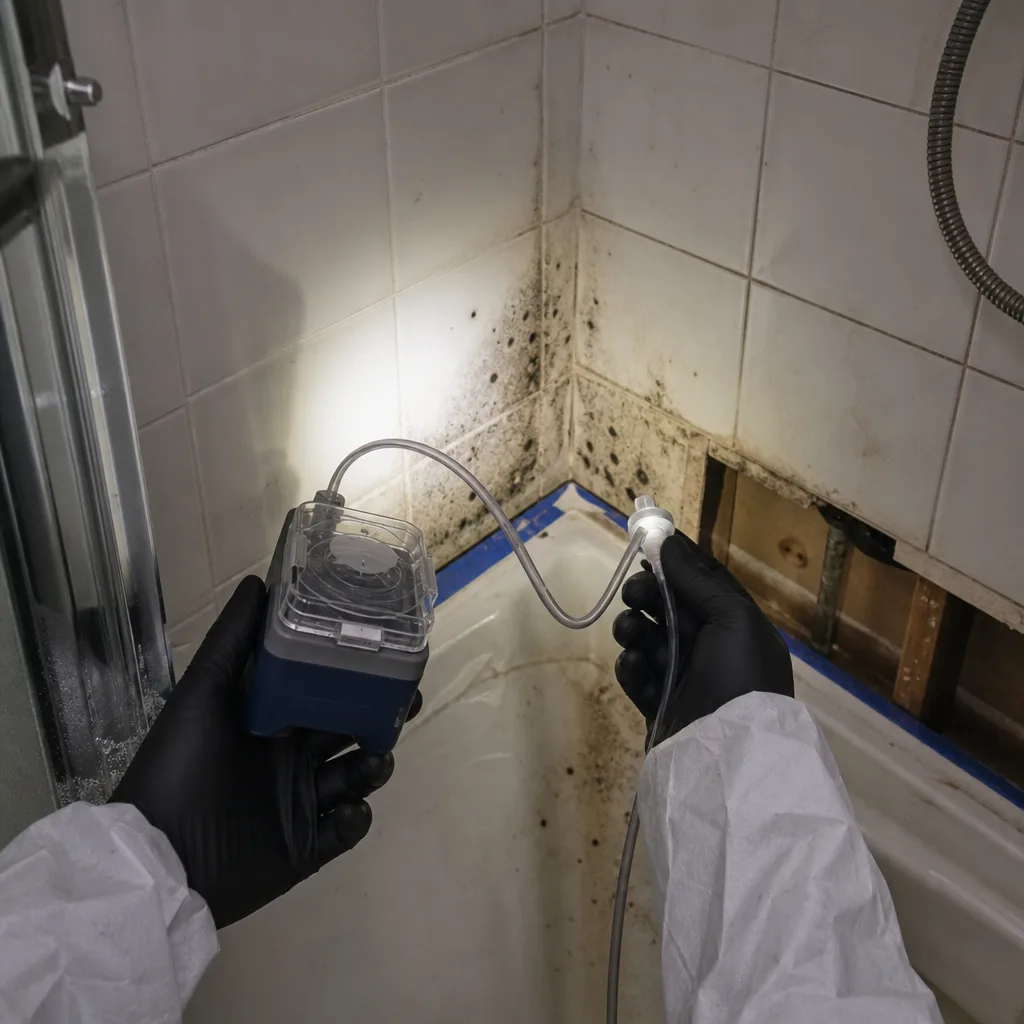
The DIY vs. professional restoration decision in Encinitas hinges on documentation capacity, not handyman skill. Coastal humidity raises the equipment threshold. California licensing law restricts certain work. And insurers have become systematic in using documentation gaps to deny secondary damage claims. A homeowner with a moisture meter, a hygrometer, disciplined record-keeping, and a loss under 50 square feet on non-porous materials can produce a viable DIY restoration. Everyone else is buying false economy - saving on equipment rental while creating the record-keeping failure that costs them their claim. Professional restoration is not primarily a service purchase. It is a documentation purchase, with equipment and labor attached. The question is whether your claim can afford the alternative.
Written by Alicia Brennan, Owner at DryMark Restoration Encinitas, serving Encinitas since 2011.