
Last updated September 23, 2026
Free visual inspection and a written scope of work before any mitigation begins - photos, moisture readings, and drying logs go in your claim file
The scope we write is the scope we bill. Anything new gets shown to you, in writing, before we touch it.


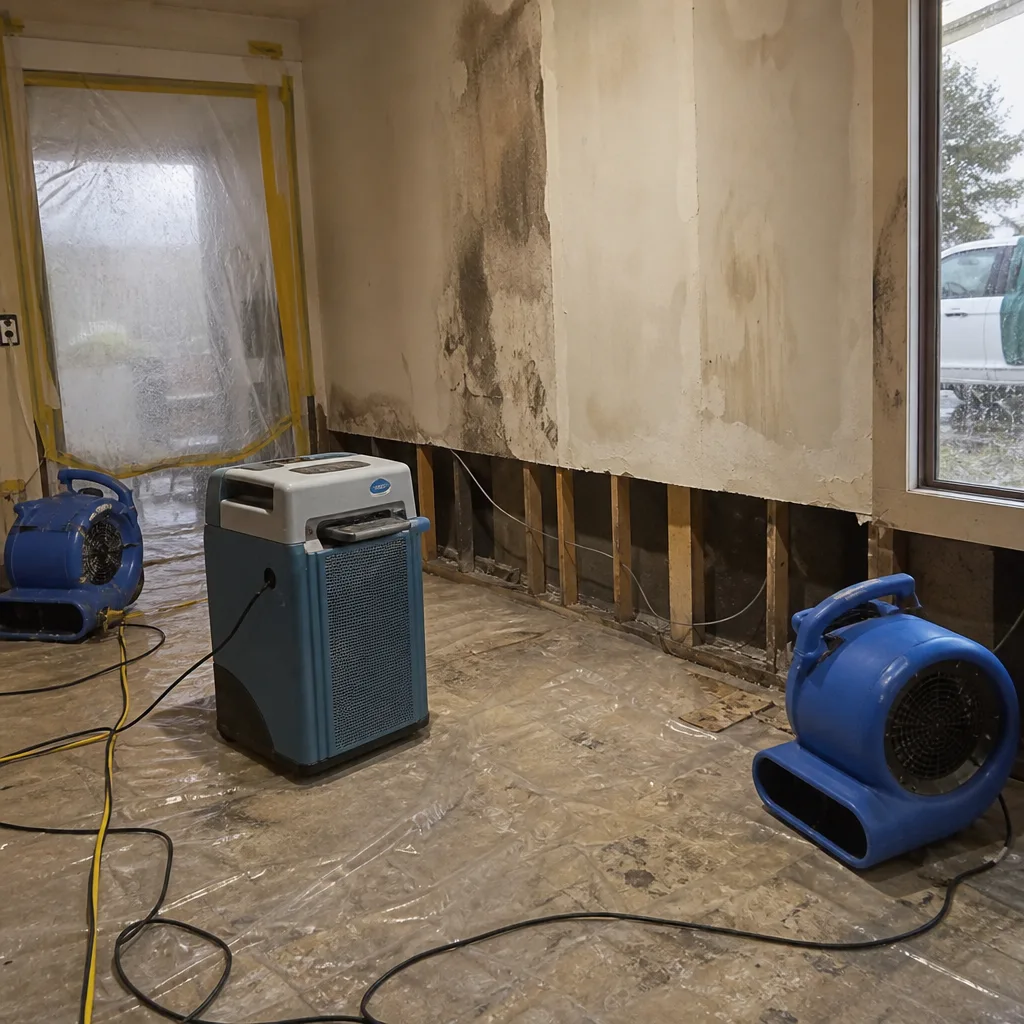 Before
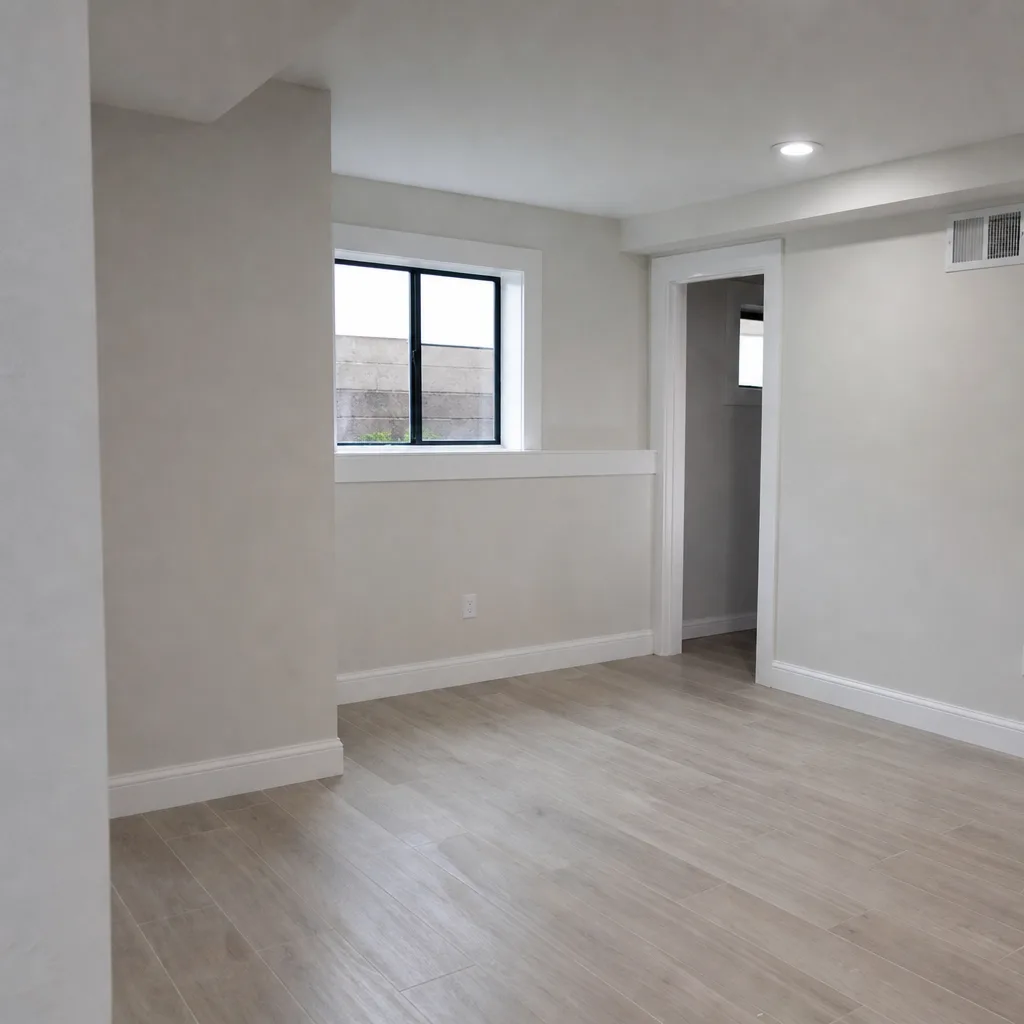 After
After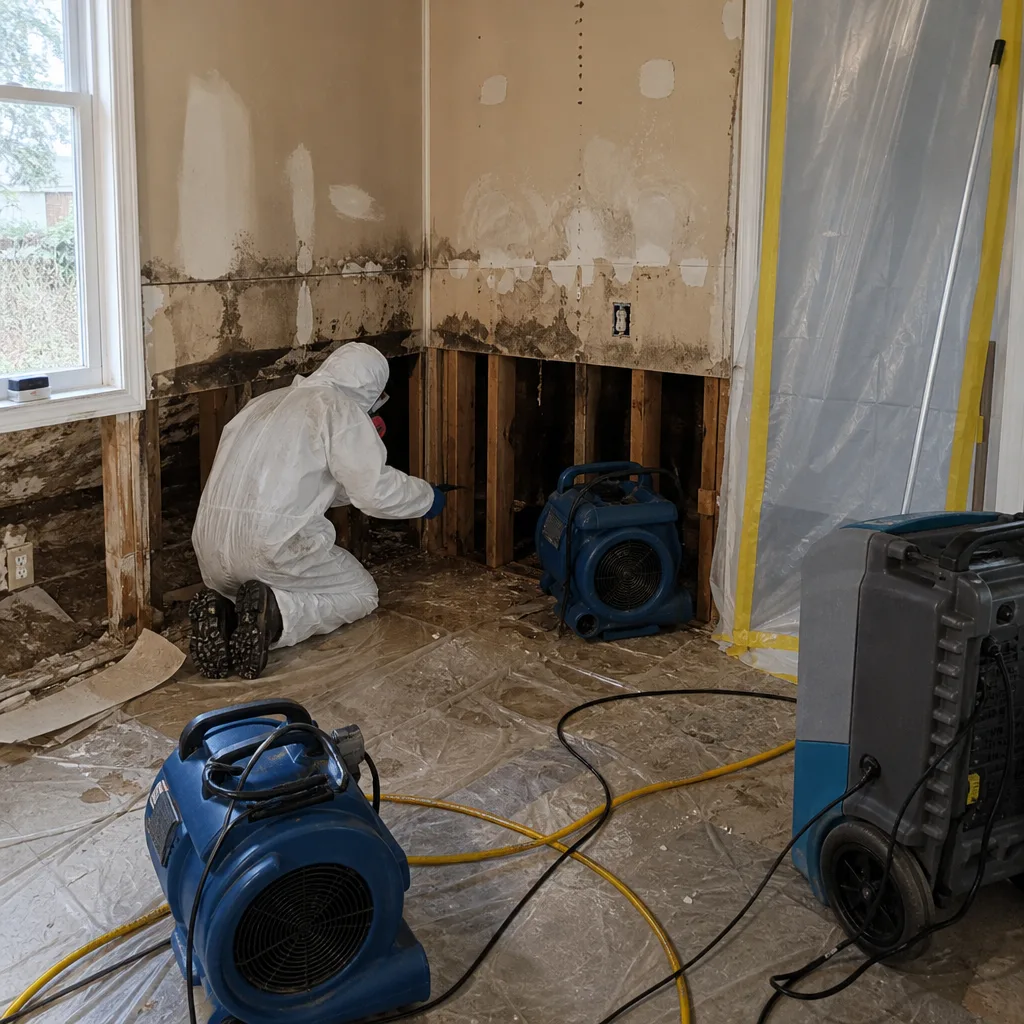 Before
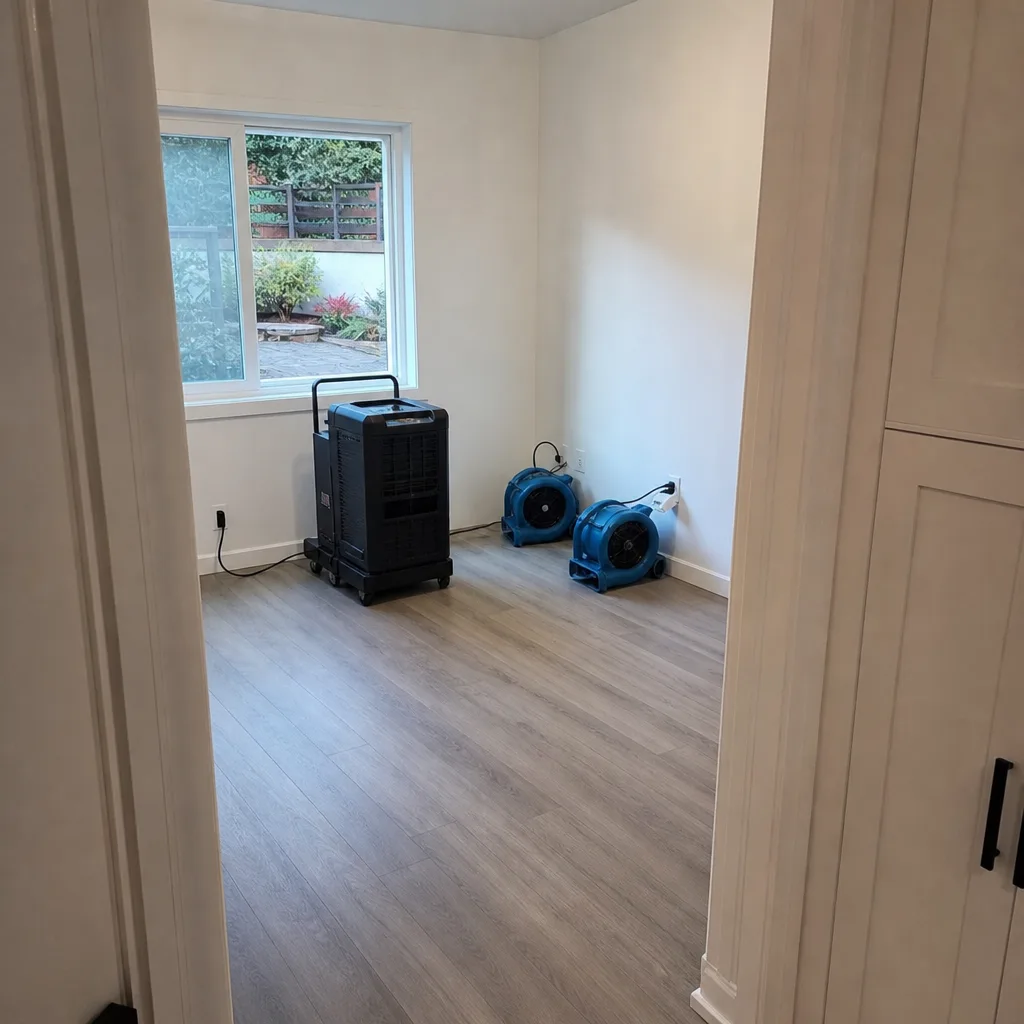 After
AfterSeasonal Damage Restoration Care for Encinitas: Year-Round Homeowner’s Guide
Encinitas doesn’t have four distinct seasons for restoration risk. It has three overlapping pressure windows, each producing a different failure mode, and most homeowners only react to one of them. The marine layer that rolls in from May through July sustains indoor relative humidity at 75-85% for weeks, activating dormant mold colonies behind bathroom tile that sat harmless all winter. Meanwhile, the Santa Ana winds of October and November create rapid pressure differentials that drive moisture into wall cavities, then suck it back out so fast that damage hides until the next storm cycle. We’ve documented 12,000+ homes since 2011, and the pattern in Encinitas is consistent: the homes that stay dry are the ones with a written inspection schedule matched to these windows, not a generic spring cleaning checklist. For a deeper look at protecting your property year-round, see our Complete Guide to Damage Restoration in Encinitas.
Quick Answer
Encinitas homeowners should run three distinct inspection cycles per year: a roof and drainage audit before the November-March storm window, indoor humidity monitoring during the June-September marine layer period, and a building-envelope inspection after October-November Santa Ana wind events. Each cycle targets measurable conditions, documented with photos and moisture readings, that predict the damage claims filed in December, January, and July.
Table of Contents
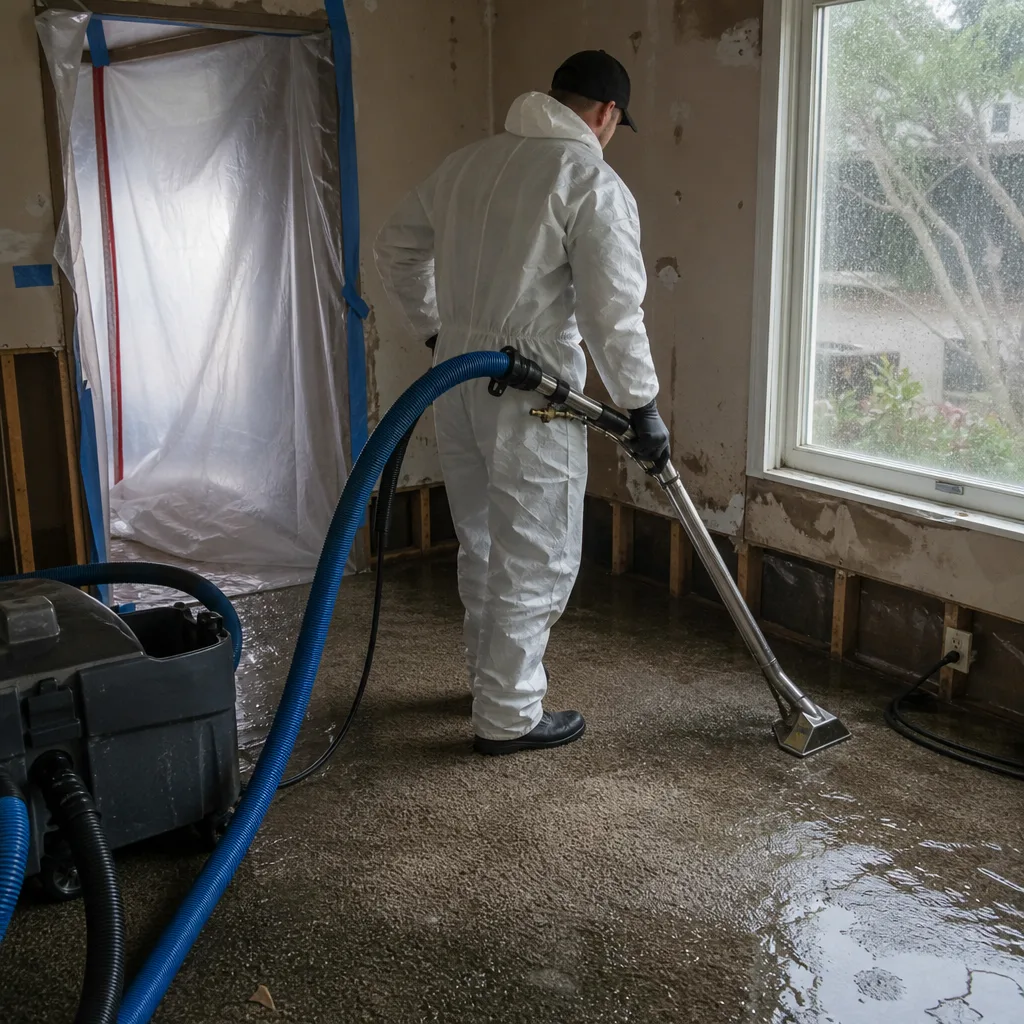
- The Three Overlapping Pressure Windows in Encinitas
- November-March Storm Window: Roof, Flashing, and Drainage
- June-September Marine Layer Window: Indoor Humidity Control
- October-November Santa Ana Wind Window: Hidden Intrusion Detection
- Canyon-Adjacent Properties: Slope Drainage and Retaining Wall Checks
- 12-Month Inspection Log Template
- What Seasonal Prevention Costs vs. Reactive Restoration
- Common Mistakes to Avoid
- When to Call a Professional
- Frequently Asked Questions
 Before
 After
AfterThe Three Overlapping Pressure Windows in Encinitas
Most seasonal maintenance guides divide the year into quarters. That framework fails in Encinitas because our climate drivers don’t respect calendar boundaries. The three pressure windows overlap, and each produces a distinct category of insurance claim.
Window 1: November-March Storm Intrusion. Pacific storms deliver concentrated rainfall in 24-72 hour events. The damage we see in Leucadia and Cardiff-by-the-Sea isn’t from roof age, it’s from flashing separation at valleys and penetrations that opened during summer heat cycling. A roof that passed a visual inspection in September can fail in December because thermal expansion moved the metal.
Window 2: June-September Marine Layer Saturation. Sustained high humidity without liquid water. This is the window that produces mold claims in July and August, often from colonies that established in May and grew undetected through June. The moisture source isn’t a leak, it’s vapor pressure equalizing through the building envelope.
Window 3: October-November Santa Ana Pressure Events. Rapid barometric change, low relative humidity, and sustained 30+ mph winds. These conditions force moisture into wall assemblies through every gap, then desiccate the surface so quickly that interior damage hides behind apparently dry drywall.
The inspection schedule below targets each window with specific measurements, not visual guesses. We’ve built this from the drying logs and scope documents of Encinitas jobs going back to 2011.
November-March Storm Window: Roof, Flashing, and Drainage
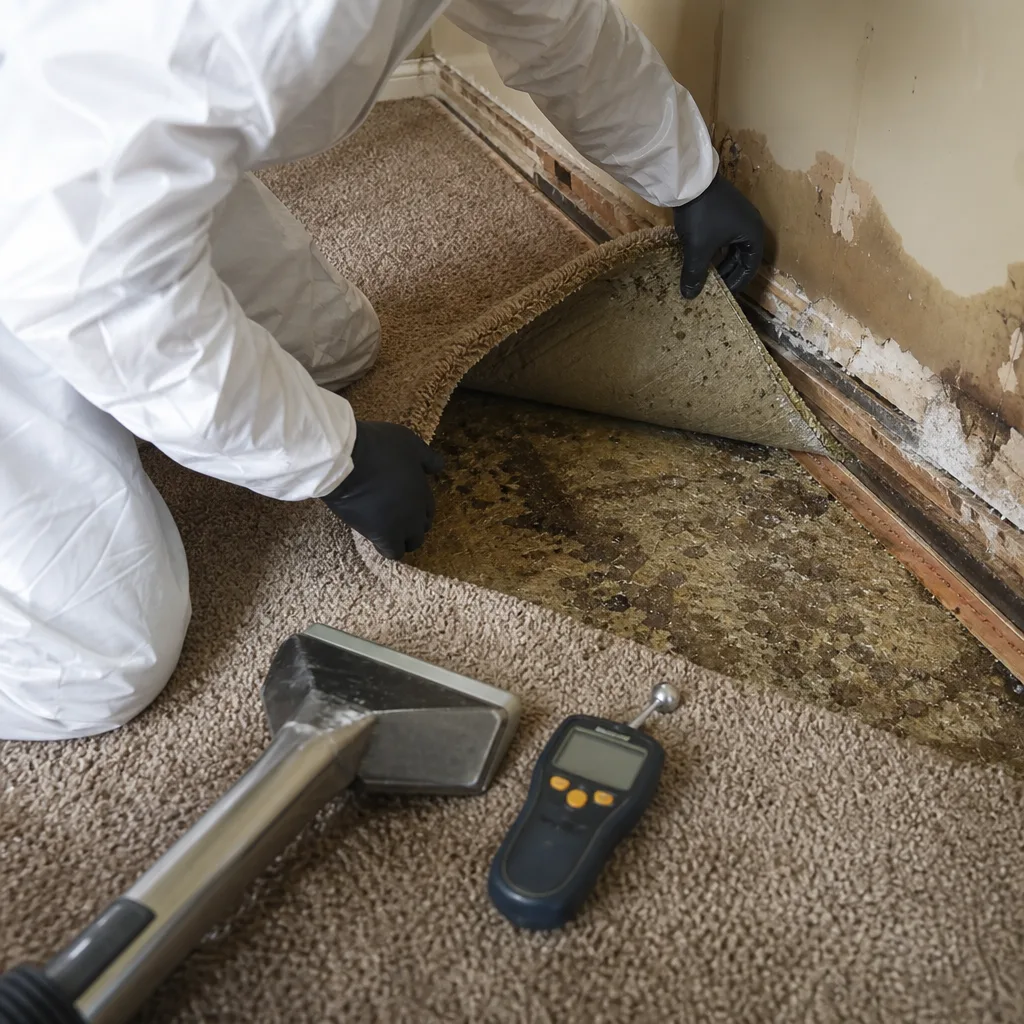
The claims spike in Encinitas hits the second week of December, every year. Not because storms are worst then, but because the first significant rainfall reveals failures that developed during the dry season. Here’s the inspection protocol we recommend completing by October 31.
Roof Surface and Penetrations
Walk the roof or hire a licensed inspector. Document with dated photos. Check these points in order:
- Valley flashing: Look for lifted seams, cracked sealant, or debris accumulation. In Encinitas, valley flashing on south-facing slopes degrades faster from UV thermal cycling. A 1/8-inch gap at a valley seam will pass 2-3 gallons per hour in a driving December storm.
- Pipe penetrations: The rubber boots around plumbing vents harden in 7-10 years of coastal sun. Press the rubber; if it cracks, replace before rain. This is the most common leak source we document in Encinitas ranch-style homes built 1970-1995.
- Chimney cricket and saddle: If your chimney is wider than 30 inches, it needs a cricket (a small roof behind it to divert water). Missing or poorly flashed crickets account for 15% of the water damage restoration calls we handle in the 92024 hillside zones.
- Gutter capacity and downspout termination: Measure gutter interior dimensions. Standard 5-inch K-style gutters handle about 5,500 square feet of roof area in a 1-inch-per-hour rainfall. Encinitas storms can exceed that rate. If your roof area exceeds gutter capacity, add downspouts or upgrade to 6-inch. Terminate downspouts at least 6 feet from foundation; in canyon-adjacent properties, 10 feet minimum.
Drainage Plane and Foundation
Surface water management determines whether a roof leak becomes a restoration job. Check:
- Soil grade slopes away from foundation at minimum 6 inches vertical over 10 feet horizontal
- Window wells have functioning drains or gravel beds that don’t hold standing water
- Deck ledger boards are flashed with Z-flashing above, not just caulked
- Stucco weep screeds at foundation level are unobstructed (common blockage: landscaping mulch piled too high)
Document each item with a photo and note the condition. If you find a deficiency, get a written repair scope with a price before work starts. Haven Standard, Clause 1 applies to prevention work too: a written price before work begins protects both parties.
Water Damage Restoration in Encinitas
June-September Marine Layer Window: Indoor Humidity Control
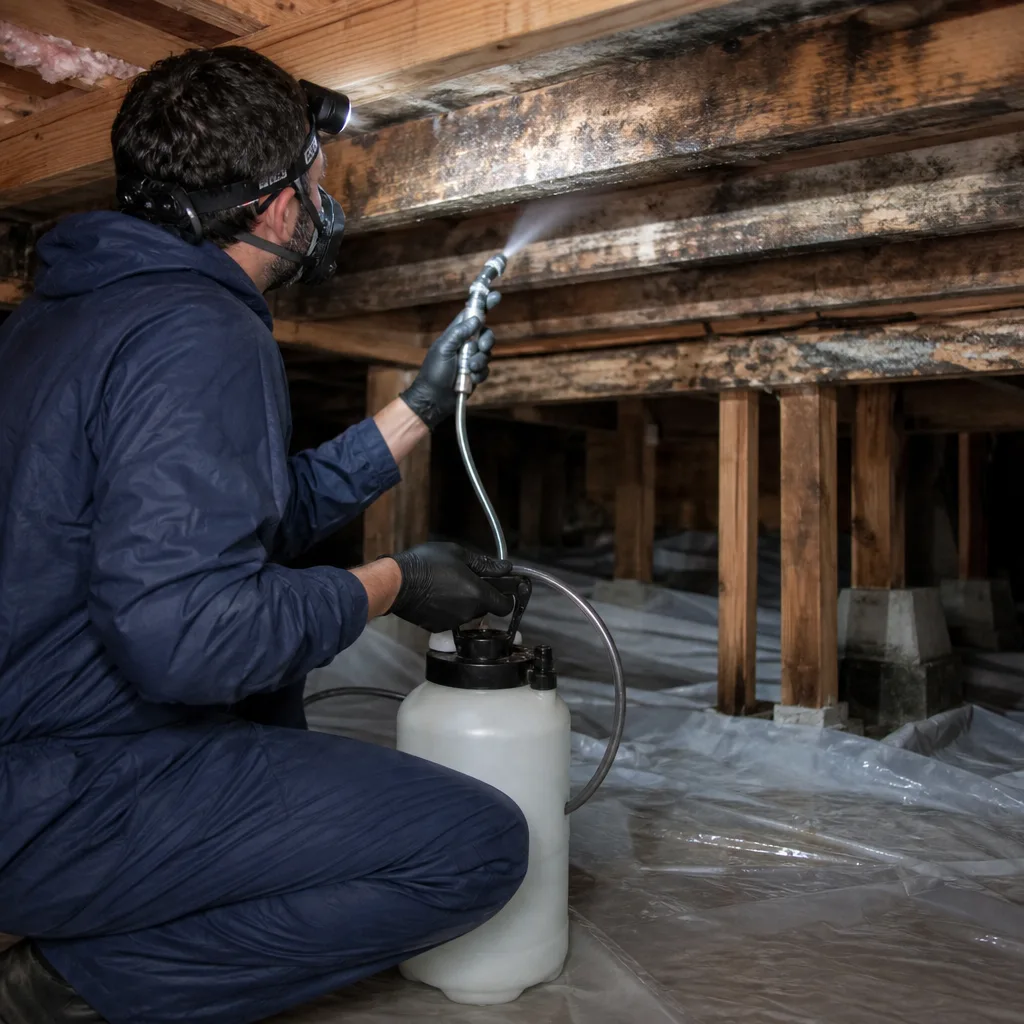
This is the window homeowners ignore because there’s no emergency. The marine layer doesn’t feel threatening. But sustained indoor relative humidity above 60% activates mold spores that have sat dormant in wall cavities since construction. We’ve opened walls in Encinitas homes where the visible surface was pristine and the backside of drywall supported active Stachybotrys growth from three months of 78% RH.
Measuring Indoor RH Correctly
Buy a digital hygrometer, not an analog dial. Place it in the geographic center of your living space, 3-4 feet above floor level, away from HVAC vents and exterior walls. Record readings at 6:00 AM, 2:00 PM, and 10:00 PM for three consecutive days during peak marine layer (typically mid-June through mid-July).
The threshold: 60% RH sustained for 48+ hours triggers intervention. Not 70%. Not “when it feels muggy.” Sixty percent is the point where mold germination rates increase exponentially on cellulose substrates common in residential construction.
Intervention Options by Severity
| RH Range | Duration | Action | Cost Range (Encinitas market) |
|---|---|---|---|
| 60-65% | 2-5 days | Increase ventilation: run bath fans 30 min post-shower, range hood during cooking, portable dehumidifier in problem rooms | $150-$400 (equipment) |
| 65-70% | 5-14 days | Whole-home dehumidification assessment; check HVAC condensate drainage; inspect vapor barrier in crawl space | $400-$1,200 (assessment + equipment) |
| 70%+ | 14+ days | Professional moisture mapping with thermal imaging; targeted drying with documented psychrometric data; mold inspection if musty odor present | $800-$2,500 (inspection + initial drying) |
Psychrometric data is the measurement of temperature, relative humidity, and vapor pressure that determines whether a structure is drying or accumulating moisture. We document this data to IICRC S500 standards on every job, producing daily drying logs that adjust equipment placement based on actual readings, not guesswork.
In our experience, the homes that avoid mold claims in Encinitas run a portable dehumidifier continuously in June and July, set to 55% RH, in the main living area. The electricity cost runs $30-$50 per month. Compare that to Mold Remediation in Encinitas starting at $2,500 for a contained bathroom job and scaling to $15,000+ for whole-house treatment with HVAC decontamination.
October-November Santa Ana Wind Window: Hidden Intrusion Detection
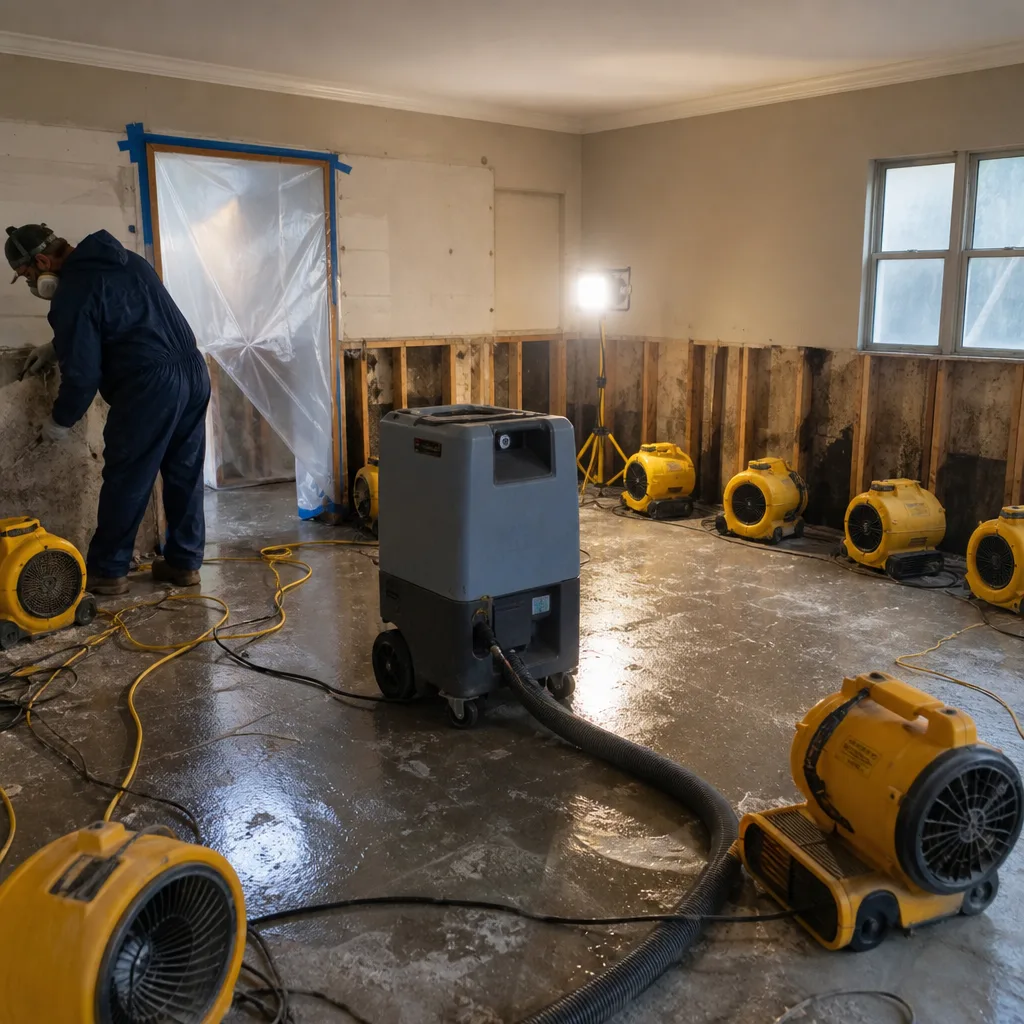
The Santa Ana winds create a restoration risk that doesn’t look like water damage. The mechanism: rapid pressure changes force air, and the moisture it carries, through gaps in the building envelope. When the wind stops, the pressure equalizes, and the moisture deposits inside wall cavities. The surface drywall reads dry on a moisture meter. The insulation behind it doesn’t.
We’ve documented this pattern in Encinitas homes after every significant Santa Ana event since 2011. The damage shows up months later, often misdiagnosed as a plumbing leak because the point of interior damage doesn’t align with any roof feature.
Post-Event Inspection Protocol (Within 72 Hours of Wind Event End)
- Exterior walk-around with focus on windward walls: Note any displaced siding, separated trim, or lifted shingles. The north and east exposures take the brunt in Encinitas Santa Ana events. Photo-document everything, even if damage appears minor.
- Interior moisture spot-check at windward walls: Use a pinless moisture meter set for drywall. Take readings at 12 inches and 36 inches above floor level, every 4 feet along windward walls. Baseline reading for conditioned drywall in Encinitas: 8-12% moisture content. Readings above 16% indicate intrusion.
- Attic inspection at windward eaves: Look for disturbed insulation, which indicates air movement path. Check for dampness on the attic side of windward walls. The Santa Ana can drive rain through soffit vents even when the sky is clear; the wind itself carries enough force to push mist through 1/8-inch mesh.
- Window and door seal check: Feel for drafts with the HVAC off. A draft after a wind event indicates a seal failure that admitted air and moisture. Caulk failure is common on south and west exposures from thermal cycling; Santa Ana damage concentrates on north and east.
If moisture readings exceed 16% or you find damp insulation, call for professional moisture mapping. Tertiary drying, the third phase of structural drying that targets bound water in materials, may be required. This isn’t a DIY phase; it requires vapor pressure differential management with commercial desiccant or heat-based systems from Dri-Eaz and Phoenix, monitored with daily psychrometric logging.
Fire & Smoke Damage Restoration in Encinitas
Canyon-Adjacent Properties: Slope Drainage and Retaining Wall Checks
The 92024 zip code includes hillside zones from Olivenhain to the eastern edge of Leucadia where canyon drainage creates failure modes that flatland guides never address. If your property backs to a slope steeper than 15%, or you have a retaining wall over 4 feet in height, this section applies specifically.
Retaining Wall Drainage
Retaining walls fail from hydrostatic pressure, not age. The pressure builds when drainage behind the wall is blocked. In Encinitas canyon properties, this happens two ways: silt accumulation in weep holes from upslope erosion, and root intrusion from native chaparral vegetation.
Inspect weep holes at the base of the wall every October. They should pass water freely; if plugged, clear with a plumber’s snake, not a pressure washer (which can drive silt deeper). Look for wall tilt or cracking. A retaining wall that leans more than 2 inches from vertical over 10 feet of height needs engineering evaluation. The cost of wall failure includes not just reconstruction, but the water damage to structures below when saturated soil releases.
Slope Drainage Above the Structure
Check upslope drainage channels, whether natural swales or installed French drains. After the 2017 storms, we restored four homes in the Encinitas hillside zone where upslope French drains had failed from root intrusion into the perforated pipe. The repair cost was $8,000-$15,000 per home; the water damage restoration added $12,000-$30,000.
French drain inspection: locate the cleanout or outlet. Run water through the system with a hose at the upslope collection point. Water should appear at the outlet within minutes. If it doesn’t, the pipe is compromised. A camera inspection runs $300-$500 in the Encinitas market; replacement of a 50-foot run with proper root barrier is $2,500-$4,000.
Building Clearance from Slope
Code requires minimum 6-foot horizontal clearance from building foundation to top of slope for erosion protection. Many Encinitas hillside homes from the 1970s-1980s were built closer. If your clearance is less, inspect the foundation wall annually for moisture staining, efflorescence (white mineral deposits indicating water passage through concrete), or cracking. Document with photos dated to the inspection cycle.
12-Month Inspection Log Template
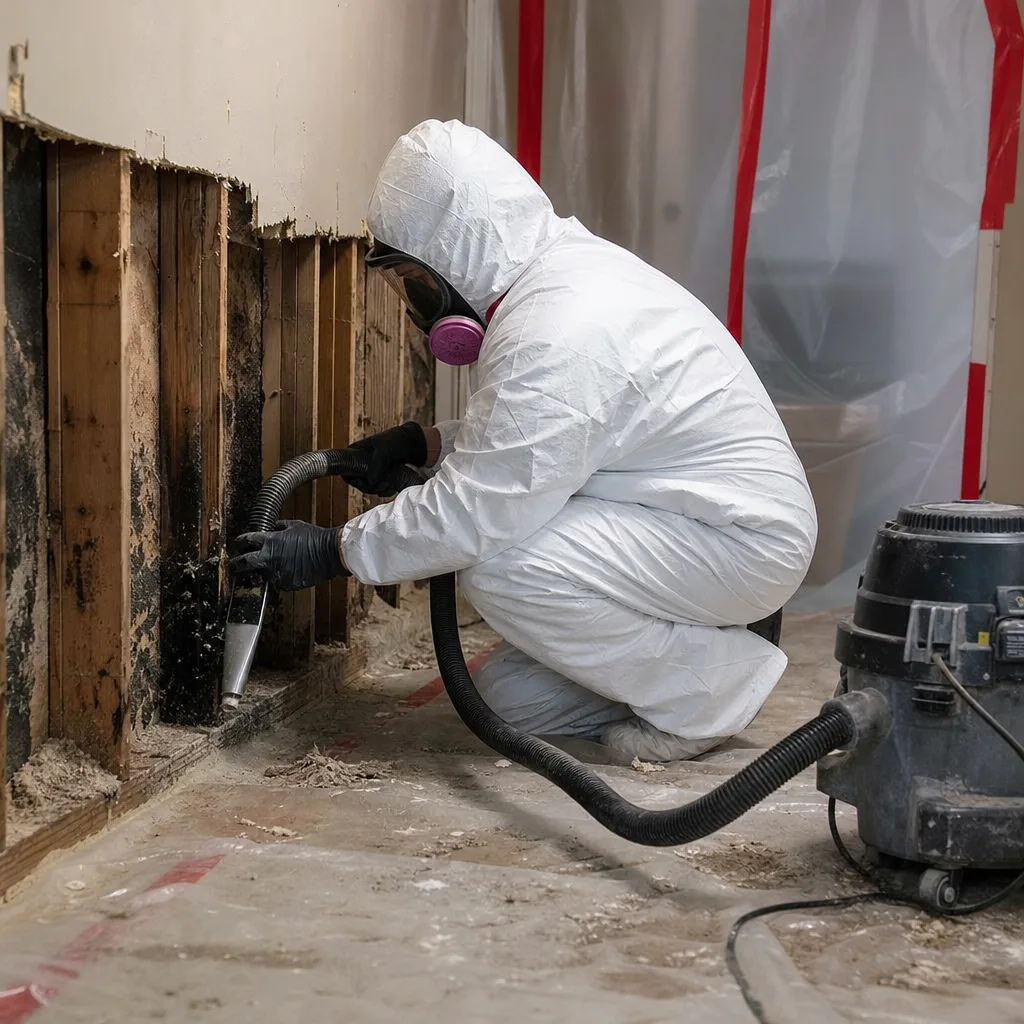
This is not a narrative diary. It’s a record structured so an adjuster or restoration contractor can read it in 60 seconds and understand your home’s condition history. We use this format on every job documentation package; adapted for homeowner use, it provides the evidence base that speeds claim processing if damage occurs.
Log Structure: One Entry Per Inspection Event
| Field | What to Record |
|---|---|
| Date | Exact date of inspection |
| Window | Storm / Marine Layer / Santa Ana / Annual |
| Inspector | Self or contractor name and license if applicable |
| Areas Inspected | List: Roof, Attic, Crawl Space, Interior Rooms (list), Exterior Drainage, Retaining Wall, Slope |
| Moisture Readings | Location, meter type, reading, baseline reference |
| Photos Taken | Number and general subject; store in dated folder |
| Findings | Factual, not interpretive: “3-inch crack in valley flashing at north valley” not “roof looks old” |
| Action Required | Repair, monitor, or none; with deadline if repair |
| Cost if Known | Written price received, or “pending quote” |
Sample Entry
Date: October 15, 2024 | Window: Pre-Storm | Inspector: Self
Areas: Roof, gutters, north and east exterior walls, crawl space
Moisture: Crawl space soil reading 18% (baseline 12%); north wall interior 10% (normal)
Photos: 12, including valley flashing, gutter downspout terminations, crawl space vapor barrier condition
Findings: Gutter downspout at northeast corner terminates 4 feet from foundation (inadequate); crawl space vapor barrier has 2-foot tear over soil
Action: Extend downspout to 6-foot minimum by October 30; patch vapor barrier with 6-mil polyethylene tape
Cost: Downspout extension $45 materials; vapor barrier patch $12 materials
Store this log with your insurance policy documents. If you file a claim, the log demonstrates due diligence, which matters for coverage disputes over gradual damage exclusions. We’ve seen claims denied for mold damage where the insurer argued the homeowner failed to maintain the property; a documented inspection history changes that conversation.
What Seasonal Prevention Costs vs. Reactive Restoration
Homeowners ask us for pricing on prevention work. We provide written prices before work starts, every time, Haven Standard, Clause 1. Here’s what the Encinitas market looks like for the inspection and prevention work described in this guide, compared to typical reactive restoration costs for the failures prevented. See our Damage Restoration Cost Breakdown: The Encinitas Homeowner’s Reference for 2026 for detailed pricing by scenario.
| Prevention Item | Typical Cost (Encinitas) | Failure Prevented | Typical Restoration Cost |
|---|---|---|---|
| Roof inspection + minor flashing repair | $350-$800 | Storm leak, ceiling/wall damage, insulation saturation | $3,500-$12,000 |
| Gutter upgrade to 6-inch + proper termination | $800-$2,200 | Foundation water intrusion, crawl space flooding | $4,000-$15,000 |
| Whole-home dehumidifier (installed) | $1,200-$2,800 | Mold remediation, HVAC contamination, contents damage | $2,500-$25,000 |
| French drain inspection + root barrier repair | $800-$2,500 | Retaining wall failure, hillside soil collapse, structure undermining | $15,000-$75,000+ |
| Post-Santa-Ana moisture mapping | $400-$900 | Hidden cavity mold, structural decay, months-undetected intrusion | $5,000-$20,000 |
The ratio is consistent: prevention costs 10-25% of restoration. But the comparison understates the real difference. Prevention happens on your schedule, with a written price, with no deductible, with no claim on your record. Restoration happens on damage’s schedule, often with emergency service premiums, always with stress, and with potential coverage disputes.
We offer a Free Second Opinion on any competitor’s written estimate for restoration work. Bring us a scope and price from another contractor; we’ll review it against IICRC standards and document whether the drying plan, equipment allocation, and line items match the actual moisture conditions. No charge. This service exists because we’ve seen homeowners in Encinitas pay for three days of drying when five were required, or for equipment that didn’t match the vapor pressure differential needed for their specific assembly.
DryMark Restoration Encinitas home
Common Mistakes to Avoid
- Waiting for visible water before acting. By the time water stains appear on drywall, the damage behind it has progressed through insulation, framing, and potentially into structural members. In Encinitas’s marine layer climate, mold can be active for 30-45 days before any surface indicator shows.
- Using a home inspector’s report as a restoration prevention plan. Home inspections identify code and safety issues. They don’t measure moisture content, vapor pressure differential, or humidity trends. A clean inspection report in September means nothing for December storm vulnerability.
- Running a bathroom fan “until it feels dry.” Fans remove moisture by air exchange, not by a timer in your head. Run bath fans for 30 minutes minimum after showering; install a humidity-sensing switch if you can’t remember. In Encinitas, the ambient humidity is often high enough that a fan running 5 minutes barely breaks even.
- Ignoring the crawl space because “it’s just dirt down there.” Forty percent of the air in your first floor originates in the crawl space in typical California construction. A damp crawl space at 80% RH is a mold spore factory feeding directly into your living space. Check it quarterly; photo-document the vapor barrier condition.
- Assuming new construction doesn’t need inspection. We’ve restored water damage in Encinitas homes built in 2022 and 2023. Flashing installation errors, missing kickout diverters, and improperly sloped drainage planes occur in all vintages. The 10-year builder’s warranty covers defects, not damage from deferred maintenance you could have detected.
- Calling for restoration only after insurance demands documentation you don’t have. The inspection log described above isn’t obsessive; it’s the evidence that converts a “gradual damage” denial into a covered claim. We’ve seen the difference in claim outcomes between homeowners with dated photos and moisture readings and those with memory alone.
When to Call a Professional
Some conditions require trained assessment with documented equipment, not homeowner observation. Call for professional moisture mapping if: moisture meter readings exceed 16% on drywall or 20% on wood framing; you detect musty odor without visible source; your inspection log shows trending increase in any moisture reading; or you’ve experienced a Santa Ana wind event and find any exterior envelope damage.
For emergency conditions, live phone coverage is available 24 hours a day, 7 days a week with no voicemail on emergency lines. Every job is quoted in writing before work begins, documented with a photo record on every visit, and covered by the 365-Day Done Right Promise. A Free Second Opinion on any competitor’s written estimate is available at no charge.
DryMark Restoration Encinitas offers free estimates in Encinitas. Call (760) 454-2594.
Frequently Asked Questions
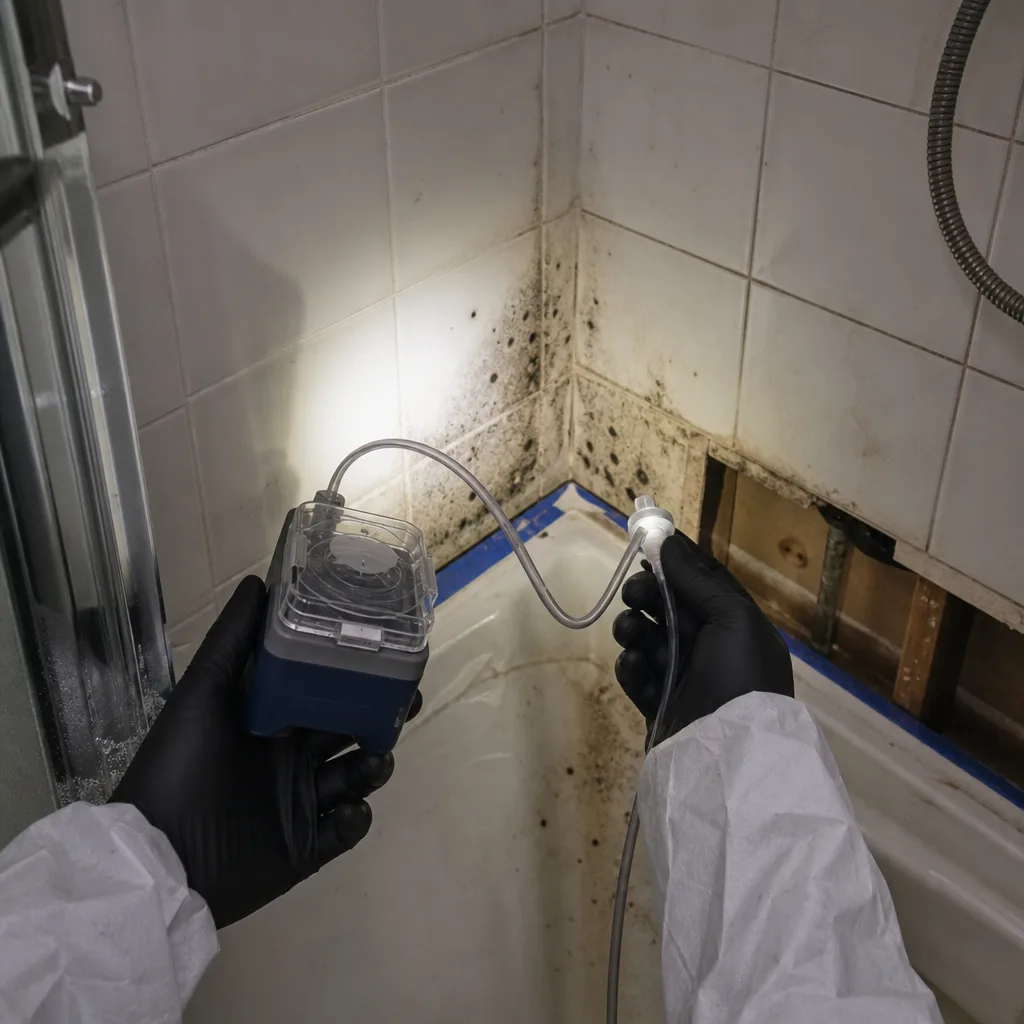
A professional moisture inspection with thermal imaging and documented readings typically runs $400-$900 in the Encinitas market, depending on home size and crawl space accessibility. This includes a written report with photos, moisture content readings by location, and recommended action if readings exceed baseline. Call (760) 454-2594 for an exact quote; estimates are free.
Standard homeowners policies cover sudden and accidental damage, not gradual deterioration. Marine layer mold is often denied as “maintenance” unless you can document proactive humidity management. Santa Ana wind damage is typically covered as storm damage if you document the event and your prompt inspection. The inspection log format in this guide is designed specifically to produce that documentation. For claim support, we provide photo-documented assessments and direct adjuster coordination as part of our standard service.
Live person answers every call, 24 hours a day, 7 days a week, with no voicemail trees. Emergency response for active water intrusion is dispatched immediately; crew arrival time depends on current call volume and your location within Encinitas, typically 45-90 minutes during business hours and within 2 hours overnight. For non-emergency moisture mapping or prevention consultations, we schedule within 24-48 hours. Call (760) 454-2594 for current availability.
Surface mold on non-porous materials (tile, glass, metal) can be cleaned with appropriate products. Mold on porous materials (drywall, insulation, carpet, wood) requires professional remediation because hyphae penetrate the material and surface cleaning leaves active growth. In Encinitas’s climate, incomplete remediation typically results in recurrence within 90 days. We assess with moisture readings and air sampling, then provide a written scope and price before any work starts. Haven Standard, Clause 1: written price before work begins, every time.
We coordinate directly with your adjuster, providing the documented photo record, daily drying logs, and written scope that adjusters need to approve payment. Our documentation is structured to IICRC, RIA, and IFA standards specifically because we’ve seen what incomplete documentation costs homeowners in delayed or denied claims. Alicia Brennan founded Back to Dry in 2011 as a former claims adjuster who built the company around closing that documentation gap.
The 365-Day Done Right Promise is a written guarantee under The Haven Standard, not a verbal assurance. If any work we perform is not done right, we make it right, for 365 days from completion. It’s backed by our documented process: written price before work starts, photo record on every visit, and drying logs to IICRC standards. The promise has an address: Haven Standard, Clause 3. Most contractor “warranties” are limited to materials or exclude labor; ours covers the complete scope of our work.
The Bottom Line
Encinitas homes face three distinct damage pressure windows, not four generic seasons. The November-March storm window demands roof and drainage verification before rain arrives. The June-September marine layer window requires active humidity measurement and intervention at 60% RH. The October-November Santa Ana wind window needs post-event inspection for hidden intrusion that surface dryness conceals. Canyon-adjacent properties in 92024 add slope drainage and retaining wall monitoring. Document every inspection with dated photos, moisture readings, and factual findings in a structured log. The cost of this prevention program is 10-25% of reactive restoration, and the documentation it produces protects your coverage if damage occurs despite your effort. The homes that stay dry are the ones with a schedule, not a hope.
Written by Alicia Brennan, Owner at DryMark Restoration Encinitas, serving Encinitas since 2011.