
Last updated September 23, 2026
Free visual inspection and a written scope of work before any mitigation begins - photos, moisture readings, and drying logs go in your claim file
The scope we write is the scope we bill. Anything new gets shown to you, in writing, before we touch it.


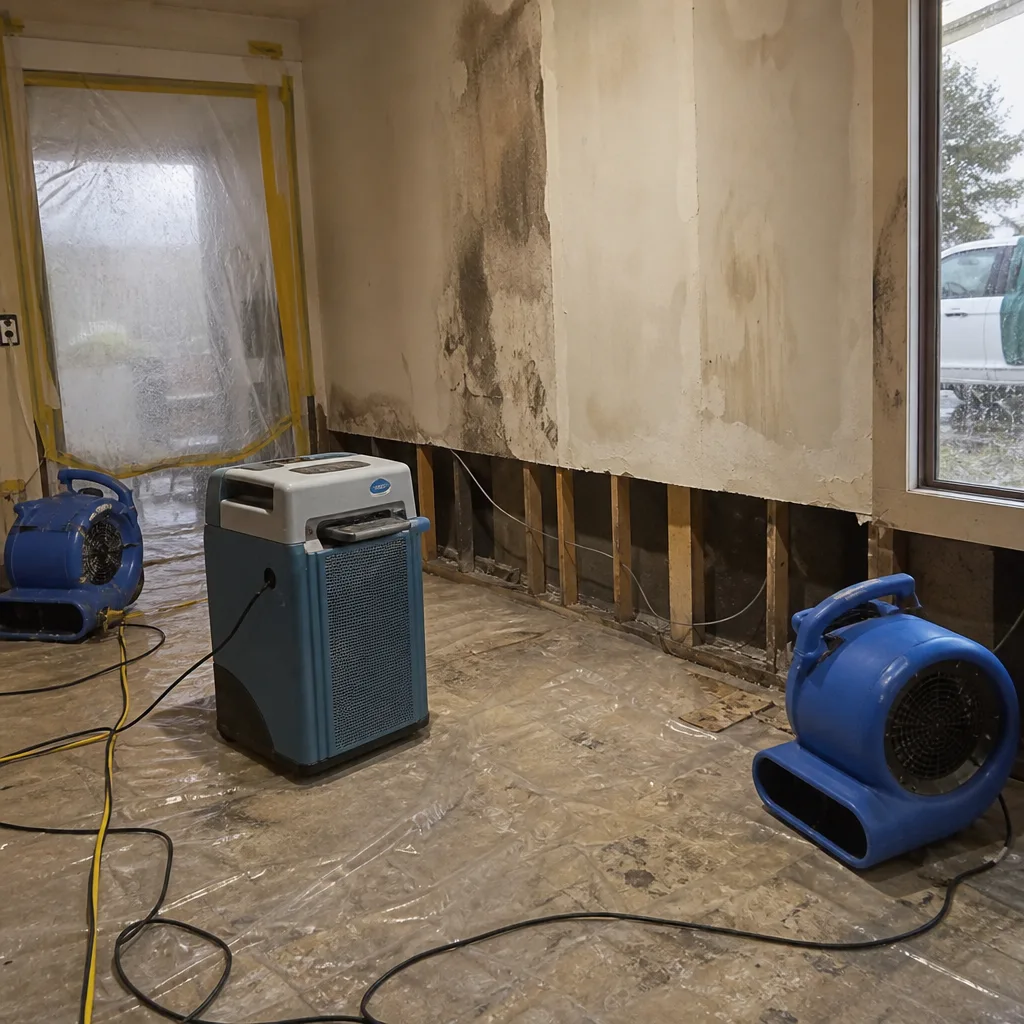 Before
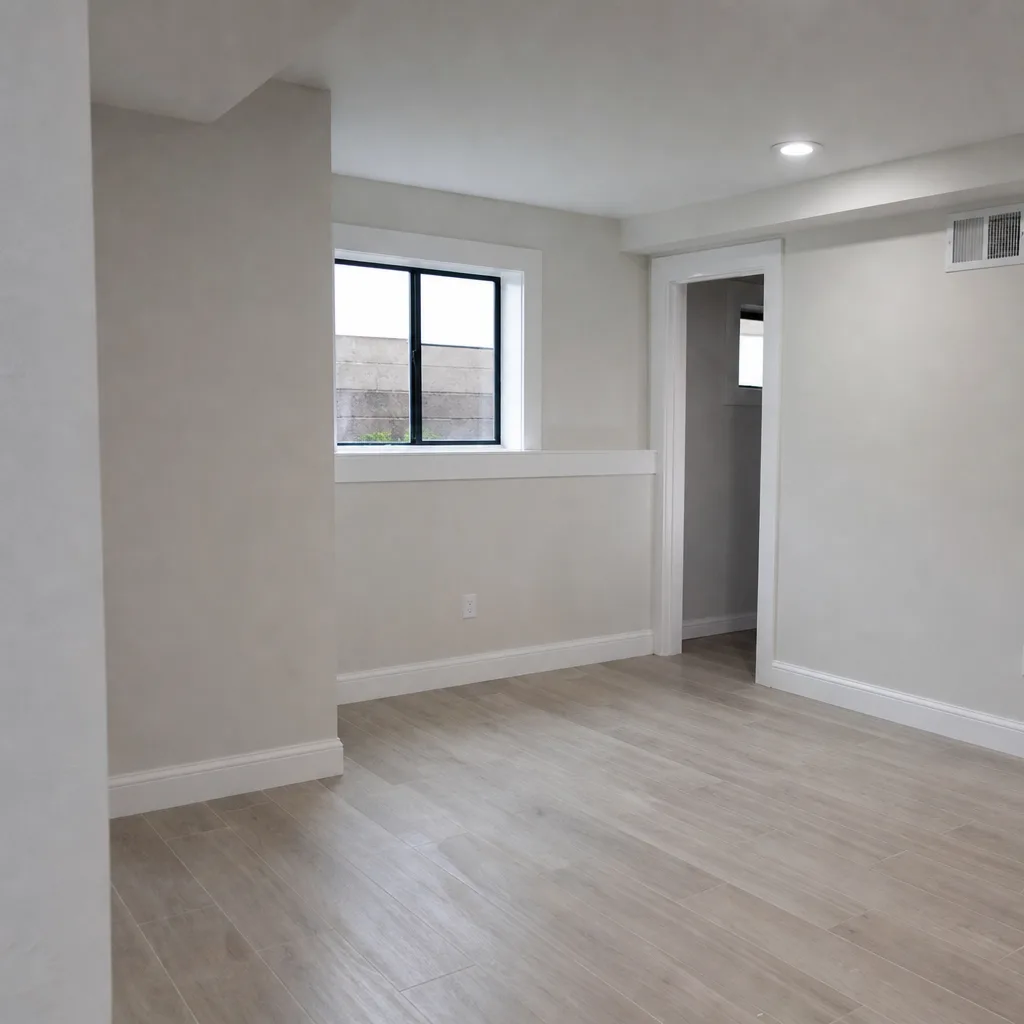 After
After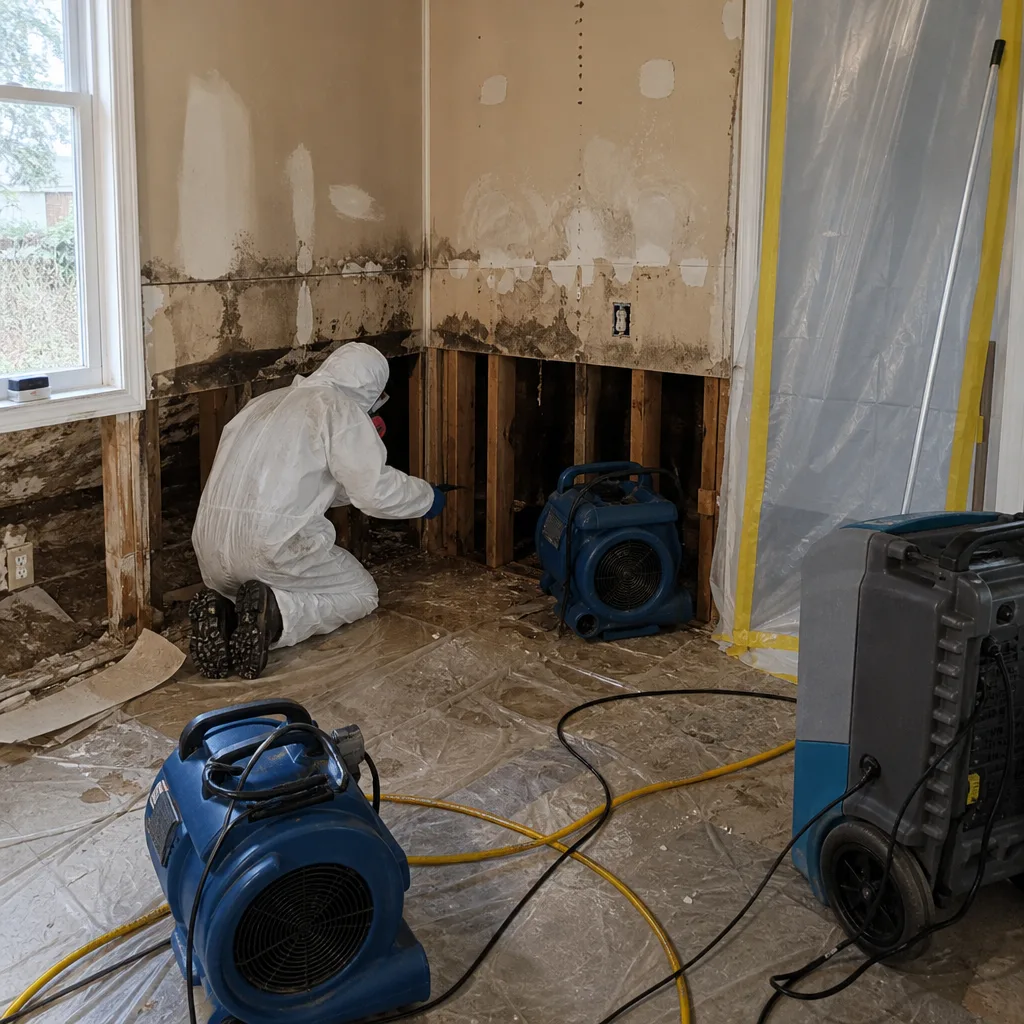 Before
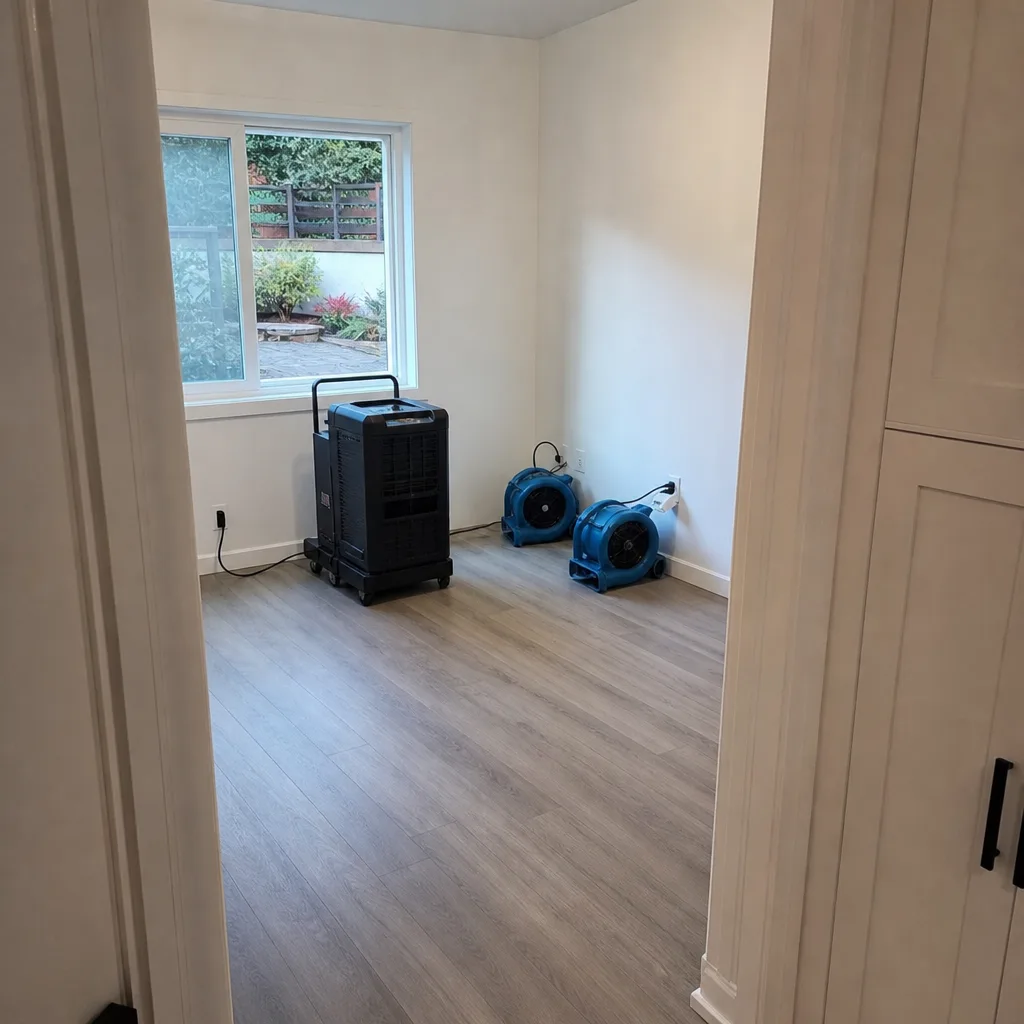 After
AfterHow to Hire a Damage Restoration Contractor in Encinitas: A Step-by-Step Guide
Here’s a number that stops most Encinitas homeowners cold: roughly 40% of water damage claims are underpaid or denied because the restoration contractor’s documentation wouldn’t survive an adjuster’s review. Not because the work was bad. Because there was no written scope, no photo record, no daily drying log to prove the equipment ran long enough to hit dry standard. In a coastal climate where morning marine layers can keep wall cavities damp for weeks, that paperwork gap isn’t administrative. It’s financial.
This complete guide to damage restoration in Encinitas gives you an interview script built around documentation artifacts - the five written items a legitimate contractor must produce before work begins, how to verify licenses and certifications in under three minutes, and the specific questions that separate contractors who document from those who improvise. Use it as a checklist, not a suggestion.
Quick Answer
Hiring a damage restoration contractor in Encinitas requires verifying four things before anyone enters your home: a current California contractor license (CSLB), active IICRC certification with verifiable number, a written scope with line-item pricing signed before work starts, and a documented photo record included as standard deliverable. The contractor should also explain their drying documentation process - daily moisture logs versus informal “checks” - because that difference determines whether your insurer pays the full claim or disputes it.
Table of Contents
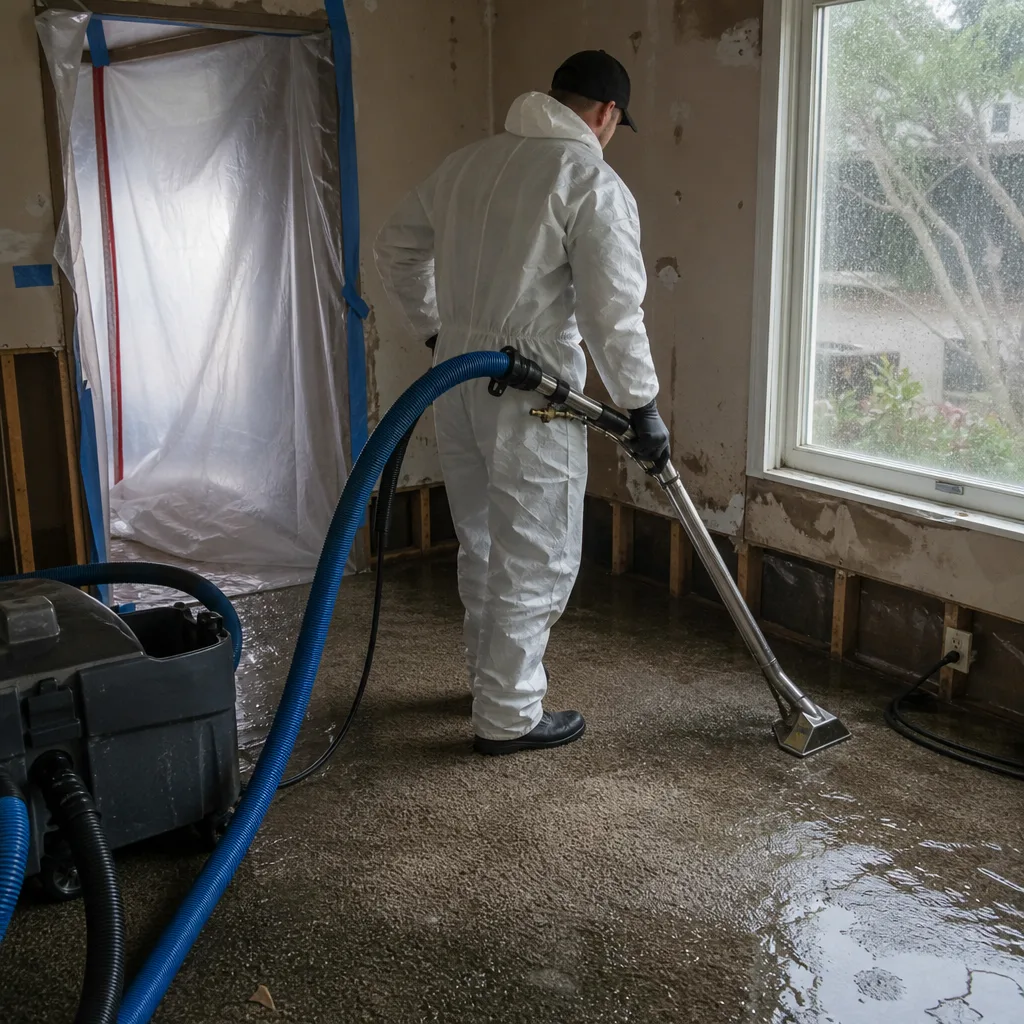
- The Five Written Documents Every Encinitas Contractor Must Provide
- How to Verify a License and IICRC Certification in Under Three Minutes
- Assignment of Benefits: What You Surrender When You Sign
- How to Compare Bids Using Line-Item Scope, Not Total Price
- Daily Drying Logs vs. Anecdotal Checks: The Documentation That Decides Claims
- Encinitas-Specific Factors: Climate, Codes, and Coastal Considerations
- Common Mistakes to Avoid
- When to Call a Professional
- Frequently Asked Questions
 Before
 After
AfterThe Five Written Documents Every Encinitas Contractor Must Provide
The most common contractor red flag isn’t a bad review. It’s a verbal price. If a scope of work doesn’t exist in writing before a crew enters your home, you have no enforceable agreement - and your insurer has no obligation to pay.
Here are the five documents we require on every job at DryMark Restoration Encinitas home. Any contractor you’re considering should produce equivalents without prompting.
1. Written Scope of Work with Line-Item Pricing
This is Haven Standard, Clause 1: a written price before any work starts, every time, with no exceptions. The scope should break down each task by room and material: water extraction from carpet and pad, removal of baseboards, deployment of air movers and dehumidifiers, antimicrobial application, and reconstruction. Each line carries its own price. You see exactly what you’re paying for and can remove items you don’t want.
A scope that reads “dry out house: $4,200” is not a scope. It’s a guess. And guesses get disputed by adjusters.
2. Proof of Insurance and Bonding
Request a certificate of insurance (COI) naming you as additional insured for the project duration. The COI should show general liability, workers’ compensation, and pollution liability (critical for mold and sewage jobs). Bonding is separate - it protects you if the contractor abandons the job or fails to pay suppliers.
3. Daily Drying Log
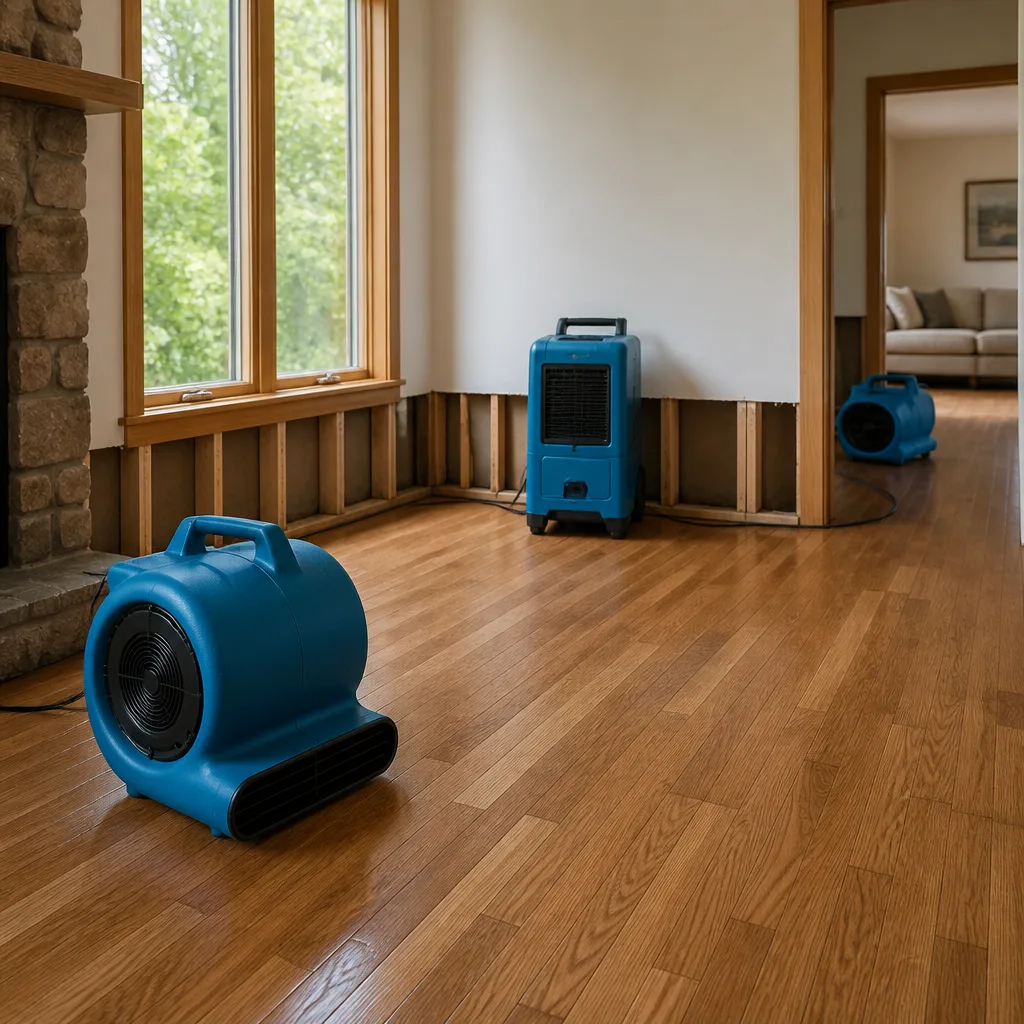
Psychrometric data recorded at least once per 24-hour cycle: temperature, relative humidity, and specific humidity readings for each affected room, plus moisture content percentages for structural materials (wood framing, drywall, concrete subfloors). The log should note equipment serial numbers, placement maps, and any adjustments made. This is the document that transforms a restoration invoice into a payable insurance claim.
4. Photo Record on Every Visit
Date-stamped, geotagged photographs of damage before work begins, equipment placement during drying, and materials at dry standard before reconstruction starts. Not a few phone snapshots. A systematic record with a numbering protocol that matches the written scope room by room. At DryMark Restoration Encinitas, this is standard deliverable, never an upsell.
5. Signed Warranty or Guarantee
A written document with a specific duration, coverage terms, and a physical address for claims. Our Water Damage Restoration in Encinitas carries the 365-Day Done Right Promise under The Haven Standard - if it’s not done right, we make it right, with a signed guarantee stamped on every job, not a marketing line.
How to Verify a License and IICRC Certification in Under Three Minutes
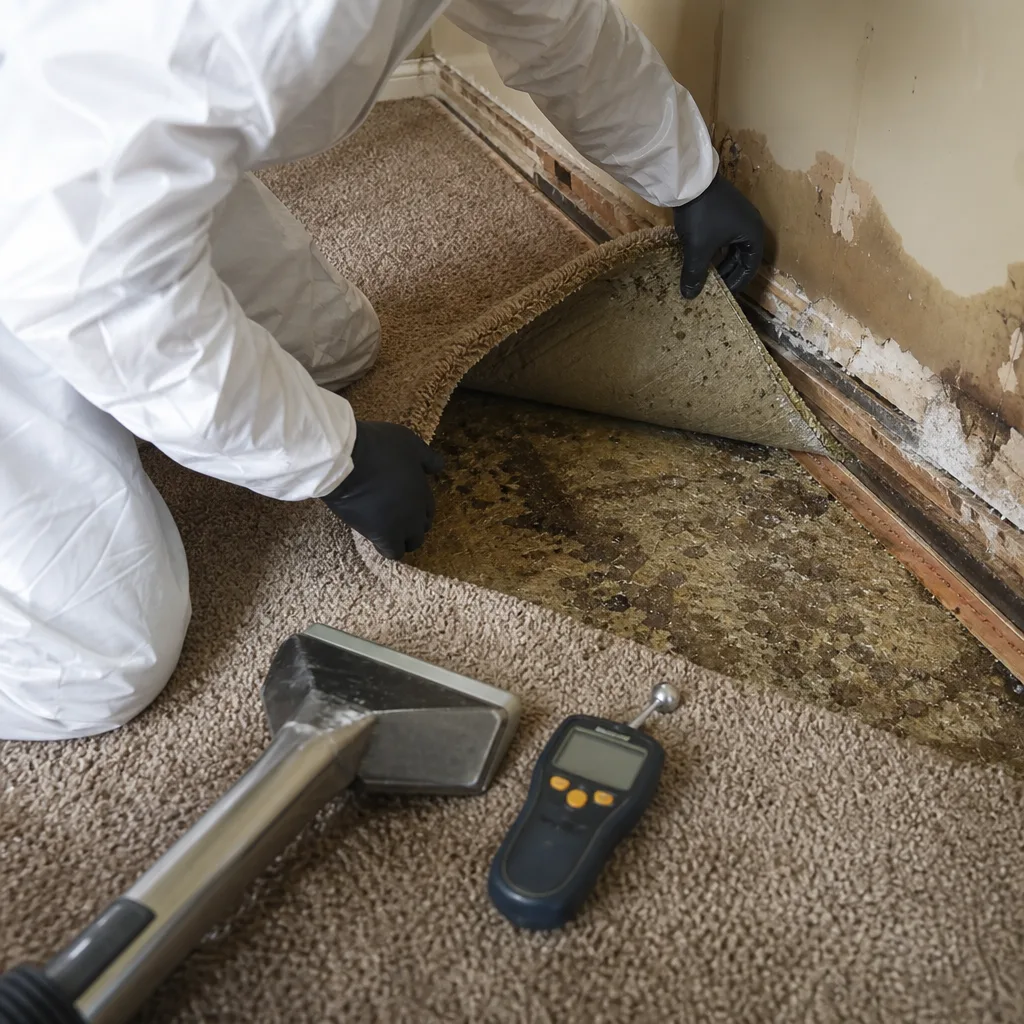
California makes this easy. Most homeowners never do it.
Step 1: CSLB License Lookup
- Go to cslb.ca.gov and click “Check License.”
- Enter the contractor’s license number or business name.
- Confirm the status reads “Active” - not “Suspended,” “Revoked,” or “Cancelled.”
- Verify the classification includes C-61/D-64 (Non-specialized) or B-General Building, which covers restoration work. Some water damage contractors operate under a C-36 Plumbing license; this is legitimate for extraction but may not cover full structural drying or reconstruction.
- Check the workers’ compensation insurance status. If it reads “Exempt,” the contractor has no employees - which means anyone on your job may be uninsured day labor.
Step 2: IICRC Certification Verification
- Ask the contractor for their IICRC certification number and specific designations (WRT for Water Damage Restoration Technician, AMRT for Applied Microbial Remediation Technician, FST for Fire & Smoke Damage Restoration Technician).
- Call IICRC headquarters at (760) 454-2594 or email info@iicrc.org with the number. Verification is free and typically same-day.
- Confirm the certification is current - IICRC requires continuing education credits every few years, and lapsed certifications are common in this industry.
Three minutes. Two phone calls or web lookups. The contractors who resist this process are telling you something their marketing won’t.
Assignment of Benefits: What You Surrender When You Sign
An Assignment of Benefits (AOB) is a legal document that transfers your insurance claim rights to the contractor. You sign. They bill your insurer directly. Sounds convenient. In practice, it’s a mechanism some Encinitas contractors use to inflate claims, delay resolution, and litigate against your insurer using your name.
Here’s what you actually surrender:
- Control over settlement negotiations. The contractor decides whether to accept the insurer’s offer or sue. You may not even be informed until you’re named in a lawsuit.
- Visibility into billing. With AOB, the contractor bills your insurer directly. You never see the invoice until - sometimes - it’s already in dispute.
- Your policy’s good-faith protections. Disputes become contractor-versus-insurer, with you as legal placeholder. Your premiums and future insurability may be affected by a fight you didn’t choose.
California has tightened AOB regulations, but enforcement remains uneven. The alternative is simpler: a contractor who works with your adjuster under a standard direction-of-pay agreement, with you retaining claim ownership and receiving every document. At DryMark Restoration Encinitas, we coordinate directly with adjusters daily - but the claim stays in your name, and every invoice comes to you first.
If a contractor presents an AOB as “standard procedure” or “required for us to start,” that’s your signal to pause and call your insurer before signing anything.
How to Compare Bids Using Line-Item Scope, Not Total Price
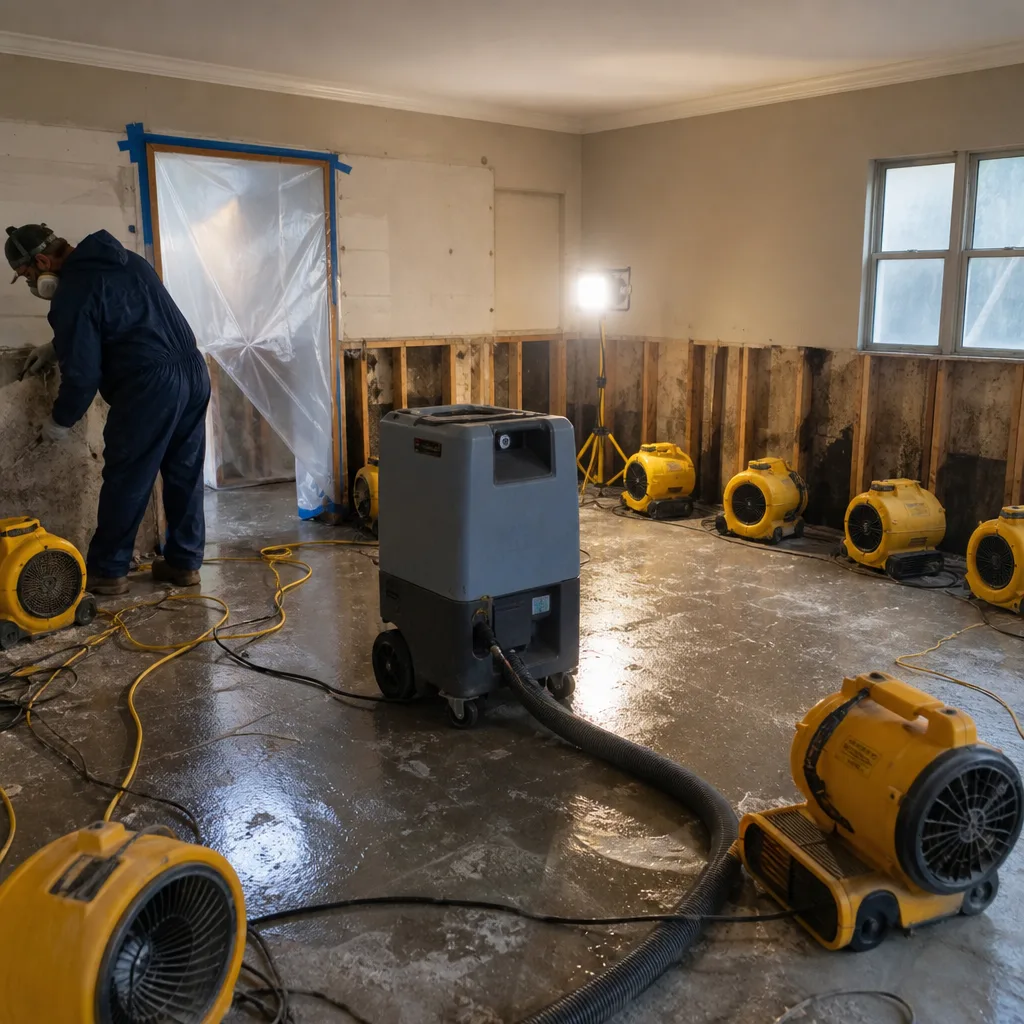
The lowest total bid often conceals the highest final cost. Here’s why: underbidding contractors omit line items they plan to add later as “discovered damage,” or they underestimate equipment days and charge change orders when drying takes longer than their guess.
Line-item comparison reveals this before work starts. Here’s how to do it.
Build a Comparison Matrix
Take three bids. Create rows for each task category, columns for each contractor. Use these standard categories:
- Emergency water extraction (gallons removed, hourly rate or flat fee)
- Demolition and disposal (square footage, material type: drywall, plaster, lath, tile)
- Equipment rental by day: air movers (count and CFM rating), dehumidifiers (LGR or desiccant, pint capacity), air scrubbers (HEPA, CFM)
- Antimicrobial application (square footage, product name, EPA registration number)
- Content manipulation (furniture moving, pack-out, storage)
- Moisture monitoring (frequency, documentation format)
- Reconstruction (line-item by room: drywall, insulation, flooring, paint, trim)
A bid with fewer line items isn’t simpler. It’s less accountable.
Check Equipment Specifications
Professional-grade drying equipment matters for speed and documentation. We deploy systems from Phoenix, XPOWER, and Injectidry - brands that output verifiable airflow and dehumidification rates for drying logs. A contractor using unmarked or consumer-grade equipment can’t produce the psychrometric data insurers expect.
Verify the Dry Standard
Every comparison should include the contractor’s target moisture content for each material class. Wood framing typically targets 10-12% moisture content in Encinitas’s coastal climate. Drywall: below 1% above baseline for that wall assembly. Without stated dry standards, “done” is subjective - and change orders follow.
Our Mold Remediation in Encinitas includes the same line-item discipline, because mold jobs that start with vague scope definitions end with repeated remediation and disputed invoices.
Daily Drying Logs vs. Anecdotal Checks: The Documentation That Decides Claims
This is where most restoration claims succeed or fail. Not in the quality of drying - though that matters - but in whether the drying can be proven.
What a Daily Drying Log Contains
A legitimate log is a structured document, physical or digital, with these elements for each 24-hour period:
- Psychrometric readings: Temperature, relative humidity, and specific humidity for each affected room, measured with calibrated thermo-hygrometers. Psychrometrics is the study of air and moisture relationships; these readings tell us whether the air can still absorb water from wet materials or has reached equilibrium.
- Material moisture content: Percentage readings from pin or pinless meters for wood, drywall, concrete, and subfloors, taken at consistent locations marked on a room diagram.
- Equipment inventory: Serial numbers, make/model (Phoenix 200 HT dehumidifier, XPOWER X-430TF air mover, Injectidry HP-Plus wall cavity system), count, and placement map.
- Vapor pressure differential: The difference between vapor pressure in the affected material and surrounding air. Positive differential means drying is still occurring; near-zero means equipment adjustment or removal. We define this in plain terms on every log so adjusters and homeowners understand without calling us.
- Technician signature and timestamp: Named, background-checked technician who was physically present.
What Anecdotal Checks Look Like
“Stopped by Tuesday, looked dry, pulled equipment.” No readings. No serial numbers. No signature. This documentation won’t survive a desk review, and when the insurer denies the equipment rental portion of your claim - often $200-400 per day for LGR dehumidifiers alone - the contractor may bill you directly for the disputed amount.
We’ve reviewed competitor estimates at no charge under our Free Second Opinion program. The most common deficiency: 30-40% fewer documented drying days than the actual moisture readings would justify, with no log to support the equipment charges. The homeowner pays the gap, or the contractor eats it and cuts corners on reconstruction.
Tertiary drying - the final phase where deep structural moisture is removed at low vapor pressure differentials - is where anecdotal checks fail most dramatically. Surface readings look acceptable. Wall cavities and subfloors remain damp. Six months later, mold remediation becomes necessary, and the original contractor’s documentation can’t prove whether the initial dry standard was actually achieved.
Encinitas-Specific Factors: Climate, Codes, and Coastal Considerations
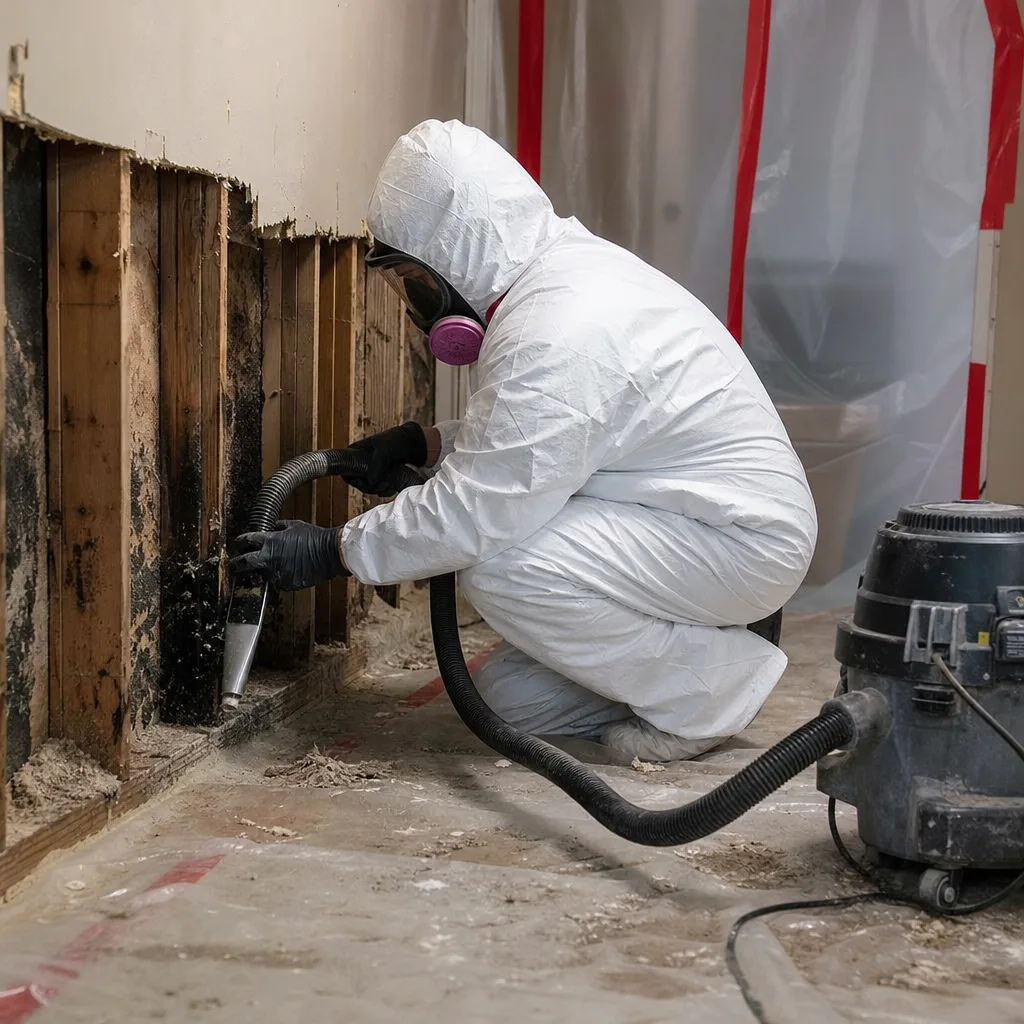
Seasonal damage restoration care for Encinitas differs from inland San Diego County in measurable ways that affect scope, pricing, and documentation requirements.
Marine Layer Moisture Dynamics
Encinitas experiences marine layer penetration 200+ mornings annually, with relative humidity frequently exceeding 85% from May through August. This doesn’t stop drying, but it changes the calculation. Dehumidifiers work harder to maintain the 30-50% relative humidity target for optimal drying. A contractor using equipment specs from Phoenix or Las Vegas will undersize the dehumidification capacity, extending drying days and inflating costs.
Our drying logs for Encinitas jobs include baseline outdoor humidity readings and adjust equipment ratios accordingly. A home in Leucadia three blocks from the coast requires different psychrometric planning than a property east of El Camino Real.
Soil and Foundation Types
Older Encinitas neighborhoods - particularly in the Original Encinitas area near downtown - feature raised foundations with crawl spaces that trap moisture. Slab-on-grade construction in newer developments like Encinitas Ranch presents different challenges: concrete wicking, vapor barrier integrity, and the difficulty of detecting sub-slab moisture without specialized meters. Each foundation type demands distinct documentation protocols, and a scope that doesn’t specify the inspection method is incomplete.
Local Permit and Code Requirements
The City of Encinitas requires permits for reconstruction involving structural repair, electrical or plumbing modification, and any work exceeding $1,000 in value. A restoration contractor who proposes to “handle everything” without specifying permit responsibility in writing is creating liability. The written scope should state: who pulls permits, who pays fees, and how inspection scheduling affects the project timeline.
Coastal zone properties may also require California Coastal Commission review for reconstruction that alters the building envelope or footprint - rare in restoration but critical when fire or storm damage requires substantial rebuild.
Neighborhood-Specific Risk Patterns
In our experience across 12,000+ homes since 2011, Encinitas properties in Cardiff-by-the-Sea see elevated mold remediation rates due to older construction with limited vapor barriers and persistent marine influence. Olivenhain properties, with larger lots and more recent construction, more commonly experience water damage from irrigation system failures and pool equipment leaks. These patterns inform our initial moisture mapping and documentation focus on every job.
Common Mistakes to Avoid
- Accepting a verbal estimate. In California, any home improvement contract over $500 must be in writing. A contractor who won’t put scope and price on paper before starting is violating state law and exposing you to unlimited cost escalation.
- Skipping the CSLB lookup. We’ve encountered unlicensed operators in Encinitas using another company’s license number. The lookup takes 90 seconds and reveals active status, classification, and complaint history.
- Comparing only total prices. A $3,800 bid with 12 line items and a $4,200 bid with 28 line items are not comparable. The lower bid likely omits tasks you’ll pay for later as change orders.
- Signing an Assignment of Benefits without legal review. Some Encinitas contractors present AOBs as standard. They’re not. They’re optional, and they transfer significant legal rights.
- Neglecting to request the drying log before final payment. The log is your insurance documentation. If the contractor can’t produce it, or produces a single page with three days of readings for a two-week job, you’ve paid for undocumented work.
- Assuming “IICRC certified” means current. Certifications lapse. Verify the number directly with IICRC.
- Hiring based on response speed alone. Emergency mitigation requires fast dispatch - but reconstruction should be scoped, scheduled, and priced in writing like any remodel. A contractor who rushes both phases is cutting documentation corners.
When to Call a Professional
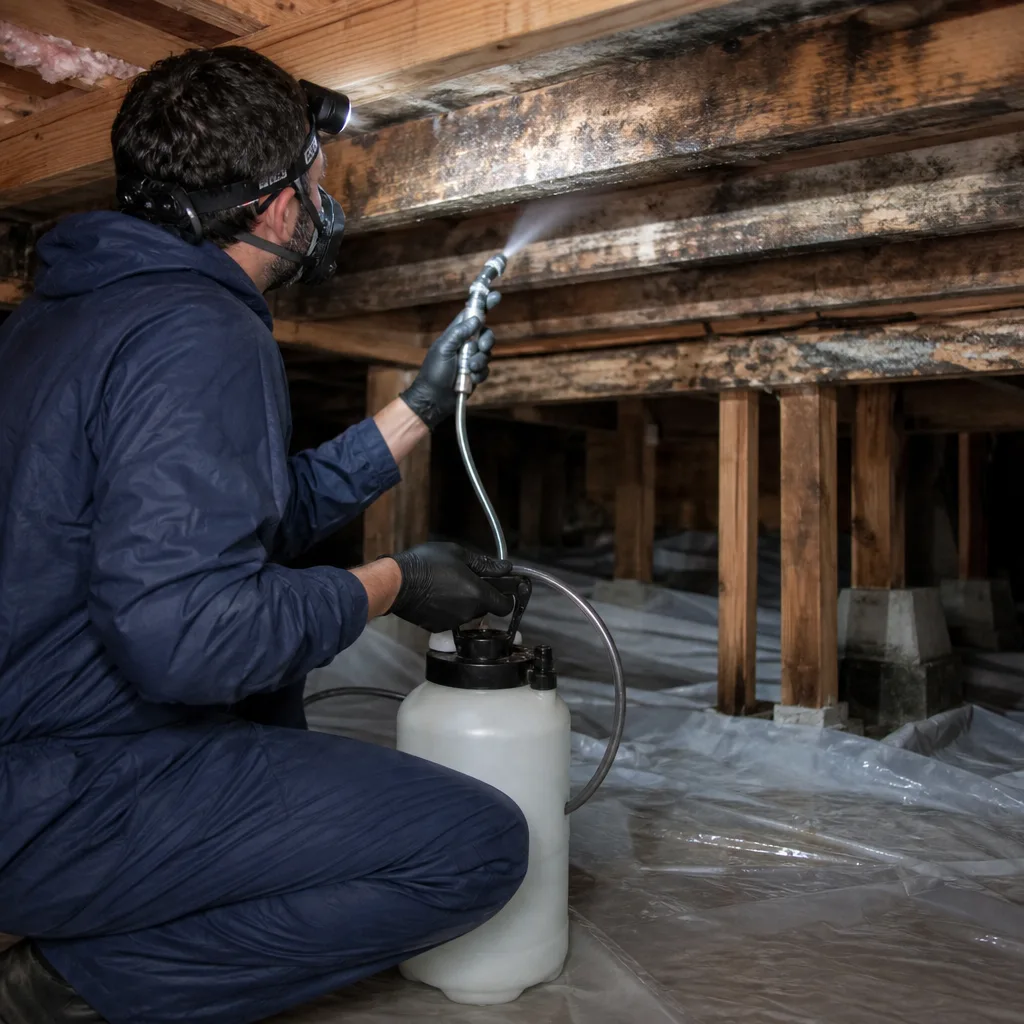
Some situations permit temporary homeowner action: shutting off the water main, extracting standing water with a wet/dry vacuum, or placing fans for minor spills under 10 square feet. These are mitigation, not restoration - see our water damage restoration maintenance checklist for Encinitas homeowners for guidance.
Call a professional immediately when: water has reached wall cavities or subfloors; damage exceeds a single room; sewage or gray water is involved; mold is visible or suspected; fire damage has compromised the structure or HVAC system; or your insurer has already opened a claim and requires documented scope for approval.
In Encinitas, where morning humidity can re-wet partially dried materials before afternoon sun arrives, the window for effective mitigation without professional equipment is often 24-48 hours. After that, secondary damage - mold, wood rot, structural compromise - becomes probable, and documentation requirements intensify.
Fire & Smoke Damage Restoration in Encinitas and all other services from DryMark Restoration Encinitas include free estimates with written scope before any commitment. Call (760) 454-2594 to schedule documentation-first assessment.
Frequently Asked Questions
Most residential water damage restoration in Encinitas ranges from $2,800 to $7,500 for standard mitigation, with reconstruction adding $15-45 per square foot depending on material class and finish level. Category 3 sewage losses, marine layer complications requiring extended dehumidification, and crawl space work in older Original Encinitas homes trend toward the upper range. Every job at DryMark Restoration Encinitas receives a written line-item price before work begins - call (760) 454-2594 for an exact quote; estimates are free.
Insurance coverage depends on your policy language, the cause of loss, and - critically - the quality of contractor documentation. For more guides & resources on navigating claims, explore our blog. Sudden and accidental water damage is typically covered; gradual leaks and maintenance issues are not. The single largest factor in claim approval is whether the contractor’s drying logs, photo records, and written scope create an auditable trail that satisfies the adjuster’s desk review. We coordinate directly with adjusters and provide the documentation package that turns restoration invoices into payable claims.
Emergency mitigation - water extraction, stabilization, equipment deployment - should begin within 1-4 hours for active losses. DryMark Restoration Encinitas maintains live phone coverage 24 hours a day, 7 days a week with no voicemail on emergency lines. Reconstruction is different: it’s scoped, scheduled, and priced in writing like a remodel, typically starting 3-10 business days after mitigation completes and permits are secured.
For water damage under 10 square feet with no wall cavity involvement and clean (Category 1) water, DIY extraction and drying may suffice. Anything larger, anything involving gray or black water, or any moisture trapped in walls, floors, or HVAC systems requires professional equipment and documentation. Self-directed drying in Encinitas’s humid coastal climate frequently results in hidden moisture that manifests as mold within 30-60 days, transforming a covered water claim into an excluded mold remediation.
You retain that authority unless you sign an Assignment of Benefits. The best arrangement is a contractor who documents thoroughly and communicates directly with your adjuster while you retain claim ownership. At DryMark Restoration Encinitas, we provide adjusters with daily drying logs, photo records, and written scope updates - but every document comes to you simultaneously, and no settlement is accepted without your approval.
A drying log is a structured, dated record of psychrometric readings, material moisture percentages, equipment serial numbers, and technician signatures for every 24-hour period. A moisture check is an informal visual or meter reading with no documentation protocol. Insurers pay equipment rental charges based on drying log data; they deny or reduce payment when only anecdotal checks exist. The difference is often thousands of dollars in out-of-pocket costs for the homeowner.
The Bottom Line
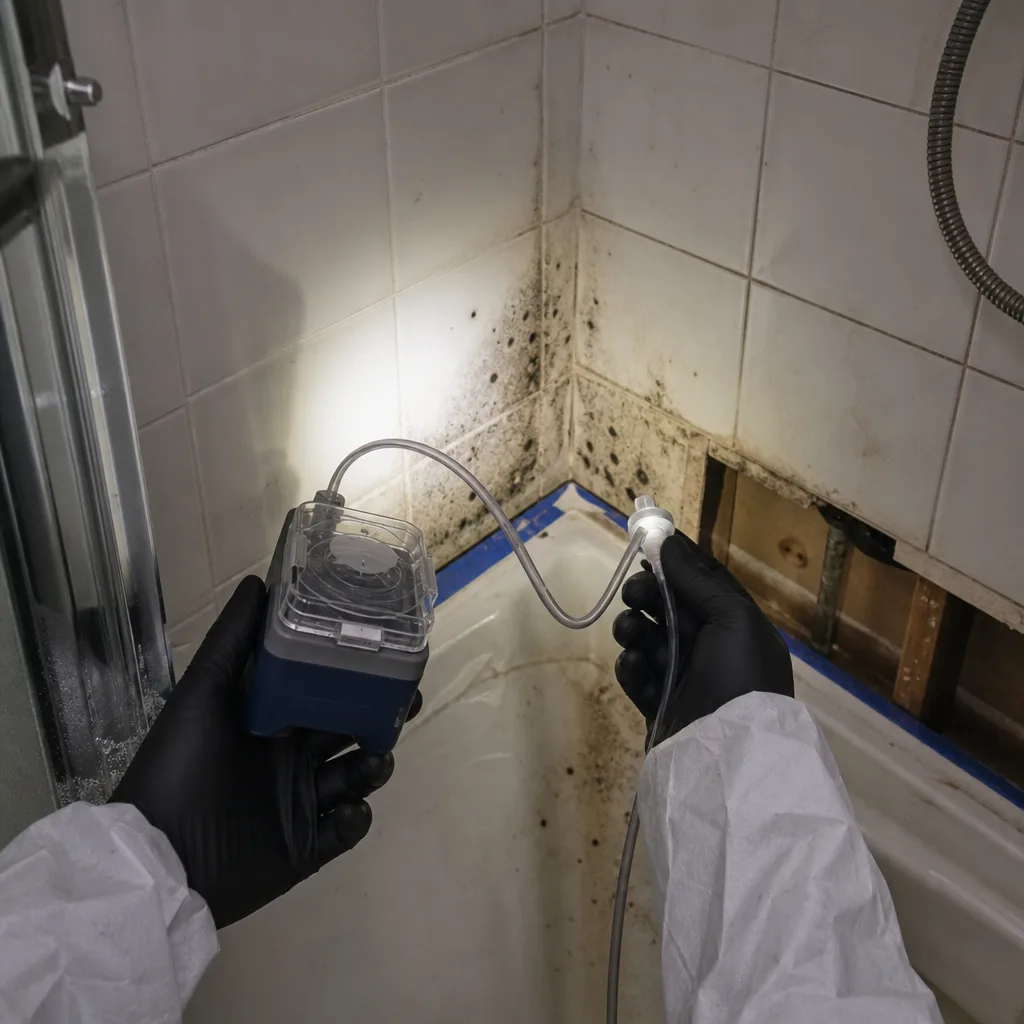
Hiring a restoration contractor in Encinitas is a procurement decision measured by documentation quality, not salesmanship. The right contractor produces five written artifacts before work begins, welcomes license and certification verification, explains drying documentation in plain language, and never asks you to surrender claim rights. The wrong one leads with urgency, avoids written scope, and treats paperwork as an afterthought.
Use this guide as your interview script. Ask for the documents. Verify the numbers. Compare line items, not totals. The contractors who pass this process are the ones whose work survives both the drying cycle and the adjuster’s review.
Call (760) 454-2594 for a free estimate with written scope before any work begins - Haven Standard, Clause 1, on every job.
Written by Alicia Brennan, Owner at DryMark Restoration Encinitas, serving Encinitas since 2011.